A Vision Unrealized: Reflections on Daniel Kaluuya's 'The Kitchen'
My heart sang when I first heard the news—Daniel Kaluuya, an artist whose choices have always felt like whispered secrets of profound insight, was stepping behind the camera. His writing and directorial debut, The Kitchen, arrived with the promise of a new cinematic language, a promise carried on the shoulders of Top Boy’s formidable Kane Robinson. I entered that darkened space in my mind, ready to be transported. Yet, as the final credits rolled on this futuristic drama, I was left not with the thunderclap of revelation, but with the soft, persistent echo of a question: what could have been? The film is executed with competence, a solid piece of craft, yet it lingers in the realm of the almost-extraordinary, never quite crossing that luminous threshold. Perhaps my expectations were a constellation I asked it to become, a map it was never meant to follow.
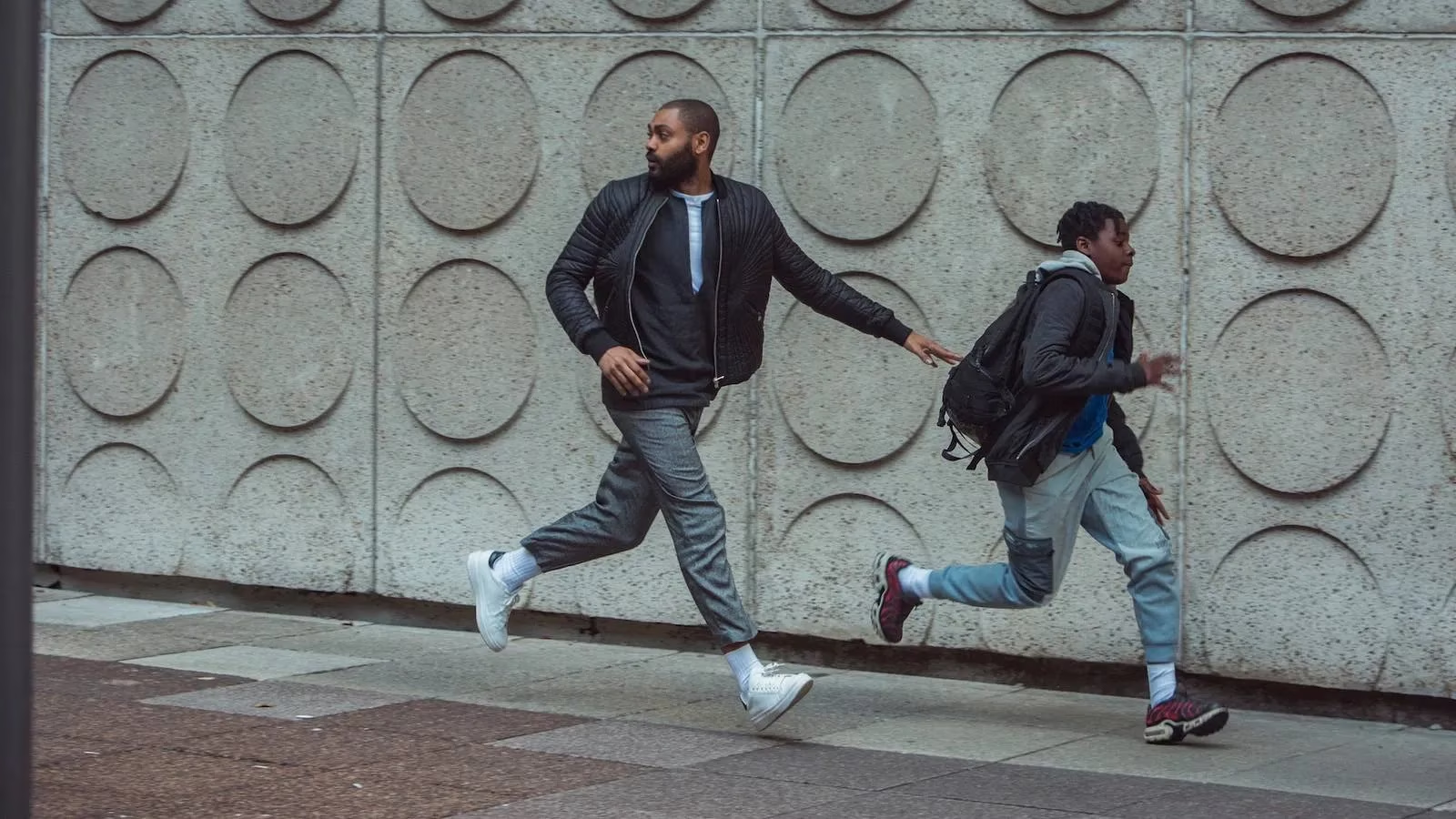
Kane Robinson as Izi is a landscape of contained fury. He moves through the frame not just with his body, but with the weight of a silent history. So much of his performance exists in the subterranean chambers of his being—a glance that holds a library of grief, a stillness that vibrates with the potential for eruption. In his most aggressive outbursts, I don't see a man losing control; I see a boy, lost and hurting, finally finding a voice for the scream that has been trapped inside for years. It is a feat of profound, quiet emoting, a testament to Robinson's depth as he reveals a softer, more vulnerable side, all while maintaining that signature, magnetic glare. His presence alone is a reason to witness this world.
And what a world it is! This is where Kaluuya's instincts shine with fleeting, brilliant sparks. The world-building in The Kitchen is its most undeniable strength. I could feel the texture of this near-future London, a society on the razor's edge of rebellion. Small, exquisite touches hinted at a visionary mind at work. The deconstructed Nike masks from the opening heist—a stroke of genius! I remember that concept swirling through the digital ether years ago, a piece of viral fashion now fossilized into a symbol of anarchic style within the film's universe. You simply don't see that kind of raw, contemporary aesthetic bravado in films of this scale anymore. Paired with the kinetic, almost docu-style filming of Staples' gang, led by the compelling Hope Ikpoku Jnr, there were moments that felt wholly unique, a fingerprint of a new directorial voice finding its shape alongside co-director Kibwe Tavares.
The film's very bones are strong, its thematic heart beating with urgent, infallible truth. The story of Izi, a man searching for anchors in a father-figure who is himself adrift, set against the tectonic plates of societal inequity and housing displacement... it is a story for our age, for every age. The plot is sound, the drama well-acted and structured. Yet, here lies the core of my quiet disappointment. For all its solidity, the central drama felt... stagnant. It possessed the solemnity of a meditation but lacked the vital, electric current needed to make that meditation truly compelling.
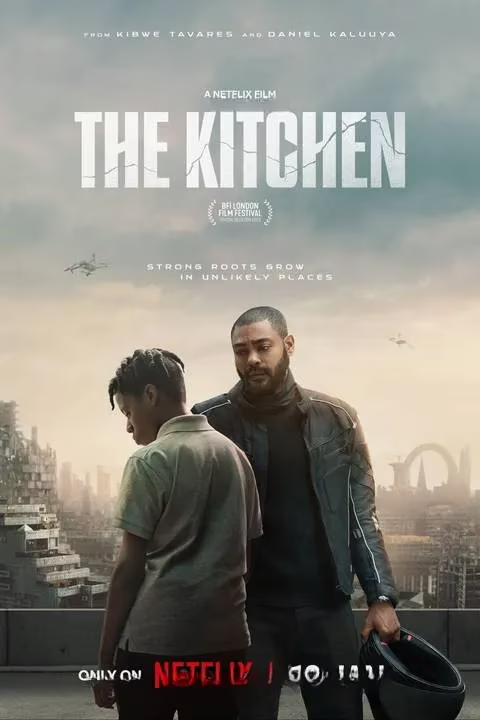
The film seemed to pour all its emotional capital into this interpersonal orbit, leaving the brewing societal revolution feeling like a distant rumor, a backdrop painted in broad, underdeveloped strokes. The magnificent, gravitas-filled monologues delivered by Ikpoku Jnr soared on their own, but they landed without the fully realized narrative foundation to make them resonate with the devastating impact they deserved. The balance was off; the fleeting moments of brilliance—a look, a line, a shot of the crumbling Kitchen estate—were often overshadowed by a central narrative that remained stubbornly in soft focus.
Yet, to speak only of lack would be a disservice to the heart that palpably beats within this film. That heart is often carried by newcomer Jedaiah Bannerman as Benji. In his eyes, I saw the raw, unvarnished hope and confusion that gives the story its most poignant stakes. From an acting standpoint, there are truly no weak links—Kaluuya and Tavares have drawn authentic, grounded performances from everyone, especially the young talent. The film is, by any objective measure, good.
| Aspect | Verdict | Emoji |
|---|---|---|
| World-Building & Style | Exceptional, visionary flashes | 🌆✨ |
| Central Performances | Powerful, nuanced, and compelling | 🎭🔥 |
| Thematic Core | Strong, relevant, and infallible | 💔⚖️ |
| Narrative Momentum | Stagnant; stakes lack urgency | 🐌⚡ |
| Emotional Payoff | Uneven; heart present but focus divided | 💔🎯 |
Ultimately, The Kitchen feels like a film with its soul split between two stories—the intimate, father-son odyssey and the epic, societal uprising. It only fully succeeds in telling the first, leaving the second as a haunting, underdeveloped specter. It is a beautiful, thoughtful, but ultimately cautious debut. It shows us that Daniel Kaluuya the director has arrived, not with a defiant roar, but with a poet's whisper. He has the eye, he has the instinct, he has the heart. I have no doubt this is merely the first chapter. The promise is there, glowing faintly but persistently. I will be waiting, with hope undimmed, for the day that promise erupts into its full, unstoppable flame.