A Visual Symphony of Emerald and Pink: The Iconic Costumes of Wicked Come to Life
In the shimmering, magical realm of Oz, where the extraordinary becomes ordinary and the impossible feels within reach, two figures stand as living testaments to a story of profound friendship and bitter rivalry. As 2026 approaches, the cinematic world eagerly anticipates the full arrival of the long-awaited two-part film adaptation of Wicked, a tale that reimagines the very fabric of a beloved fantasy universe. At the heart of this visual and narrative spectacle are the iconic costumes of its central characters, Elphaba Thropp and Glinda Upland—garments that are far more than mere fabric and thread, but rather, the vibrant, symbolic skins of their souls. These designs, now brought to breathtaking life for the screen, serve as the first, powerful notes in a cinematic symphony that promises to redefine a modern classic.
The Emerald Enigma: Elphaba's Shadowed Silhouette
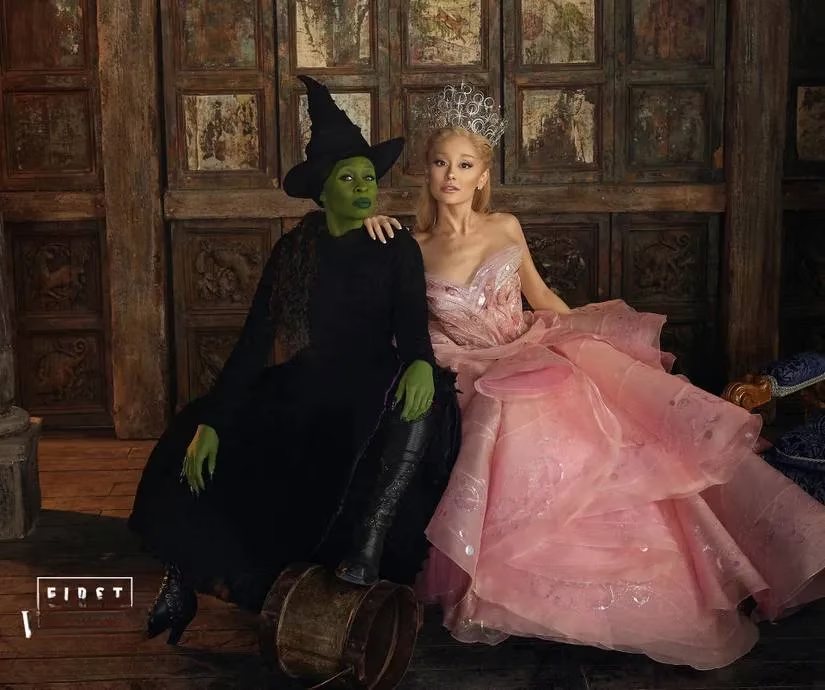
Elphaba’s appearance is a masterful homage, a bridge spanning decades of cinematic history. Her visage, painted in a striking, otherworldly shade of green, is a direct and respectful nod to Margaret Hamilton’s legendary portrayal of the Wicked Witch of the West in the 1939 cinematic landmark, The Wizard of Oz. This is not mere imitation, but evolution. The costume is a study in dramatic contrast and profound character.
-
The Fabric of Otherness: Her all-black dress is not simply a garment; it is a statement. It flows around her like a shadow given form, a visual representation of the isolation and misunderstanding she endures. The fabric seems to absorb the light around her, making her emerald skin glow all the more vividly—a beacon of difference in a world that fears it.
-
The Crown of Power: Perched upon her head is the tall, peaked hat, an instantly recognizable silhouette that has haunted the dreams of audiences for generations. In this new incarnation, it is not just a witch’s accessory but a crown of thorny power, a symbol of the formidable destiny she both resists and embraces.
Every stitch in Elphaba’s costume tells a story of defiance and depth, transforming a classic villain’s guise into the armor of a complex, misunderstood heroine.
The Gilded Glimmer: Glinda's Radiant Regalia
In stark, beautiful contrast to Elphaba’s somber elegance stands Glinda Upland, a vision of confectionary perfection and calculated charm. Her costume is a direct descendant of the Good Witch Glinda from the 1939 film, yet infused with a contemporary sparkle and youthful exuberance that is uniquely Ariana Grande’s.
-
A Cascade of Pink: She is swathed in a flowing, voluminous pink gown that seems to be made of spun sugar and dawn light. The color pink, often associated with innocence and popularity, here becomes a uniform, a carefully constructed persona of benevolence and bubbly charm.
-
The Diadem of Destiny: Adorning her long, blonde locks is an ornate, glittering tiara. It is less a crown of royalty and more a badge of social status, a symbol of the privileged, shining world Glinda inhabits—a world that initially seems galaxies away from Elphaba’s shadowy corner of Shiz University.
Glinda’s costume is a confection, beautiful and seemingly weightless, yet it carries the heavy burden of expectation and the glittering cage of being perpetually, perfectly good.
A Canvas for Connection: Costume as Character
The true magic of these costumes is revealed not in isolation, but in their poignant juxtaposition. The newly released imagery showcases them not as separate entities, but as interconnected pieces of a single, heartbreaking story.
A Palette of Polar Opposites:
| Element | Elphaba | Glinda |
|---|---|---|
| Primary Color | Deep, absorbing Black | Luminous, reflective Pink |
| Skin Tone | Vibrant, unnatural Green | Pale, conventional Peach |
| Headwear | Tall, imposing Peaked Hat | Delicate, sparkling Tiara |
| Symbolism | Misunderstood Power, Isolation | Cultivated Goodness, Acceptance |
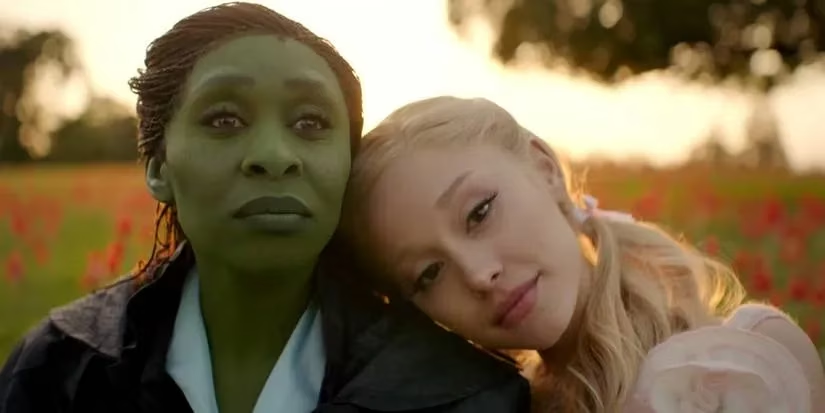
This visual dichotomy is the foundation of their relationship. One image, poignant in its simplicity, captures Glinda resting her blonde, tiara-adorned head upon the black-clad shoulder of her green-skinned friend. Here, the costumes cease to be barriers and become a shared landscape. The stark black fabric supports the effervescent pink; the emerald skin becomes a pillow for gilded hair. It is a moment of pure, unguarded connection before the tides of destiny pull them apart, a silent promise of the deep bond that will make their eventual divergence all the more tragic.
The Legacy Woven in Thread
Directed by Jon M. Chu, this ambitious two-part adaptation carries the weight of a beloved legacy. It draws its lifeblood from multiple revered sources:
-
The enduring stage musical by Winnie Holzman and Stephen Schwartz, a theatrical phenomenon.
-
Gregory Maguire’s rich, revisionist 1995 novel, Wicked: The Life and Times of the Wicked Witch of the West.
-
The timeless, original bedrock of L. Frank Baum’s 1900 novel and its iconic 1939 film adaptation.
The costumes are the most immediate and visceral link to this legacy. They are the sacred icons, faithfully preserved yet meticulously refreshed for a new generation. Cynthia Erivo and Ariana Grande do not merely wear these clothes; they inhabit them, breathing new life into every fold of black taffeta and every sparkle of a pink sequin. Under Chu’s guidance, the film has undertaken the admirable task of translating theatrical magic into cinematic grandeur, ensuring that when Elphaba first defies gravity and Glinda descends in her bubble, they are visually rooted in a tradition that audiences know and love, while feeling thrillingly new.
As the final preparations are made for the saga’s continuation, these iconic costumes stand as a promise. They are more than just remarkably detailed cinema attire; they are the first chapter in a visual novel about perception, identity, and the colors we are forced to wear by the world. In the contrast between emerald and pink, shadow and light, we see the entire, epic scope of a friendship that changed Oz forever—a story waiting, once more, to be told.