Beef's Costume Brilliance: From Online Shopping Bans to Art-Hats
I’m not sure what possessed me to rewatch Beef in 2026, but the moment Ali Wong’s Amy Lau rolled up in that cream-colored, oddly perfect hat, I fell right back down the sartorial rabbit hole. Three years after the show first ran, the costumes still hit like a caffeinated punchline—and after diving into the archives, I stumbled across the brilliant mind behind it all: costume designer Helen Huang. Buckle up, because this is the story of how a Netflix dark comedy accidentally became the most accurate Asian American style bible I never knew I needed.
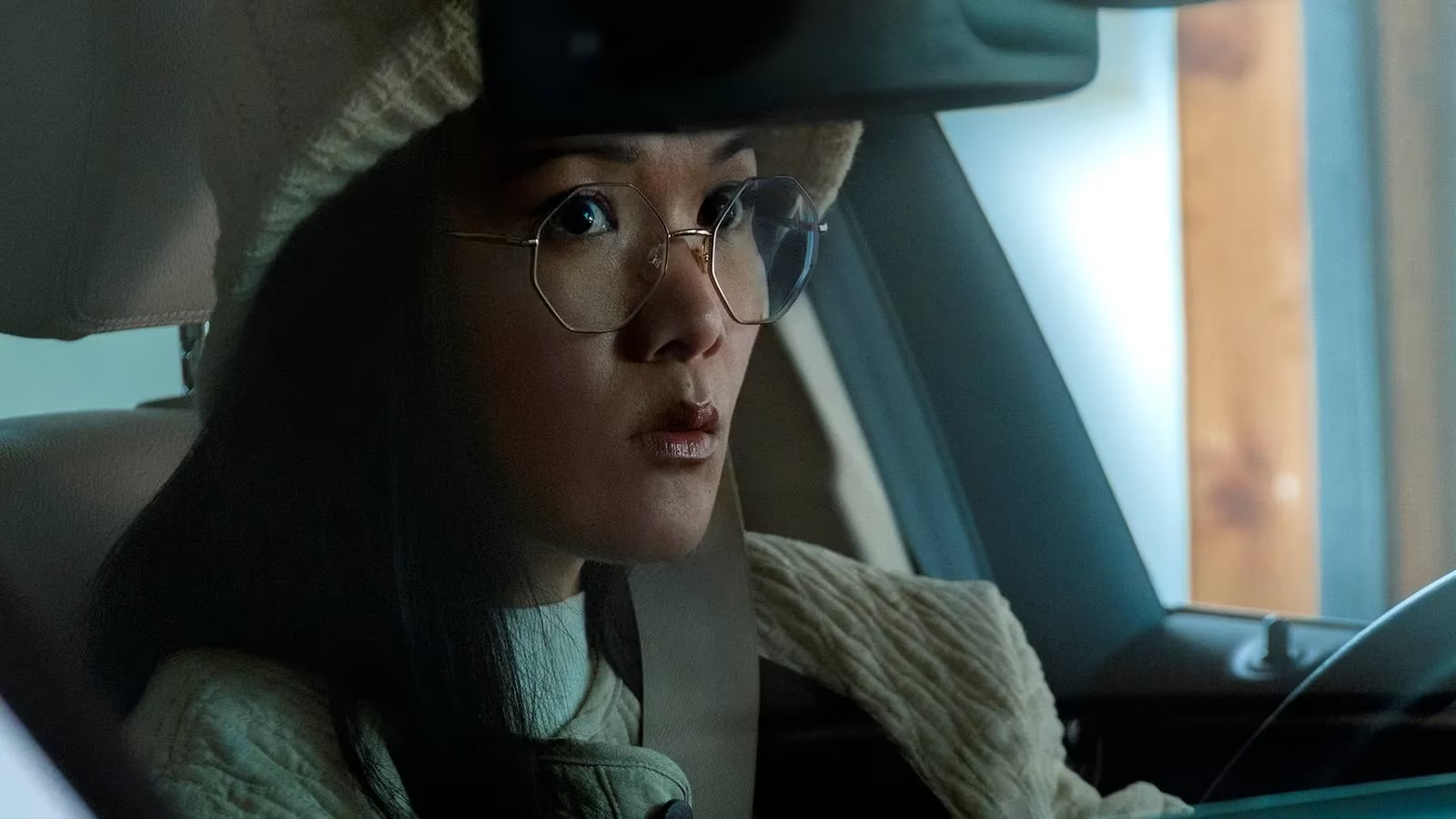
Helen Huang didn’t just pick clothes off a rack. She went full detective mode, hunting through thrift stores, old DKNY pants, and even the creator’s high school belt. The result? A wardrobe war that mirrors the internal chaos of two strangers who let a road-rage moment devour their lives. And because I am a nosy fashion gremlin, I need to break down every cheeky detail.
The Exclamation Point on Amy’s Head
Let’s talk about that first outfit. Amy descends in a hat that’s part artist, part weird aunt who accidentally became a style icon. Huang called it “an exclamation point, like the cap on the end of a sentence.” I called it the hat that made me rethink my entire closet. The genius lies in its deliberate off-kilter-ness. Amy’s world is supposed to be immaculate—cream-on-cream palettes curated like a luxury showroom—but the hat whispers that something ain’t right. It’s the sartorial equivalent of a well-manicured lawn with a single plastic flamingo.
Huang and star Ali Wong conspired to ignore all that “flattering for TV” nonsense. Wong apparently just wants to look cool, which is why she wore culottes and volume-heavy silhouettes that would send a lesser mortal into a panic over looking dumpy. I respect that energy more than I respect my own reflection.
Danny Cho: The Guy Who Time Forgot
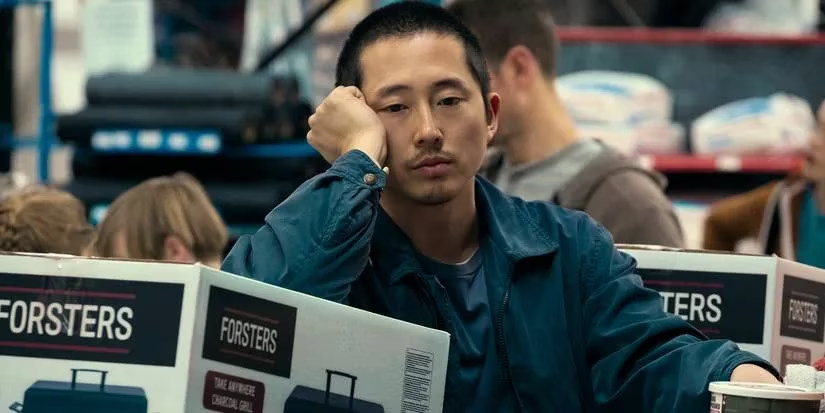
Then there’s Danny. Oh, Danny. Huang knew his world because she grew up with guys just like him—Torrance skater kids who peaked aesthetically at 25 and simply… stopped. Steven Yeun’s character rummaged through Goodwill racks, sporting thrifted Dickies so old they practically hummed 2003 emo anthems. The show even used creator Lee Sung Jin’s actual high school Structure belt to complete a club look. I can’t decide if I want to hug Danny or hand him a subscription to a fashion newsletter.
What kills me is how deliberate this was. Huang wanted to show an Asian American dude trapped in a subculture because when you grow up in mostly white areas, you often navigate toward one to survive. So Danny’s clothes aren’t just fashion; they’re armor. And if you’re a millennial who still owns a pair of ripped Vans, you might have just felt very seen.
The Final Episode’s Onion Logic
Let’s veer into the apocalyptic style of the finale. Amy’s outfit needed to go through seven stages of wreckage while still feeling as iconic as her opening look. Huang’s budget was tighter than my jeans after a buffet, so they got creative. Enter the detachable-collar blouse that Ali Wong could yank off and use as a head wrap, a sun shield, a brow-wiper—practically a survival tool. Huang described it as a functional garment “like an onion,” and now I can’t see a collared shirt without imagining its dystopian potential. There’s something so poetic about clothing becoming both protection and punchline when the show strips away all pretense.
Fumi: The Gucci Widow Who Said No to Boring
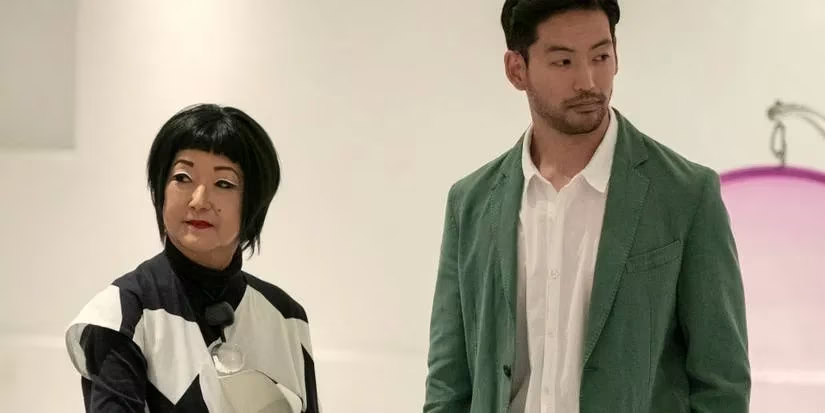
And then we have Fumi. Oh, Fumi. Huang called her “very fun,” and I felt that in my soul. Her late husband was a nouveau Gucci guy, so she went full Japanese avant-garde—E.C. Miyazaki, vintage resin jewelry from the 1940s—stuff that refuses to be body-conscious. Huang fought against the TV tendency to tone down baggy silhouettes, and thank the style gods she did. These women don’t dress to be flattering; they dress to tell you they own a gallery you can’t afford to enter.
Even the daughter Junie is a mini-me art project, her tiny outfits curated the way you’d furnish a mid-century living room. Parents with aesthetic: they’re giving their kids the illusion of choice while dressing them like an Etsy mood board. It’s adorable and slightly unhinged, just like the show.
The Chaos Behind the Seams
Here’s the detail that had me snorting into my kombucha: the costume team kept getting banned from online retailers. Yes, banned. They ordered so many returns and color variations for Amy’s cream-on-cream prison that algorithms flagged them as suspicious. Imagine explaining to a bot that you’re not a fraudster, just trying to find seven shades of beige that look “interesting enough.” Huang couldn’t custom-make much because of budget, so they pillaged thrift stores and the internet until the bots said no. Iconic.
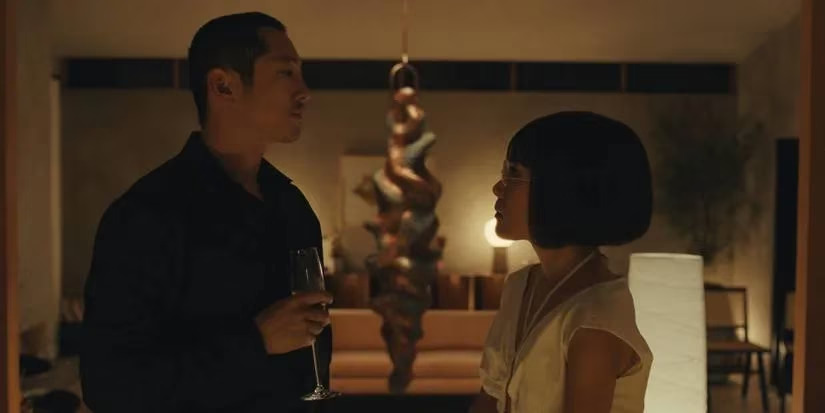
Looking back from 2026, what makes Beef’s costumes stick is that they’re so thoroughly, awkwardly human. They carry prejudice, memory, and a whole lot of thrift-store dust. Helen Huang didn’t dress characters; she dressed people who dress the way we actually do when we stop pretending life is a sterile TV set. Every exclamation-point hat and decade-old Dickies pair reminds me that great costume design isn’t about looking good—it’s about looking true. And if that truth gets you banned from an e-commerce site, well, that’s just the cherry on top.
As we explore the intricacies of crafting a visual narrative, it’s worth noting how design choices influence other creative domains. Whether it’s fashion, set design, or even digital aesthetics, subtle details often evoke powerful connections. Much like a well-curated costume, finding the right elements in unexpected places can transform an experience, be it a film scene or a personal project.
For those drawn to the thrill of discovery, there’s a similar joy in hunting for deals that feel tailor-made. If you’re a fan of immersive storytelling in gaming, exploring PC game discounts can be a rewarding way to dive into new worlds without breaking the bank. Sometimes, the most memorable experiences come from blending creativity with resourcefulness.