Beetlejuice 2 Confirms Iconic Striped Suit Return, Designer Debates Quintessential Look with Michael Keaton
The long-awaited sequel to Tim Burton's cult classic is slowly revealing its spectral style. As Beetlejuice 2 awaits its final call to action beyond the paused production lines, a key sartorial detail has materialized from the ether. Costume designer Colleen Atwood, a longtime collaborator in Burton's macabre menagerie, has confirmed that the black-and-white striped suit, the 35-year-old uniform of Michael Keaton's bio-exorcist, will indeed haunt the halls of the sequel. This announcement comes amidst a playful debate between the designer and the actor himself about what truly defines the character's most iconic look. For a generation raised on the original film's bizarre charm, this striped pattern is not just clothing; it's a cultural hieroglyph, as fundamental to the character's identity as a ghost's chilly presence.
The Designer vs. The Demon: A Debate on Iconography
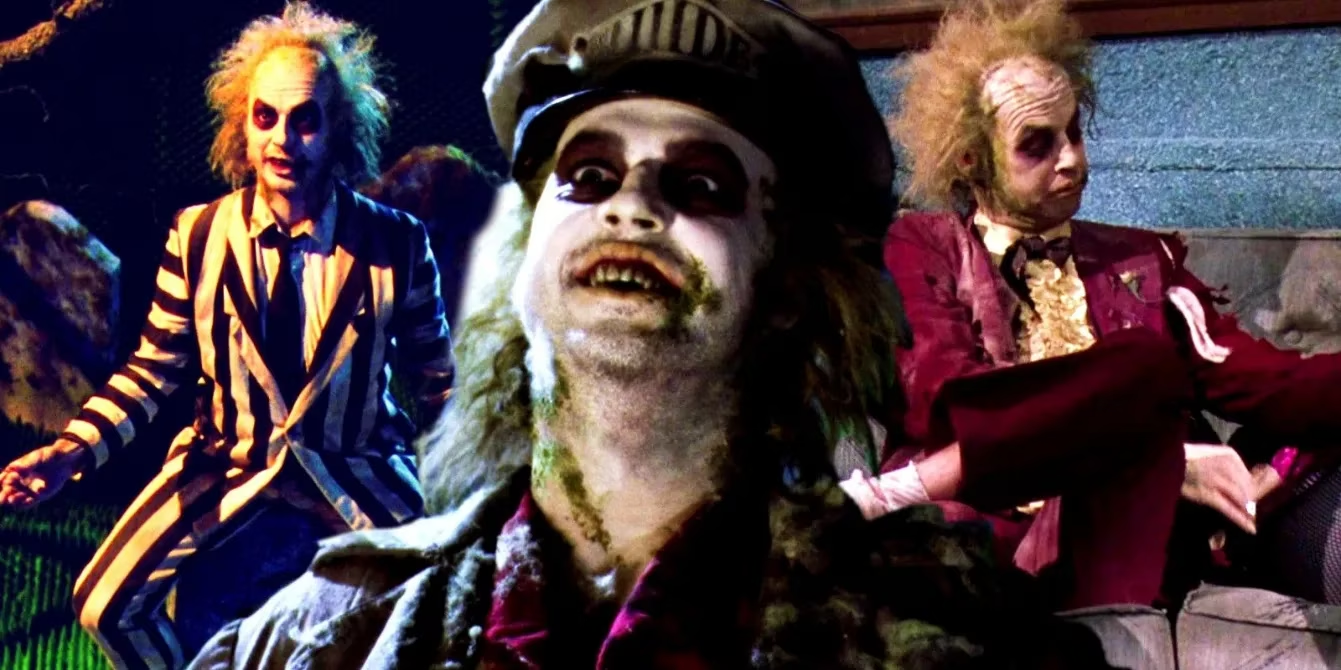
In a recent interview, Atwood drew a direct parallel to other cinematic legends. "Well, Beetlejuice has to have a striped suit," she stated. "It's like doing Alice in Wonderland needs a blue dress. How long they wear it is another thing. But Beetlejuice, that is the quintessential Beetlejuice." However, she revealed a charming point of contention with the star. "Strangely, it was Michael," Atwood added with a laugh. "He thinks the burgundy tux is the quintessential Beetlejuice, not the striped suit. But the world happens to disagree with him, so it's a funny thing."
Keaton's preference points to the tattered, wine-colored tuxedo his character wears during the film's chaotic wedding climax—a look that, while memorable, has not woven itself into the fabric of pop culture in the same way. The striped suit, by contrast, has become a visual signature as recognizable as a corporate logo. This disagreement highlights the fascinating layers of character perception: the actor's intimate connection to a pivotal scene versus the audience's broader, merchandising-fueled memory of the figure.
More Than Stripes: A Pillar of Burton's Visual Language
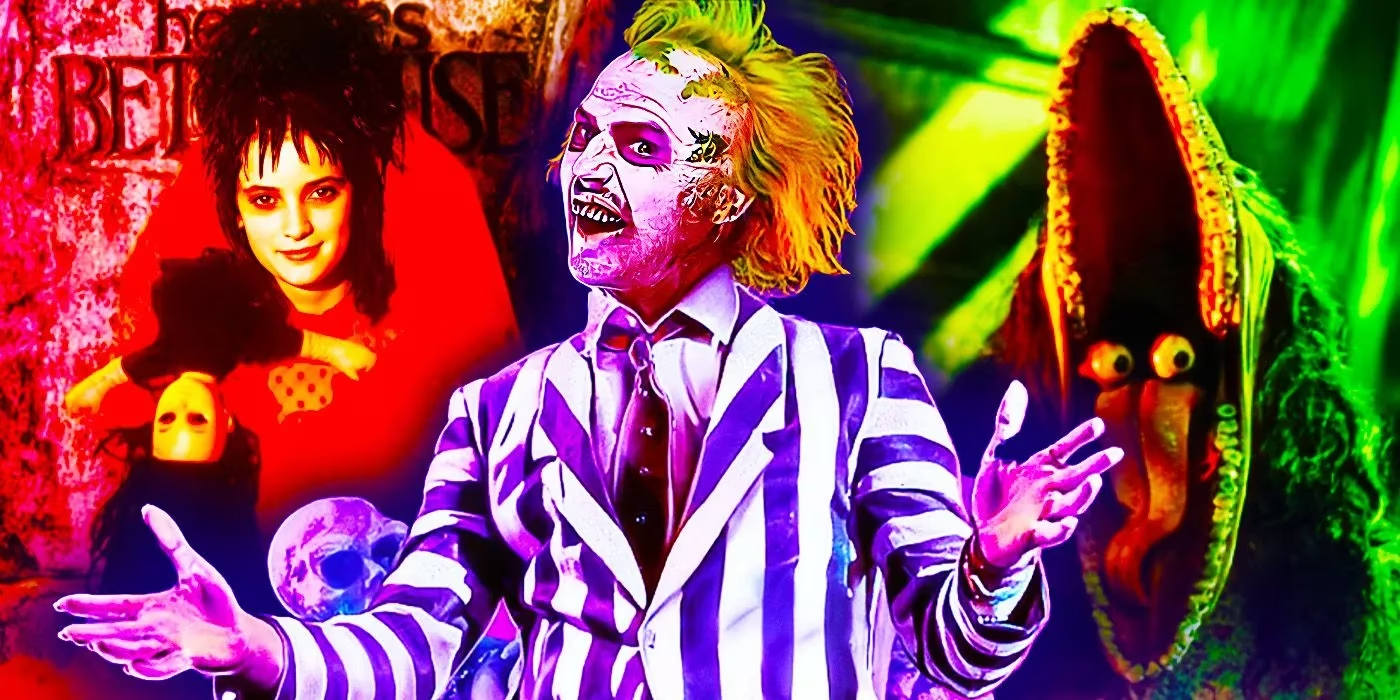
The significance of the striped suit extends far beyond mere wardrobe. It is a cornerstone of Tim Burton's distinctive visual grammar, deeply rooted in the German Expressionist films that inspire him. That movement used stark contrasts, distorted perspectives, and bold patterns—like those very stripes—to evoke psychological unease. In Beetlejuice, the motif is everywhere:
-
On the Man: The suit itself, a walking prison uniform for the afterlife.
-
On the Monster: The fearsome Sandworm, a colossal beast adorned with the same black-and-white pattern, making it feel like a chaotic extension of Beetlejuice's own chaotic energy.
-
In the Atmosphere: The use of stripes creates a sense of distorted reality, much like the warped, funhouse-mirror logic of the Netherworld.
This suit is not just what Beetlejuice wears; it's a visual virus that infects the entire film, a repeating graphic riff that plays on the audience's subconscious. It’s the film's visual heartbeat, as rhythmic and essential as a bassline in a classic song.
The Striped Suit's Afterlife: From Poster to Broadway
Over the past three and a half decades, the striped suit has proven it has more staying power than most ghosts. Its journey from screen symbol to merchandising marvel is a testament to its iconic status.
| Medium | Appearance of the Striped Suit |
|---|---|
| Original Marketing | Featured prominently on movie posters and home video packaging. |
| 1989 Animated Series | The central design for the cartoon version of Beetlejuice. |
| LEGO Dimensions DLC | The digital minifigure outfit in the video game. |
| 2019 Broadway Musical | Adapted with a tattered, distressed coat to suit the stage. |
This merchandising omnipresence has cemented the look. The suit has become the character's default avatar in the public imagination, a shorthand so powerful that omitting it from the sequel would be like presenting Sherlock Holmes without his deerstalker. Its return in Beetlejuice 2 is less a creative choice and more a respectful nod to a shared cultural code.
Looking Ahead: Reinvention in the Afterlife?
Atwood's confirmation puts one question to rest, but opens another. With 35 years having passed in our world (and presumably some time in the Netherworld), will the suit return unchanged? The costume designer's hint that "how long they wear it is another thing" suggests we may see more than just a pristine replica. Could the stripes be faded, torn, or accessorized for a new era? Perhaps it will be digitally manipulated, appearing and disappearing like a specter. The inclusion of new characters played by Jenna Ortega and Willem Dafoe, alongside returning favorites Winona Ryder and Catherine O'Hara, presents opportunities for the classic motif to interact with fresh designs. The striped suit in 2026 might be like a classic song remixed—the core melody is sacred, but the production around it can evolve.
Ultimately, Atwood's revelation assures fans that the sequel's heart is in the right place, buried in the same strange, striped soil as the original. The debate between the burgundy tux and the striped suit is a delightful footnote, but the decision to bring back the latter is a loud and clear message: Beetlejuice 2 understands its legacy. It knows that some icons are not meant to be retired, only resurrected. As we await the end of the industry strikes and the final summoning of the ghost with the most, we can take comfort in knowing that when he finally says his name three times, he'll likely be dressed for the occasion in the chaotic, comforting stripes we never forgot. 👻 ✨