Behind the Black & White Magic: Costuming Divinity with Francine Lecoultre
Alright, let me pull back the curtain on this wild ride called Divinity. It's 2026, and this film still feels like a punch to the senses—a black-and-white, stop-motion-infused sci-fi trip from Eddie Alcazar that asks, "What if an anti-aging serum ran the world?" Sure, the story about who controls the 'Divinity' serum is a head-scratcher, but let's be real: everyone walks out buzzing about the visuals. It’s like someone took a classic film noir, fed it some futuristic pills, and set it loose in the desert. And a huge part of that vibe? The clothes. Or, should I say, the costumes dreamed up by Francine Lecoultre.
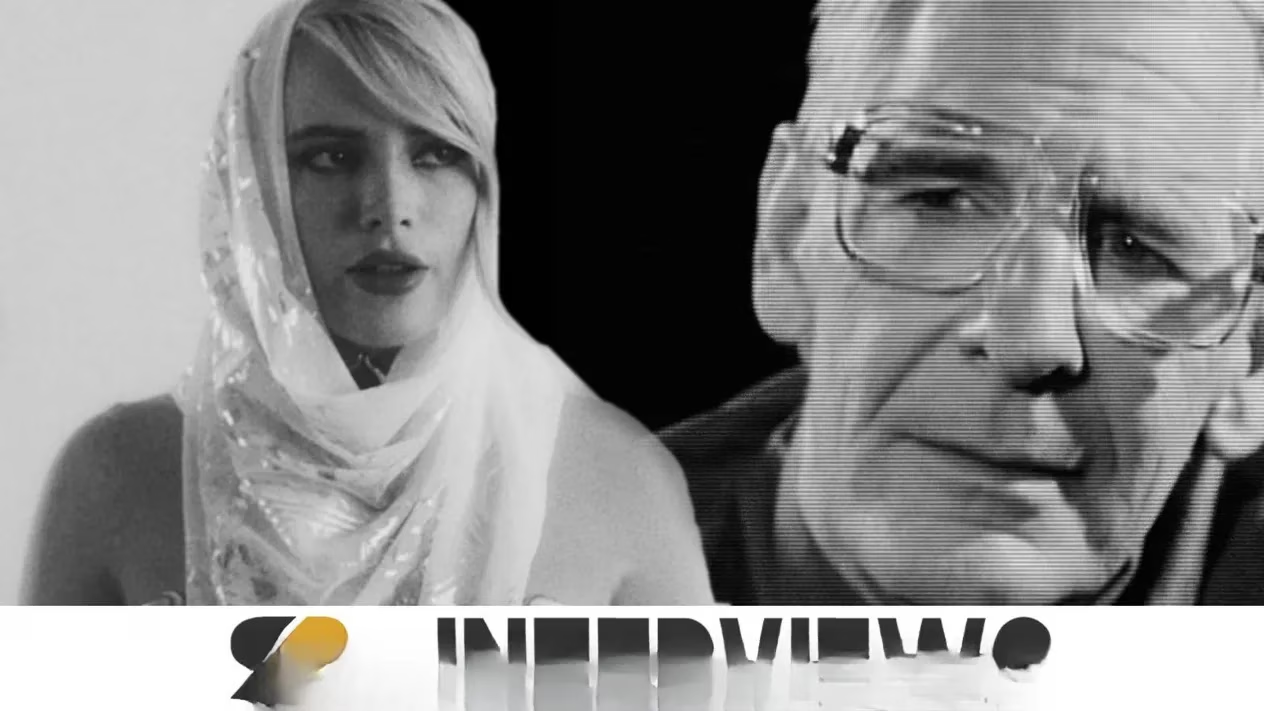
Now, Francine isn't new to making things look cool. She's been a textile artist on biggies like Total Recall and Shazam! Fury of the Gods. But Divinity? This was a different beast. She and Eddie had already done a trial run with a short film called The Vandal—also black and white, also stop-motion. Francine spilled the beans on how that started: a friend introduced them, and bam, they were off to the races. That short even premiered at Cannes, which is basically the fashion week for film nerds. Talk about a good sign!
So, How Do You Dress for a World Without Color?
Here's the kicker: Francine loves color. Like, really loves it. "My work is very colorful," she said. "The color palette is my magic." So, getting tasked with a black-and-white film was... a plot twist. But Eddie had a genius idea: don't just use black and white costumes. That would be too obvious, and honestly, a bit boring. Instead, they cooked up a palette of warm, earthy tones. Why? Because many of the actors were Black, and stark white would have created a harsh, unflattering contrast. They aged the fabrics, played with textures—all those subtle details you might not consciously notice, but your eyeballs definitely do. It’s all about the difference, you know?
Stop-Motion: The Ultimate Deadline Drama
Ah, stop-motion. It's not just moving puppets frame by frame; it's a logistical nightmare for a costume designer. Normally, you have time to tweak and fiddle. Not here! Francine had to design the costumes super early and have them finished pronto because the puppet-makers needed them to start building their tiny, perfect replicas. She admitted feeling the pressure: "I was like, ‘Well, I don't know yet!’" because ideas with a director naturally evolve. It was a constant back-and-forth: get pictures from a fitting with the human actor, send them off, and hope the puppet version would look just as slick.
Playing with Perfection (and Some Serious Muscle)
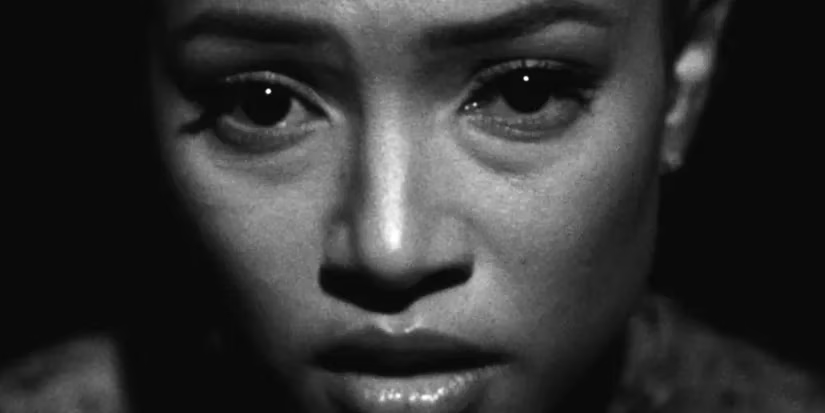
The film is obsessed with physical perfection, and the casting played right into that. The women, like Nikita (played by Karrueche Tran), were tiny—size 00, XS, the whole deal. The men? Absolute units. Champion bodybuilders. Francine said the exaggeration was already built-in; her job wasn't to add more, but to frame what was there. For the bodybuilders, the biggest challenge was making costumes that looked like... well, nothing. They mostly wore skin-tone underwear that had to be meticulously crafted to be invisible on camera. Her tailor made prototypes that were like ultra-chic, invisible bathing suits. And guess what? The bodybuilders loved them so much they wanted to take them home! Mission accomplished.
Collaboration is Key (And So is Not Melting)
Francine had a strong vision, shaped by intense storyboarding. But she also loves working with actors. Take Nikita's costume—it's essentially her one iconic look for the whole film. It had to be powerful, impeccable, skin-tight, and allow for serious movement because her character is super physical. They tried a bunch of options to find what worked best. Oh, and another co-star? The blistering heat of Joshua Tree where they filmed. "People were sweating a lot," Francine noted dryly. Comfort wasn't a luxury; it was a necessity.
The Favorite vs. The Hardest
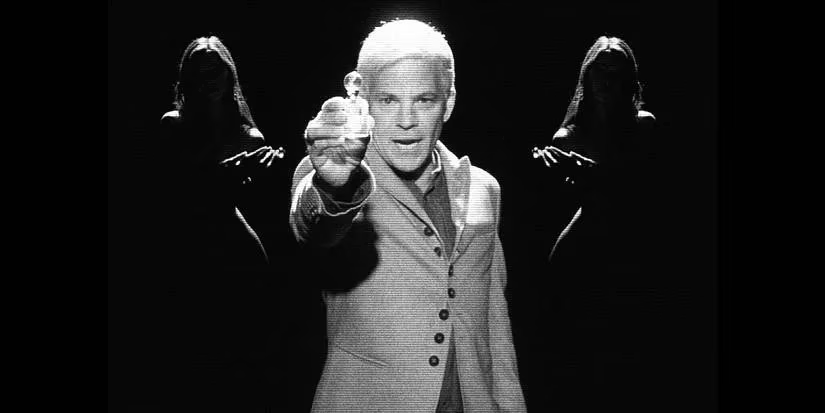
When asked about her favorite costume, Francine didn't hesitate: Nikita's. It was her canvas. She got to silkscreen the fabric with metallic ink and tattoo patterns—a super elaborate, personal process. The most challenging? Aside from the bodybuilders' 'invisible' wear, it was probably Stephen Dorff's predicament. His character, Jaxxon, spends the whole movie in underwear under layers of special effects makeup that took four hours to apply. "There was nothing flattering for him," Francine sympathized. Imagine being a movie star and your entire wardrobe is... basically one unglamorous undergarment. Oof.
So, there you have it. Creating the world of Divinity wasn't just about sewing cool clothes. It was about:
-
Reimagining color in a monochrome world.
-
Racing against the clock for stop-motion puppets.
-
Highlighting extreme body types without overpowering them.
-
Balancing bold vision with practical actor needs (and desert heat!).
It's a testament to how costume design is true visual storytelling. Every stitch, every texture, every barely-there nude fabric choice builds the eerie, perfect, and slightly terrifying world of Divinity. The film asked what immortality costs, and Francine's wardrobe answered: it looks incredibly stylish, but buddy, it's not always comfortable.