Cruella, Punk, and the Beautiful Chaos of 1977 London
If fashion had a criminal record, Cruella de Vil would need a filing cabinet just for the wigs. In 2026, half a decade after Disney's Cruella first strutted into cinemas, the film's hair and makeup still feels like a glorious act of stylish vandalism. The Oscar-nominated hair and makeup designer Nadia Stacey did not simply give Emma Stone a black-and-white dye job and call it a day. She built a whole personality out of bobby pins, lipstick, and 1970s London punk. The result? A version of Cruella who looks less like a cartoon villain and more like the coolest art-school dropout ever to crash a black-tie ball. 🖤🎸💄
Cruella is an origin story, which means audiences meet Estella before the infamous name becomes a brand. Estella is a bright child with a passion for fashion and a talent for mischief. She grows up in 1970s London with a single mother, and after a tragic accident leaves her orphaned, she partially blames herself. She runs away, teams up with two friends, and survives by swindling Londoners. Her outfits, hair, and makeup become disguises. Later, she lands in Baroness von Hellman's fashion house. At the Baroness's Black and White Ball, she first disguises herself as Cruella. It is not just a costume change. It is a hostile takeover of her own identity.
Estella First, Terror Later
Stacey told THR that she started with Estella, not Cruella. What does a future supervillain listen to at seventeen? What books is she reading? What is happening socially around her in London, 1977? Those questions shaped the looks. Stacey imagined Estella as a basic, minimal kind of girl: one lipstick, one eyeliner, a bit of mascara. Simple hair. Simple makeup. That simplicity was not boring. It was a blank canvas. When Cruella finally appears, there is room to go wild. 🎨
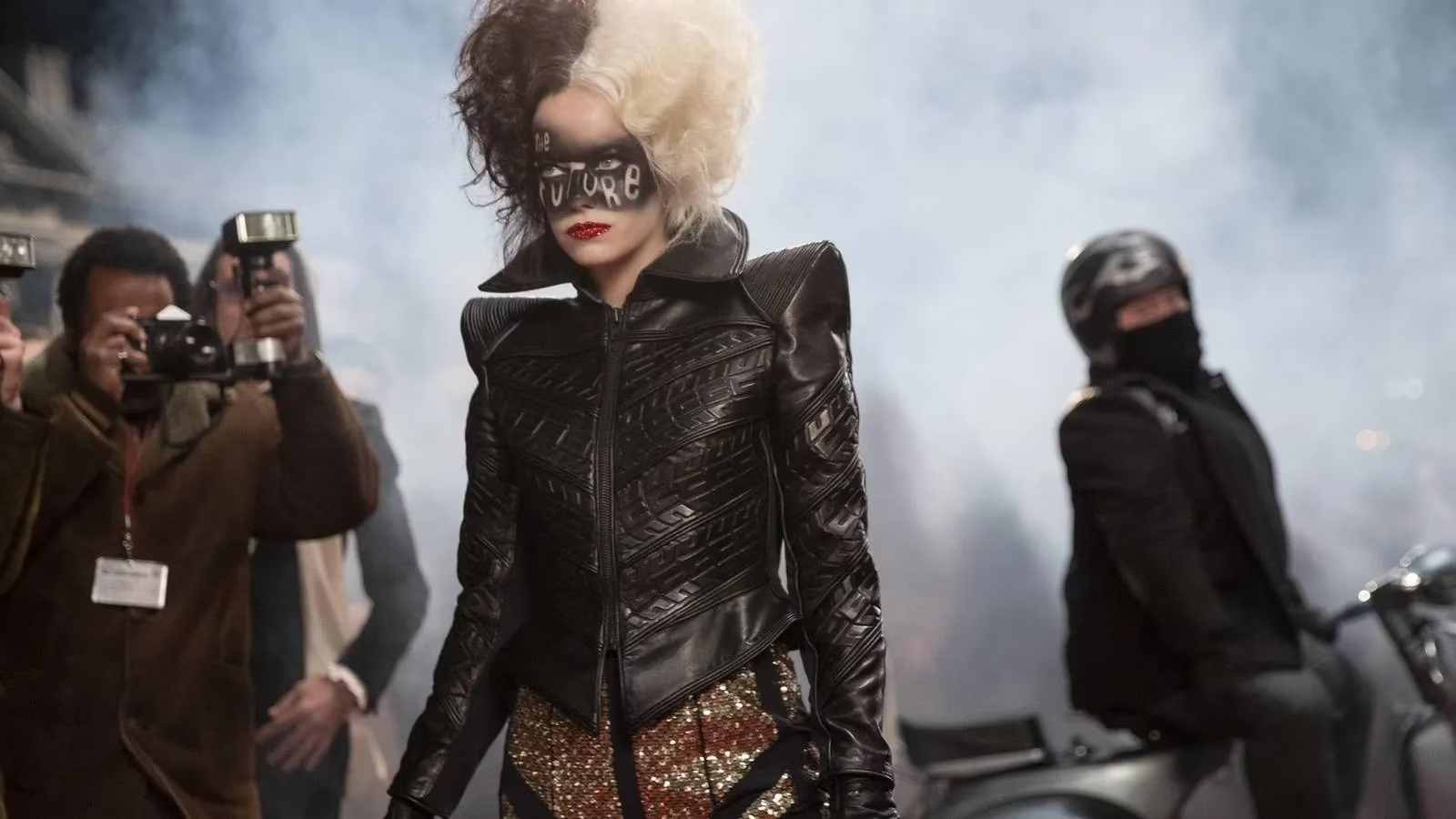
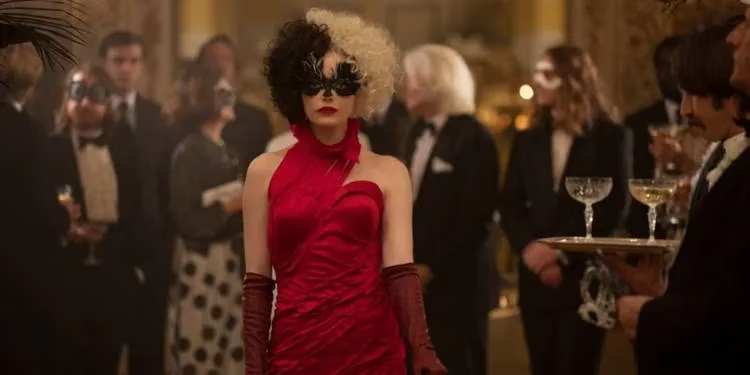
And wild it goes. The film serves look after look: a red evening gown with a feathered mask, a tightly fitted leather jacket with lightly waved hair and bangs, and a leather motocross jacket paired with voluminous hair and makeup that spells the future across Stone's face. Each look is a chapter in Cruella's emotional arc. Each look is also a clue about the culture that raised her. Growing up orphaned and surrounded by London punk did not just harden Estella. It gave her a visual language.
| Look | Vibe | Punk Influence |
|---|---|---|
| Red gown and feathered mask | Opera villain, but make it fashion | Theatrical rebellion |
| Fitted leather jacket and soft waves | Dangerous elegance | Borrowed, battered, modernized |
| Motocross jacket and The Future face | Anarchy in eyeliner form | DIY attitude, collage energy |
| Black and white ball disguise | Identity as weapon | Gatecrashing as art |
Punk Was a Patchwork, Not a Uniform
Punk played a massive part in Stacey's process. In 1977, London punk was not a tidy trend. It was a mismatch of looks, sounds, and attitudes. Stacey leaned into that. She took an 18th-century wig, messed it up, and placed it slightly tilted on Stone's head. Who says a wig has to sit straight? Who says period accuracy has to behave? That kind of thinking came partly from her work on The Favourite, another period piece where she blurred the lines between historical and modern. The courage to break rules carried over. Stacey wanted the looks to be relatable, too. She wanted people to see Estella and feel inspired, not just impressed. ✨
That is the trick of Cruella. The hair and makeup do not distract from Stone's performance. They amplify it. In a film about an up-and-coming fashion designer, safe choices would be a crime. Stacey played with length, volume, and texture of Cruella's iconic color-blocked hair. She altered the prominence and harshness of Stone's eye and lip makeup to coordinate with costume, weather, season, and scene. Small changes made big differences. A slightly tilted wig, a heavier eyeliner, a bigger hair silhouette: each detail added richness to the character's emotional journey. 💋
So what makes Cruella's style endure? It is not just the black and white hair. It is the backstory stitched into every stitch, every smear of lipstick, every deliberately messy pin. Stacey treated hair and makeup as storytelling, not decoration. She looked at every reference and borrowed from everywhere. The result is a patchwork of old and new, high and low, beautiful and unhinged. In 2026, that punk spirit still feels alive. After all, what is Cruella de Vil if not a reminder that the best way to reinvent yourself is to steal a little from everyone, tilt it sideways, and wear it like you meant it? 🐾