From the Dojo to the Big Screen: The Signature Fighting Styles of Martial Arts Movie Legends
As I reflect on the vast landscape of martial arts cinema, what continues to captivate me is the incredible diversity of fighting disciplines that have graced the silver screen. Each generation of stars has brought a unique blend of techniques, philosophies, and physical artistry, transforming combat into a narrative language all its own. I've spent years studying their movements, their forms, and the dedication behind every punch, kick, and throw. It's a world where discipline meets drama, and where an actor's chosen martial art becomes as much a part of their iconic persona as their face or voice. From the graceful, flowing forms of traditional styles to the brutal, efficient techniques of modern combat sports, this variety has kept the genre vibrant and endlessly surprising. The greatest among them didn't just perform fights; they lived their arts, and that authenticity is what bridges cultures and generations, making a well-choreographed battle scene a universal language of power, skill, and storytelling.
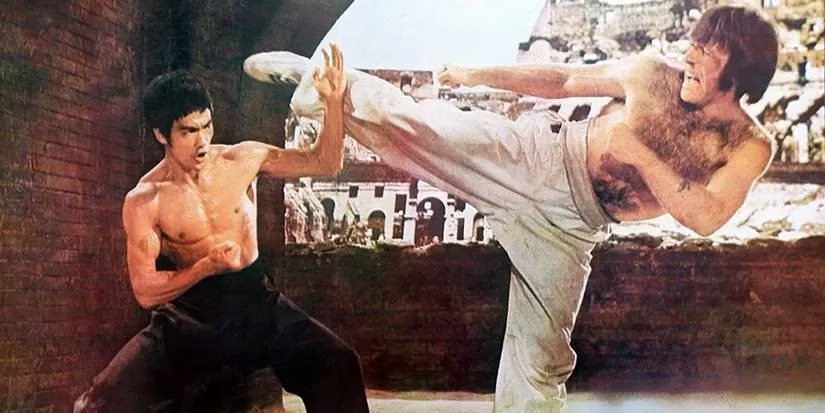
My journey into understanding these styles often begins with the pioneers. Bruce Lee, of course, was a phenomenon. While he is the face of kung fu for many, his personal philosophy, Jeet Kune Do, was about absorbing what is useful and discarding what is not. It was fluid, adaptable, and revolutionary. His contemporary and friend, Chuck Norris, presented a powerful contrast with his foundation in Tang Soo Do and the creation of his own system, Chun Kuk Do. Norris's karate was direct, powerful, and competition-proven, a style that made him a formidable on-screen villain and hero. Seeing them face off in The Way of the Dragon is like watching a debate between two martial philosophies—one of flowing water and one of unbreaking stone.
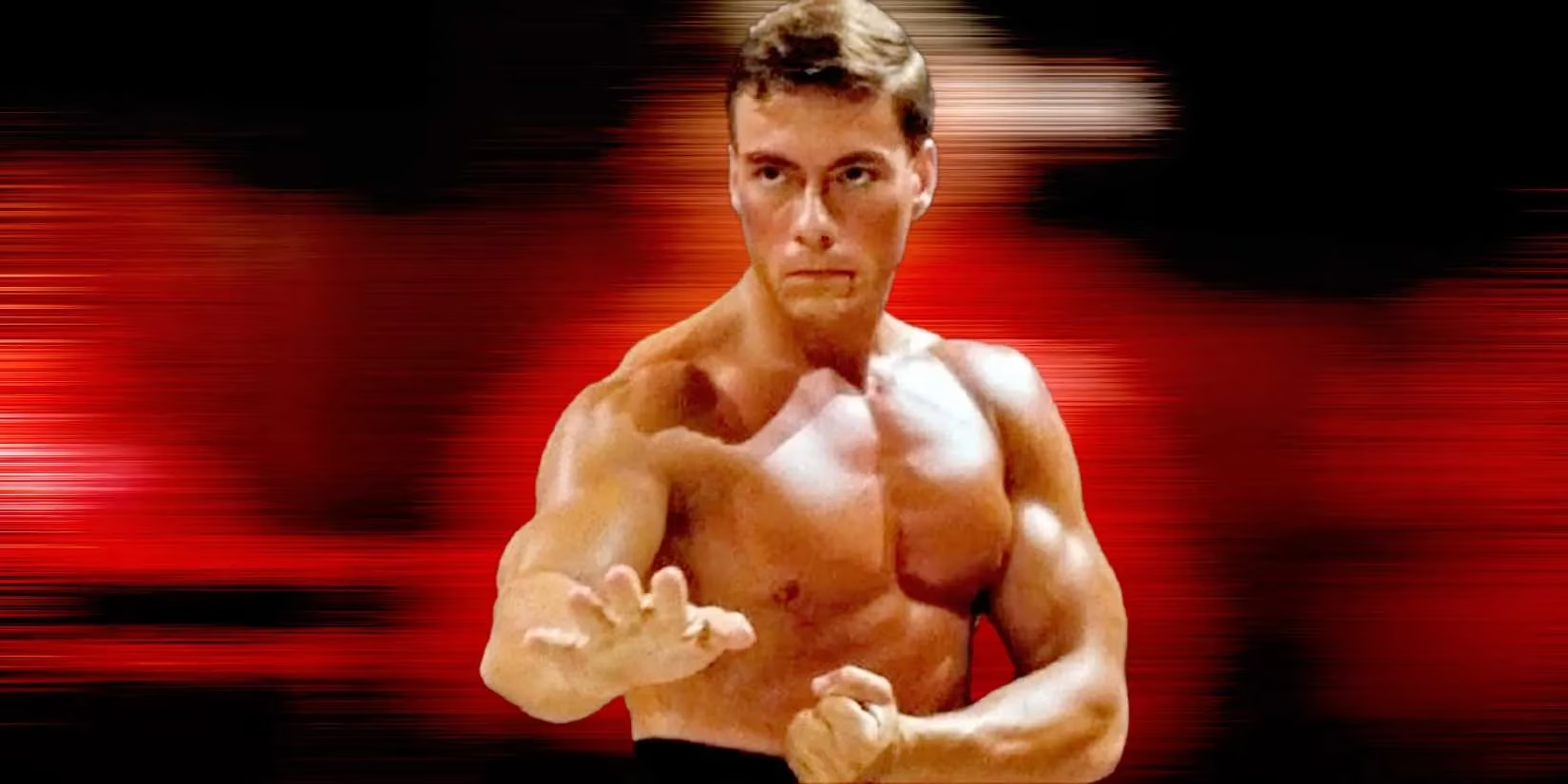
The 80s and 90s introduced a new wave of stars who specialized in distinct, often spectacular styles. I can still feel the impact of Jean-Claude Van Damme's cinematic debut. While he held a black belt in karate, it was his background in competitive kickboxing that defined his screen presence. His films, starting with Bloodsport, showcased a dynamic, athletic, and visually stunning form of stand-up fighting that emphasized high kicks and relentless offense. It was a style built for the movies—flashy, powerful, and instantly recognizable.
Around the same time, other artists were exploring less mainstream disciplines. Steven Seagal brought Aikido to mainstream action cinema. Watching his early films like Above the Law, I was struck by the difference. Aikido is not about meeting force with force; it's about redirection, using an opponent's energy against them with throws, joint locks, and pins. Seagal's portrayal, with his signature wrist locks and calm demeanor, made internal energy and control look devastatingly effective. It was a more cerebral, less flashy approach to cinematic combat.
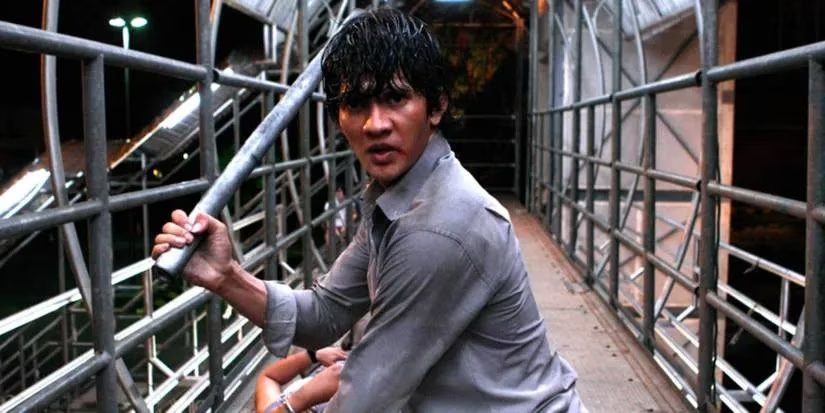
Then there are the specialists who introduced global audiences to entire cultural fighting systems. Iko Uwais and The Raid films were a revelation. Uwais, trained by his grandfather, a master of the Indonesian martial art Silat, presented a form of combat that felt raw, practical, and breathtakingly complex. Silat is a full-body fighting system incorporating strikes, grappling, throws, and weaponry, often appearing in close-quarters, chaotic scrambles. Uwais didn't just perform Silat; he embodied its relentless, close-range ferocity, making every hallway fight a masterclass in pressure and technique.
The new millennium has seen a fascinating evolution, blending traditional martial arts with the gritty realism of modern combat sports. Keanu Reeves's dedication to his role as John Wick is legendary. For the franchise, he trained extensively in Judo, among other disciplines like Brazilian Jiu-Jitsu and gun-fu. The judo techniques—the hip throws, the sweeps, the use of an opponent's gi (or suit jacket!)—gave Wick's fights a brutal, grounded efficiency. It was less about flashy spin kicks and more about using biomechanics and leverage to decisively end a confrontation, often against multiple attackers. This shift reflected a broader audience appreciation for mixed martial arts (MMA) realism.
Speaking of MMA, its arrival in mainstream action movies feels like a full-circle moment. Conor McGregor's transition from UFC champion to movie villain in the 2024 Road House is a perfect example. He didn't have to act like a fighter; he is one. His portrayal of Knox showcased the pragmatic, aggressive, and multifaceted style of modern MMA—a blend of wrestling, boxing, and submission grappling. It's a style born in the octagon, and seeing it translated to a cinematic brawl adds a layer of visceral authenticity that resonates with today's audiences.
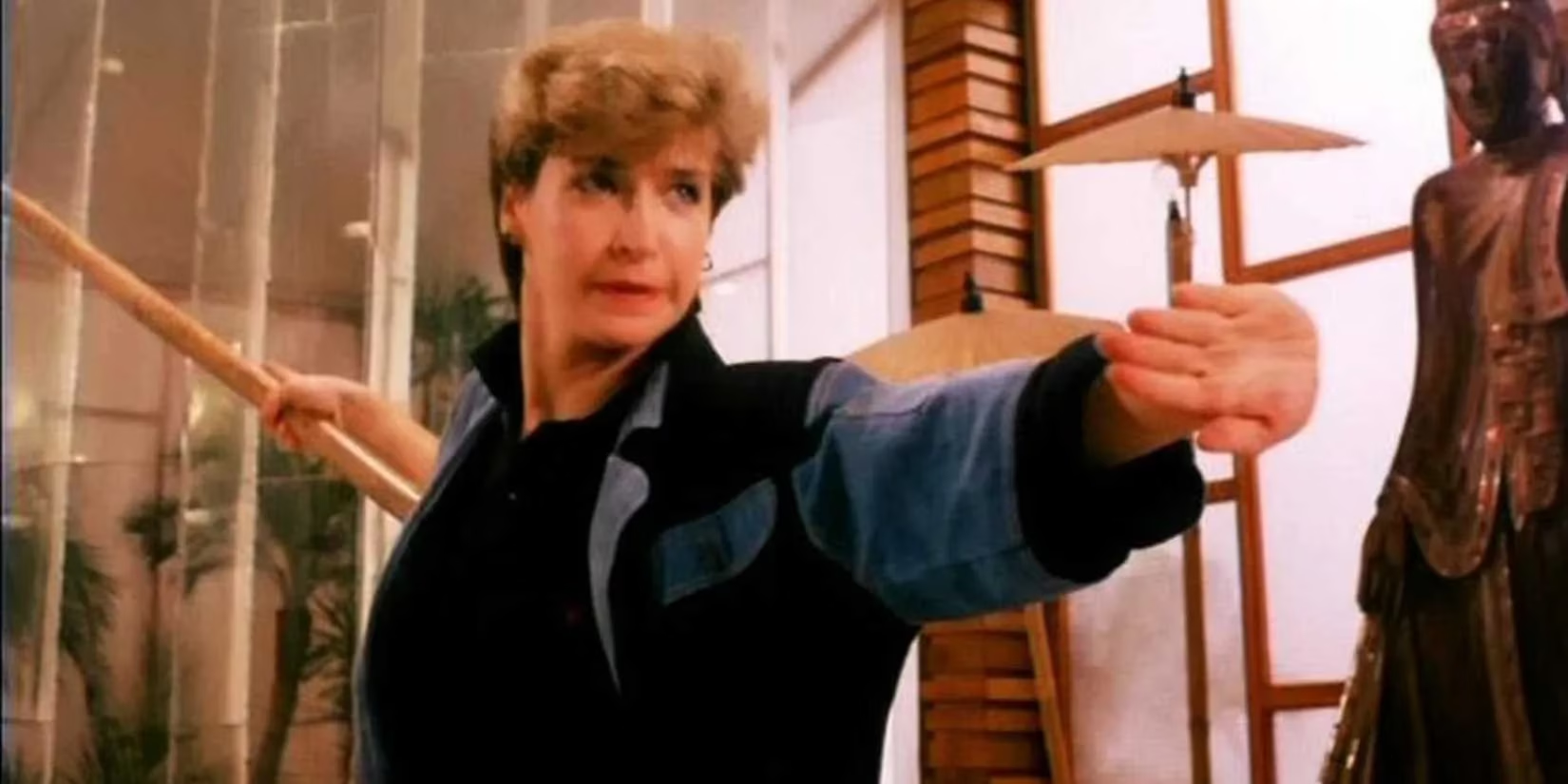
We must also celebrate the legendary women who carved their own paths. Angela Mao, "Lady Kung Fu," was a prodigy trained in Hapkido from childhood. Her films from the 1970s display a formidable and graceful mastery of a style that includes hand-to-hand combat, throws, and traditional weapons. Her skill was so profound she was often called the female Bruce Lee. Similarly, Cynthia Rothrock broke barriers with her incredible versatility, holding black belts in seven different styles including Tang Soo Do, Taekwondo, and Wu Shu. Her filmography is a testament to the depth and power of female martial artistry, proving the screen belongs to all who have mastered their craft.
And we cannot forget the artists who brought truly unique cultural arts to the forefront. Mark Dacascos's performance in Only the Strong remains, even now, the definitive Hollywood showcase for Capoeira. This Afro-Brazilian art, with its roots in resistance and its expression through dance, acrobatics, and music, is unlike any other fighting style on film. Dacascos's fluid, rhythmic movements brought a joyful, almost musical quality to the fight choreography, highlighting martial arts as a cultural expression as much as a combat system.
Finally, the foundation of it all for many fans: the classic kung fu of Hong Kong cinema. Gordon Liu is an icon, and his training in Hung Ga Kung Fu—a powerful, stable southern Chinese style—informed his most famous roles. Whether training in the rain in The 36th Chamber of Shaolin or battling the Crazy 88 in Kill Bill, his movements carried the weight of tradition. Hung Ga is characterized by strong stances and powerful, direct attacks, a style that speaks of endurance, discipline, and deep-rooted history.
| Martial Artist | Signature Style(s) | Key Film Example |
|---|---|---|
| Bruce Lee | Jeet Kune Do, Wing Chun | Enter the Dragon |
| Chuck Norris | Tang Soo Do, Chun Kuk Do | The Way of the Dragon |
| Jean-Claude Van Damme | Kickboxing, Karate | Bloodsport |
| Steven Seagal | Aikido | Above the Law |
| Iko Uwais | Pencak Silat | The Raid |
| Keanu Reeves | Judo, BJJ (for John Wick) | John Wick series |
| Conor McGregor | Mixed Martial Arts (MMA) | Road House (2024) |
| Angela Mao | Hapkido | The Tournament |
| Cynthia Rothrock | Tang Soo Do, Taekwondo (7 black belts) | Yes, Madam |
| Mark Dacascos | Capoeira, Wun Hop Kuen Do | Only the Strong |
| Gordon Liu | Hung Ga Kung Fu | The 36th Chamber of Shaolin |
Looking at the current landscape in 2026, the legacy is clear. The martial arts movie star is no longer defined by a single, pure style. The trend is toward synthesis—the Wick-style blend of martial arts with tactical weaponry, the MMA-informed realism, or the authentic representation of traditional systems like Silat. What unites all these legends, from Lee to Uwais, is a profound commitment to their craft. They didn't just learn choreography; they internalized a discipline. Their chosen art shaped their screen presence, their character's philosophy, and ultimately, the visceral thrill we feel watching them move. As a lifelong fan, I see this not as a collection of techniques, but as a living, evolving history of human movement and expression, painted in the most dynamic strokes imaginable on the canvas of cinema.