How Darth Vader's Lightsaber Style Evolved Into an Unstoppable Force
When you think of Darth Vader, you probably picture that iconic black helmet, the rhythmic breathing, and the crimson blade that's taken down Jedi masters and rebels alike. But what's often overlooked is the sheer brilliance behind his lightsaber technique—a style that didn't just pop out of a Sith manual overnight. The journey from Anakin Skywalker's aggressive Form V to Vader's hybrid killing machine is a wild tale of adaptation, rage, and a mechanical suit that forced a complete rethink of what it meant to be a duelist.
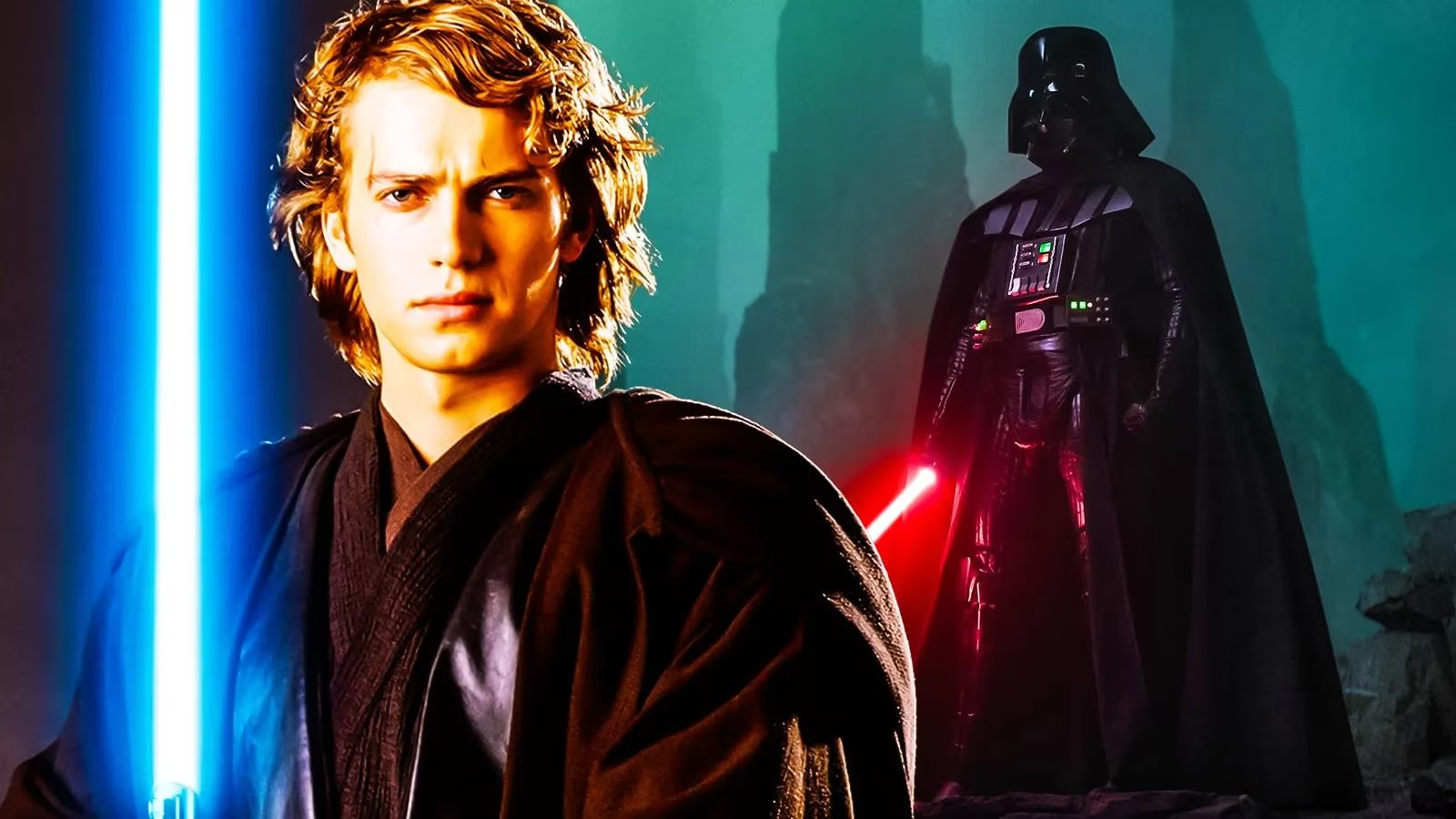
Back in the Clone Wars, Anakin was already a prodigious swordsman, and his go-to move was Form V, also known as Djem So. The whole philosophy of Form V was brutally simple: end the fight before it even gets started. Think of it like a heavyweight boxer who doesn't dance around—he just powers forward, throwing haymakers until the other guy's on the mat. For Anakin, whose natural talents were matched only by his volcanic temper, Djem So was like a match made in the Force. He'd create openings with overwhelming power, turning defense into offense, and letting his opponent flail while he dictated the rhythm. It was flashy, it was violent, and Obi-Wan Kenobi hated every second of it. The old master preferred the elegant Soresu, but Anakin? He wanted to feel the clash, the jarring impact of his blade against another's—and he was darn good at it.
Then came the fall. After pledging himself to Darth Sidious and getting the full Sith makeover, Anakin's inner darkness was no longer something to suppress—it was his fuel. As Darth Vader, he cranked up the Djem So to eleven. No more holding back for Jedi Council optics. On the hunt for surviving Jedi, Vader turned Form V into a storm of anger-driven strikes that could bulldoze nearly anyone in his path. The duel on Mustafar should have been his ultimate triumph, but fate had other plans.
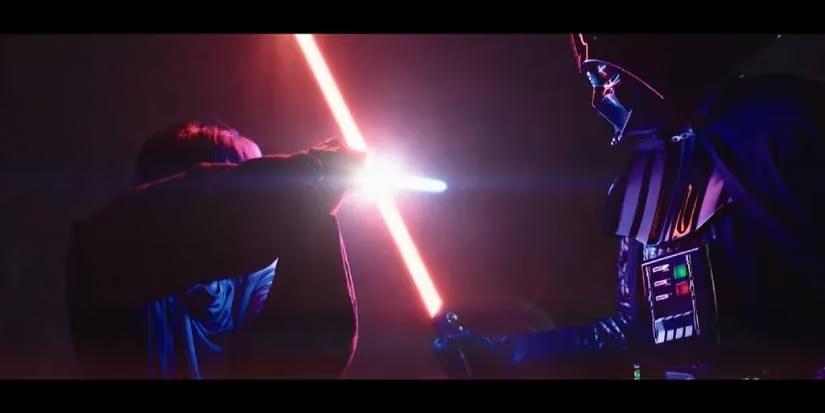
Post-Mustafar, Vader was a mess—literally. The life-support suit that kept him alive also turned him into a walking tank with the maneuverability of a rusty speeder. Gone were the acrobatic flips and blinding speed. His mechanical limbs gave him insane strength, sure, but they also limited his range of motion. Sticking solely to Form V would’ve been a death wish. Imagine relying only on aggression when you can barely pivot your upper body; one smart opponent, like his old pal Obi-Wan, could exploit that gaping weakness faster than you can say "I have the high ground." And in fact, Obi-Wan did exactly that in their rematch on the rocky moon in the Obi-Wan Kenobi series, landing a saber slash to Vader's back and even slicing open his mask. Ouch.
So, Vader hit the books—or rather, the holocrons. He started studying Form III: Soresu, the ultra-defensive style that Obi-Wan himself had mastered. Soresu was all about tight, efficient blocks and energy conservation. For a guy who had a chest panel that basically doubled as a "kill me here" sign, learning how to protect his life-support system was non-negotiable. Blending Soresu's resilience with his natural Djem So aggression gave Vader a layered defense that could shrug off blaster bolts and lightsaber strikes alike. He wasn’t just a battering ram anymore; he was a fortress that could counterattack with devastating precision.
But he didn't stop there. Vader also dove into Form II: Makashi, the elegant dueling style favored by Count Dooku. Makashi was designed for one-on-one combat, focusing on precise footwork and economical movements that conserved energy—perfect for a guy who couldn't exactly run a marathon in that suit. It emphasized keeping the blade pointed at the opponent in a way that made disarming attempts risky business. Vader’s adaptation of Makashi allowed him to dismantle dueling specialists without looking like a lumbering giant. His movements became almost eerily fluid, turning his physical limitations into a ruse; opponents would underestimate him, thinking a slow-moving giant can’t possibly fence with finesse, and then—bam—he'd skewer them with a fast, tight flourish.
And then there's the psychological game. Rumor has it Vader even explored Dun Möch, a Sith technique that's less about blade work and more about messing with your opponent's head. He was already a master at taunts and mind games (remember "I find your lack of faith disturbing"?). Combined with his unpredictable shifts between raw power and technical precision, he’d leave his enemies mentally and physically broken.
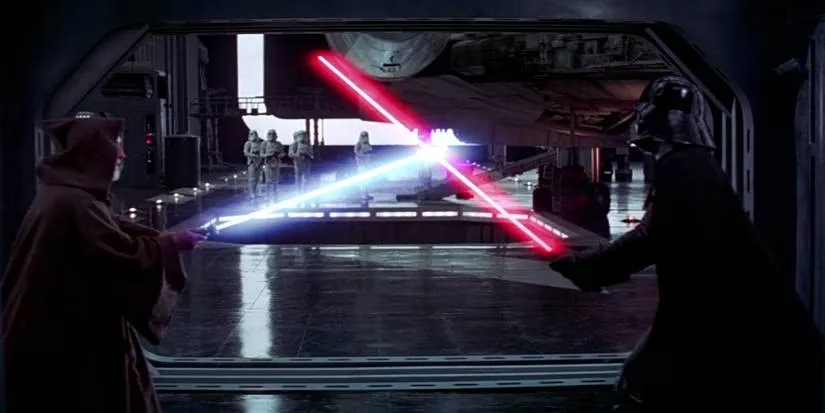
Fast forward to 2026, and fans still dissect every frame of Vader’s duels like they're sacred texts. Take the Death Star showdown in A New Hope. That slow, deliberate circling isn't just two old men taking it easy on their knees—it's Soresu and Makashi in perfect harmony, testing for openings while keeping that vital chest plate guarded. And when Vader finally unleashes a Form V power strike? It's game over. Even in his later years, after decades of refining the hybrid style, Vader was a walking contradiction: a cyborg who could be both a brutal force of nature and a methodical duelist. His ability to seamlessly switch between the relentless Djem So, the stonewall Soresu, and the artful Makashi made him nearly impossible to predict.
So yeah, Anakin Skywalker was scary talented, but Darth Vader? He was the nightmare that learned from his own weaknesses. That evolution didn't just make him dangerous—it made him the ultimate expression of Sith philosophy: strength through passion, power through adaptation, and victory through whatever means necessary. And let's be honest, if you saw that red blade ignite and the man didn’t even bother to use two hands half the time, you'd probably soil your brown pants too.