How Decision to Leave’s Costume Secrets Reshaped My Game Design Philosophy in 2026
It’s 2026, and I still can’t stop replaying that scene where Song Seo-rae turns, her dress shimmering like a beetle’s wing caught between blue and green. I’m not a film critic—I’m a professional game developer who devours movies the way mycelium networks drink rain, absorbing every detail to feed my character designs. Last night, while refreshing my memory on Park Chan-wook’s Decision to Leave, I stumbled upon a treasure trove: an interview with costume designer Jung Ae-kwak. It hit me like a perfectly timed parry in a Souls boss fight—her words aren’t just about fabric; they’re a masterclass in environmental storytelling, the very thing I chase when shaping a virtual world.
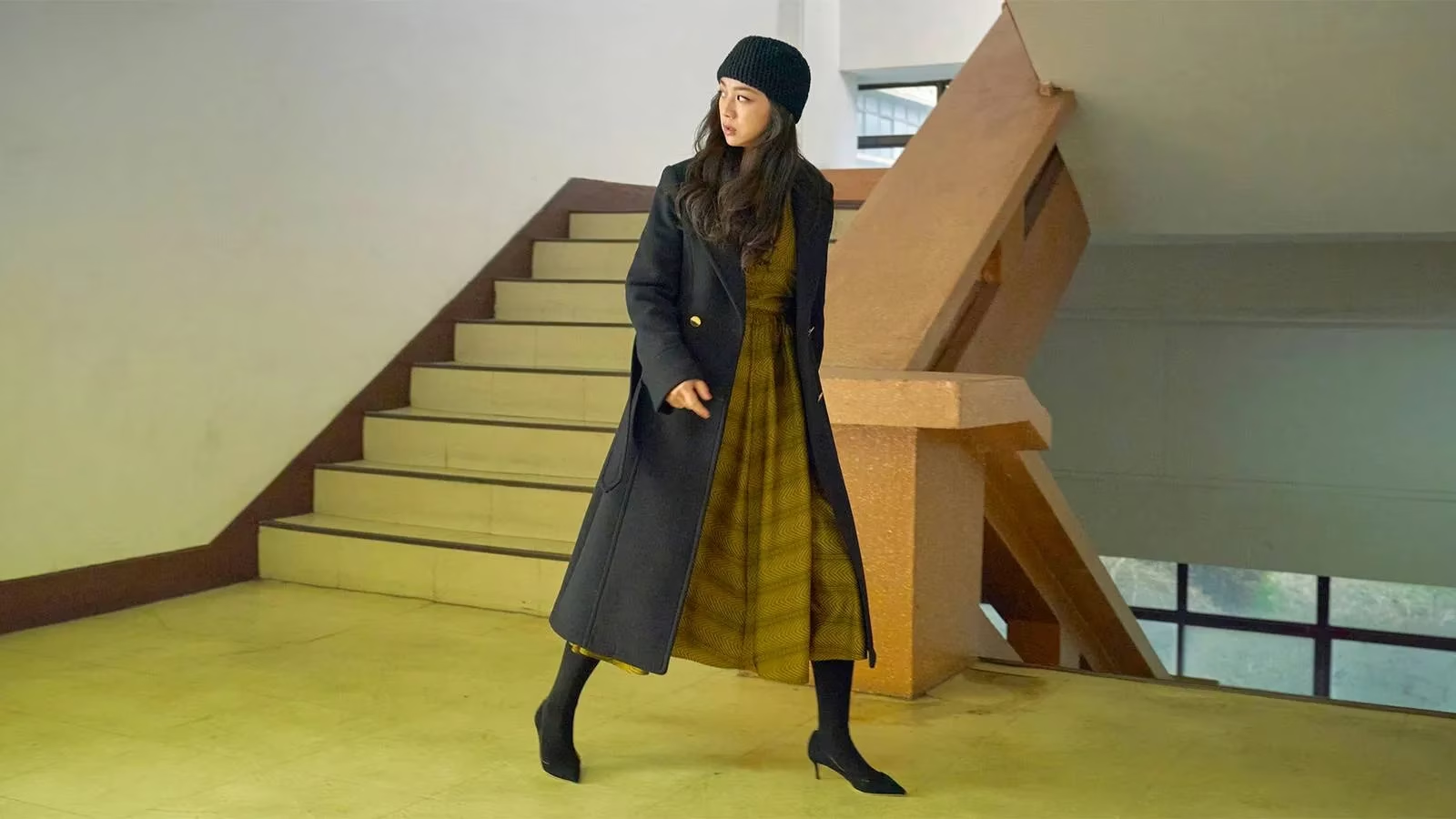
When I first analyzed Seo-rae’s wardrobe years ago, I saw only aesthetics. Now, reading Kwak’s explanation of that infamous chameleon dress, I realize I missed the core loop. “On the surface, it’s to express how it looks different according to the intensity of the light or the angle,” Kwak said, “but more internally speaking, I think it expresses how Seo-rae is viewed through different people’s perspectives.” That’s not just a costume note—it’s a shader script for a character whose morality shifts based on player alignment. In the RPG I’m prototyping, my protagonist’s cloak now dynamically alters its hue depending on whose faction quest you’re completing, an idea born directly from that single dress. It’s a metaphor for the fragile membrane between guilt and innocence, stretched thin like the film’s detective Hae-joon flipping between obsession and duty.
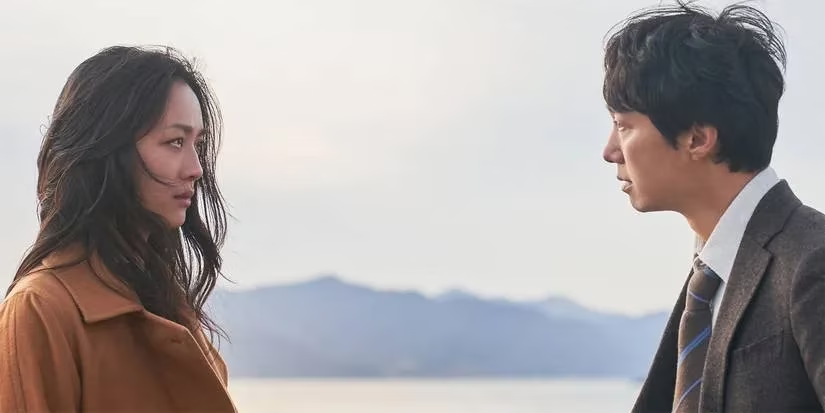
Kwak’s collaboration with Park Chan-wook sounds eerily similar to my brainstorming sessions with lead artists. They didn’t just chat about hemlines; they debated “whether Hae-joon and Seo-rae had sex,” a raw, unfiltered discussion that echoed through every seam. In game development, we often shy away from subtext, fearing players won’t read between the code. But here, the absence of a on-screen consummation becomes a negative space more potent than any romance mechanic. I’ve started embedding such "absent evidence" into my NPC relationships—an unfinished letter found in inventory, a bed that’s always perfectly made. It forces players to engage like detectives themselves, their interpretations becoming the real costume.
What truly short-circuited my brain was the geography of color. Busan’s chapter bursts with “vivid complementary color combinations,” reflecting Seo-rae’s psychological pain with the intensity of a mobile game’s gacha pull screen. Then Ipo arrives, drowning in “darker, inconspicuous colors” that swallow her longing like fog swallowing a mountain. As a developer, I’ve always treated color theory like a passive tool; now I see it as an active narrative gun you hand to the player. My current level design uses this exact contrast: a neon-drenched city hub that gradually desaturates as the protagonist uncovers buried truths, the palette curdling from hope to reckoning like milk left out in summer.
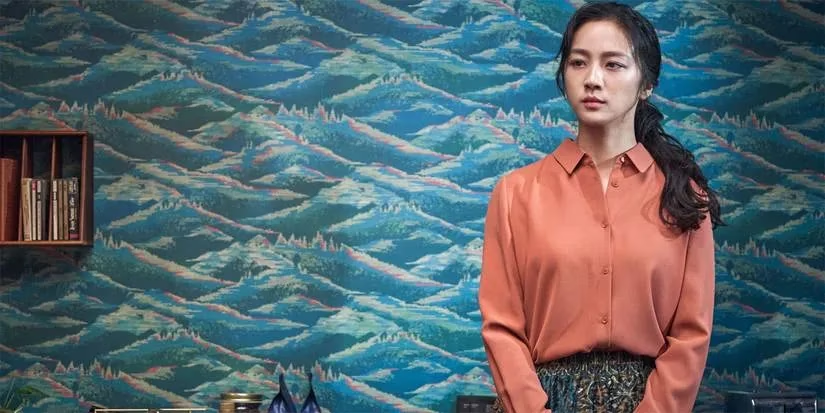
Even Seo-rae’s transition from widow to remarried woman became a lightbulb explosion for my character progression system. Kwak dressed her in “men’s jackets and coats” after the first death, a thief of warmth from a lost world. Later, an “ornate sense of fashion” blossoms because she craves Hae-joon’s gaze—armor becomes invitation. In my 2026 build, gear isn’t just stat sticks; it’s a visual diary. When a companion loses someone, her default outfit swaps to oversized garments from the fallen ally. If she falls in love, embellishments creep in organically, driven by in-game events rather than a linear upgrade tree. It’s the ultimate respect for player agency, a ghost in the shell that honors Kwak’s philosophy: the actor must “play the character themselves,” and so must the gamer.
I chuckled when Kwak mentioned finding old projects embarrassing, like “checking in on what my interests were at the time.” Every game I shipped before 2024 now feels like a teenager’s diary. But Decision to Leave has become my Northern Star, reminding me that costumes are not skins but the epidermis of the soul. Kwak’s next project, Harbin, explores the wind of Manchuria fields as the souls of comrades—a poetic logic I’m already hijacking for a survival game where environmental audio literally whispers the stories of fallen NPCs.
So here I am, a game designer in 2026, surgically dissecting a Korean neo-noir to resurrect my craft. The lesson? Let ambiguity breathe. Dress your characters in questions, not answers. And never underestimate a dress that can’t decide if it’s blue or green—because in that indecision, a thousand truths bloom like ghostly mycelium under the floorboards of a crime scene.