How Twisted Metal’s Costume Designer Brought the Game’s Mayhem to Life—One Dirty Clown Mask at a Time
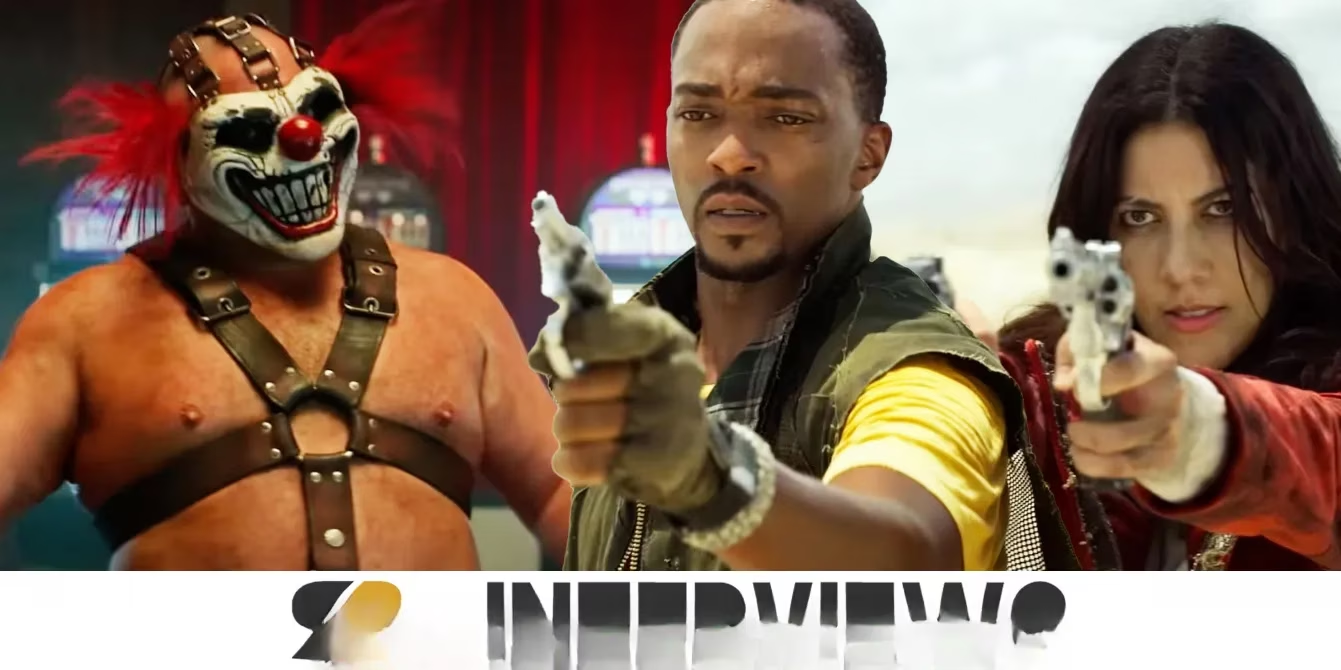
It’s 2026, and Twisted Metal has been burning rubber across our screens for a few years now, but let’s be real—the show’s heart and humor still hit like a flaming missile. The live-action adaptation of the classic PlayStation series didn’t just survive the leap from digital demolition derbies to streaming prestige; it made the wasteland feel alive, weird, and wonderfully human. At the center of that messy magic? A costume designer who understood that even in a post-apocalyptic world, you’ve got to dress the part. Liz Vastola, who previously stitched together Marvel’s street-level heroes on Daredevil and Jessica Jones, stepped into the driver’s seat to outfit a roster of maniacs, milkshake-loving murder clowns, and amnesiac delivery men. And oh boy, did she floor it.
Vastola, a self-described “elder millennial” gamer, grew up in the ’80s and ’90s, so she knew the pixelated glory of character design long before she had to make it work on human bodies. She hadn’t played Twisted Metal specifically—her family only had one gaming system, and it wasn’t the coolest one—but she’d always geeked out over how costumes function in digital spaces. When the chance to join the twisted circus came, she went on a full-blown research tear. “There are so many larger-than-life characters attached to the cars,” she once recalled, eyes lit up like a player spotting a health pickup. She dove headfirst into fan wikis, old artwork, and every iteration of the game’s bizarre cast, then sat down with showrunner Michael Jonathan Smith and the producers to pick which characters would stay visually loyal to their origins and which would drift into a new lane for the sake of the story.
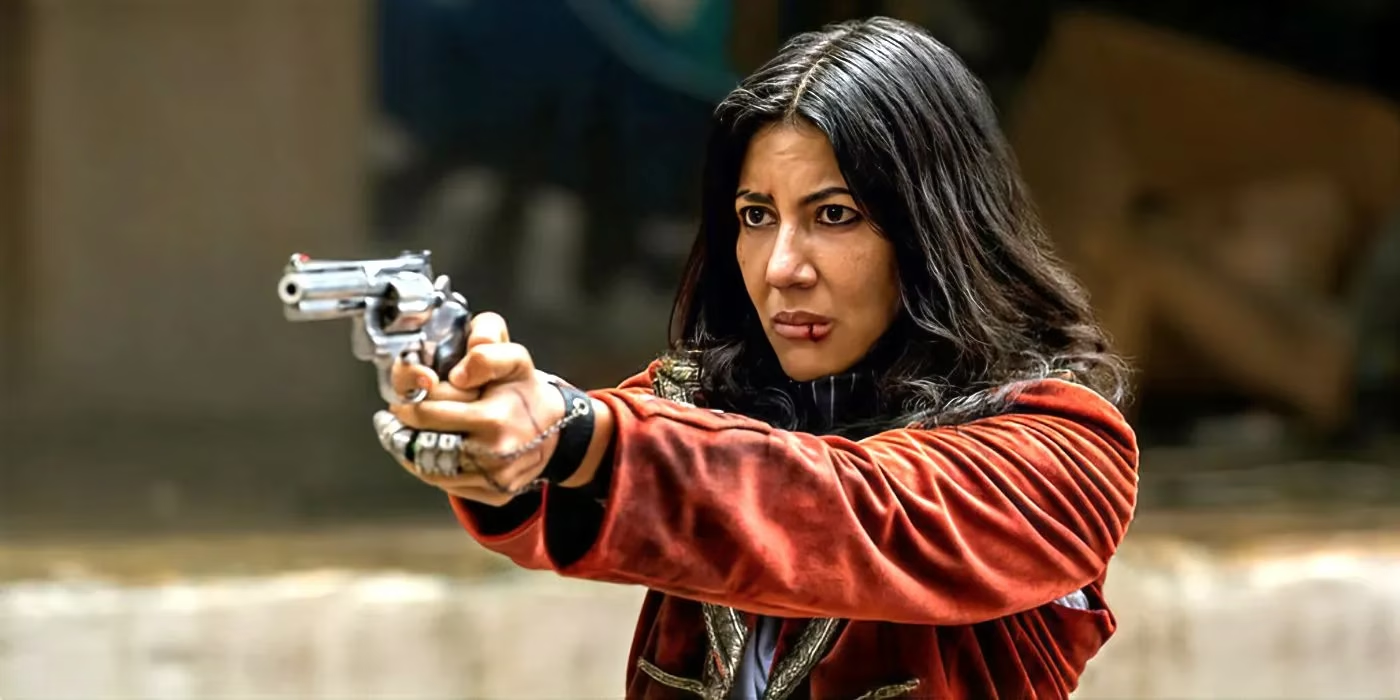
Adapting a video game character, she found, is a different beast from dragging a comic book icon into three dimensions. With superheroes born on a flat page, you’ve got to fill in the physics blanks—how does a cape really hang, where do the seams meet? But in games, especially with modern engines like Unreal, costumes are expected to drape on digital bodies with almost unsettling realism. Still, when those references hit the set, the most important thing wasn’t the environment—it was the actor inside the clothes. “In film and television, the human body is the starting line,” Vastola might say while adjusting a battered shoulder pad. The environment that shapes a game character’s wardrobe takes a backseat to the person who has to sweat, fight, and crack one-liners in it.
And then there’s Sweet Tooth. If you want to see costume-design-as-character-manifesto, look no further than that threadbare clown. The show’s version is, somehow, even more unhinged than his game counterpart—dirtier, mask all busted up, hair a tangle of nightmares. That wasn’t an accident. Vastola and the team wrestled with a deliciously tough problem: how does a self-serious, absolutely batshit killer occupy a believable casino lair for 20 years without ever doing laundry? “A big through line in the costume philosophy was, ‘Who has access to laundering, and who just doesn’t care?’” she’d note. The grime and the missing stitches on Sweet Tooth’s pants aren’t just aesthetic; they’re a diary. Every stain tells the story of a man who’d rather sharpen his machete than pick up some Tide Pods. The costume practically reeks of old grease and bad decisions, making the character feel less like a cartoon and more like someone you’d cross the street to avoid—unless you had a heavily armored car, of course.
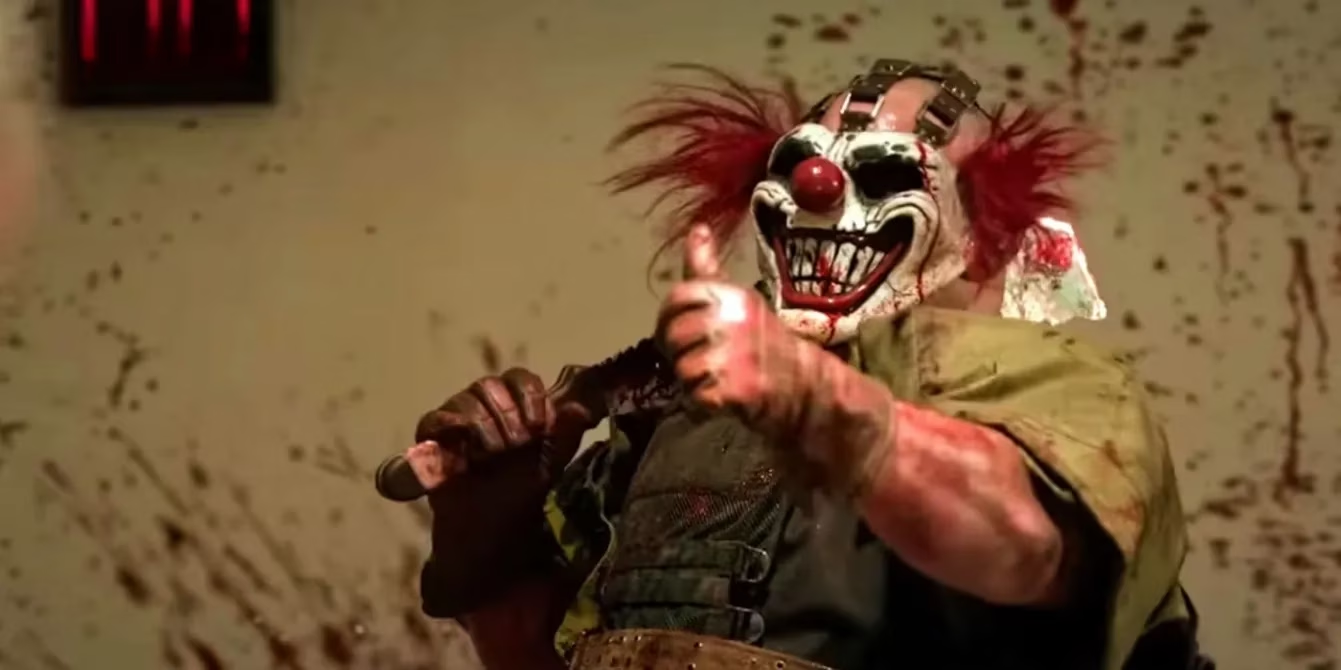
Talk about a labor of love—and multiplication. When you’ve got a series full of high-octane car chases and crunchy fight scenes, every costume needs a small army of duplicates. For Sweet Tooth, the challenge hit a whole new level. The man behind the mask, wrestling legend Samoa Joe, did many of his own stunts because, well, that’s just who he is. But even with pros on set, his shirtless, exposed physique meant every inch of skin mattered for continuity. Hiding a stunt double became a puzzle that would make a mechanic weep. Then throw in driving doubles—multiple units filming simultaneously, each needing head-to-toe looks for the actors behind the wheel. The costume department churned out copies so fast you’d think they had a cloning machine parked next to the craft services table. “The driving double of it all was definitely a challenge to figure out,” Vastola might admit with a tired grin, “but hey, that’s showbiz in a world without seatbelt laws.”
Striking a visual tone was another high-wire act. Early on, the creative team laid down a design mantra: this is not a Mad Max beige world. The wasteland was going to be bright, loud, and popping—like a video game brought to life, just as it should be for a property that soaks itself in explosions and dark humor. But you can’t just toss a bunch of neon rags at extras and call it a day. Everything had to feel grounded in a simple, aching question: where are these people getting their clothes? There are no tailoring shops in the apocalypse. Some survivors might be crafty, jerry-rigging shoulder pads from old tires; others just grab what they can and call it a vibe. That tension gave birth to looks that telegraph personality instantly. Bloody Mary, for instance, took her game lore as a jilted bridesmaid and twisted it into a sort of deranged milkwoman uniform that’s both feminine and intimidating—a walking warning sign. She, like every nomad, uses her outfit to shout “This is who I am, and you should probably run” before she even opens her mouth.
Dollface was another slow-cooked triumph. The showrunners knew they wanted to use the mask—that porcelain, emotionless icon—but they didn’t want to mimic the game exactly. Vastola and the team chewed on designs for a while, preserving the eerie essence while giving it a texture that could exist in worn reality. The result, when it finally appears, feels like a sigh of relief and a shiver down the spine all at once. For a potential second season (which, by 2026, we might already be obsessing over), Vastola once daydreamed about diving into Calypso’s suited, tailored menace—something crisp and dangerous to cut through the desert dust. And Axel? Everyone’s dying to see how you turn a man strapped between two giant wheels into a tangible, gripping presence. If anyone can do it without making it look like a cosplay accident, it’s her.
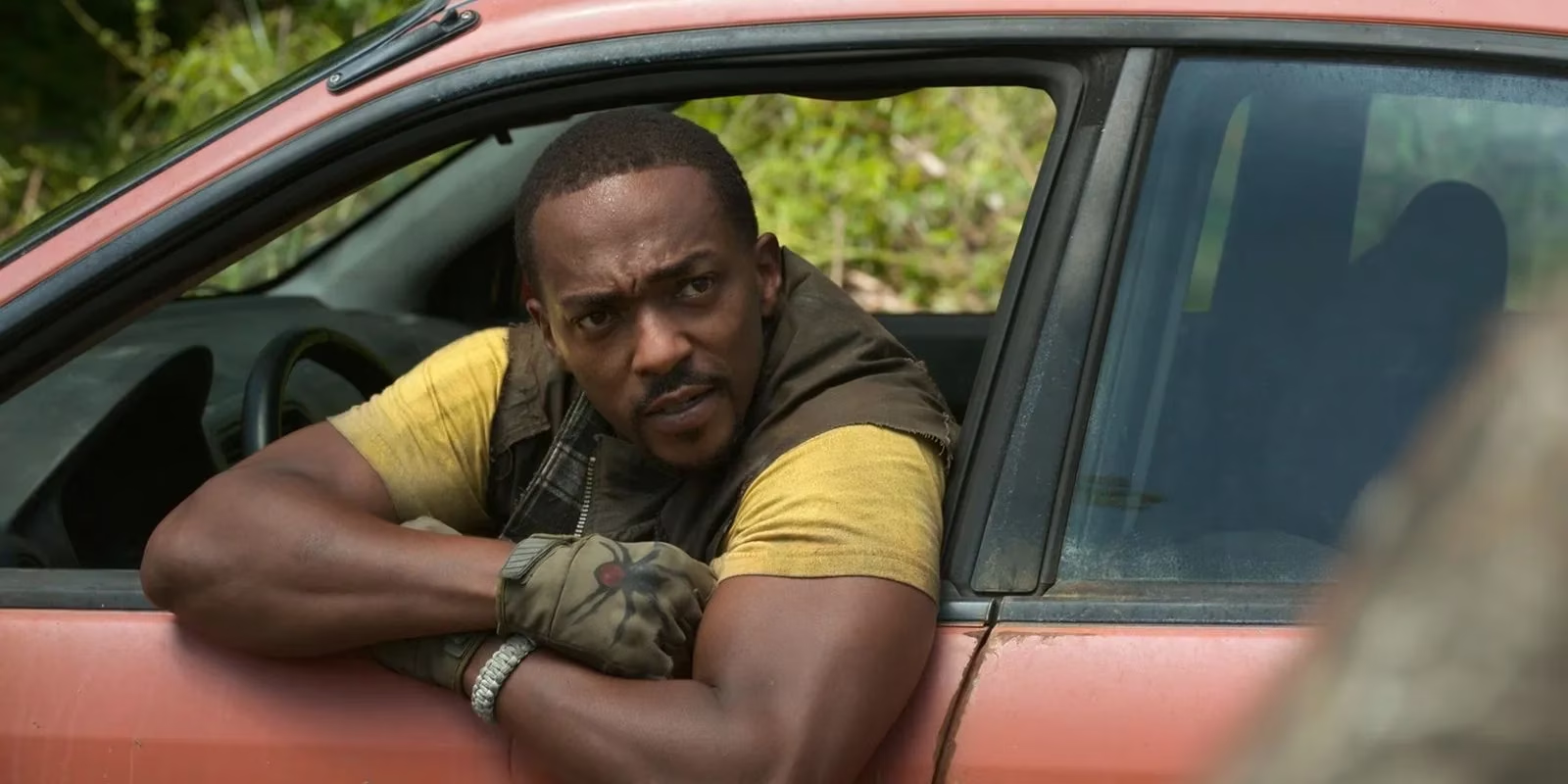
The heart of the series, though, beats inside John Doe’s well-worn jacket. A fast-talking outsider with a memory wiped cleaner than a blackboard, he accepts a mission to deliver a mysterious package across the perilous divide. It’s a story that could easily drown in its own chaos, but the costumes—like the show itself—keep it tethered to something real. Every frayed hem and sun-bleached shirt on Doe whispers of hope and heartbreak. Liz Vastola’s work proves that even in a world gone mad, the clothes don’t just make the man; they make the monster, the hero, and everything in between.