Insidious: The Red Door Costume Designer Dajia Milan on Crafting Fear and Fashion
In 2026, the legacy of the Insidious franchise continues to captivate audiences, with its fifth installment, Insidious: The Red Door, standing as a pivotal return to the Lambert family's terrifying saga. Directed by and starring Patrick Wilson, the film bridges a decade-long gap, following a now-amnesiac Dalton Lambert to college as he and his father, Josh, are forced to confront a resurgent demonic presence. Behind the scenes, a crucial element in stitching together the narrative's past and present was the work of costume designer Dajia Milan. In an exclusive discussion, Milan detailed her journey from lifelong fan to key creative force, revealing how wardrobe became a silent narrator for trauma, memory, and identity within the horror framework.
For Milan, a seasoned professional with credits in contemporary and period pieces, The Red Door marked her inaugural foray into the horror genre. "It was so exciting for me to be able to do this project of all things," she shared. "To step foot into horror—it was a totally separate world and a completely different mindset." This new challenge required a delicate balance: honoring the established visual language of the franchise while forging a fresh path for characters a decade older. Milan approached the Lambert family's evolution with a focus on subtle, everyday storytelling. "Whatever we put on tells a bit of story about what we're going through at the moment," she explained, translating this philosophy into the characters' apparel to visually communicate the unresolved tensions and hidden histories between the films.
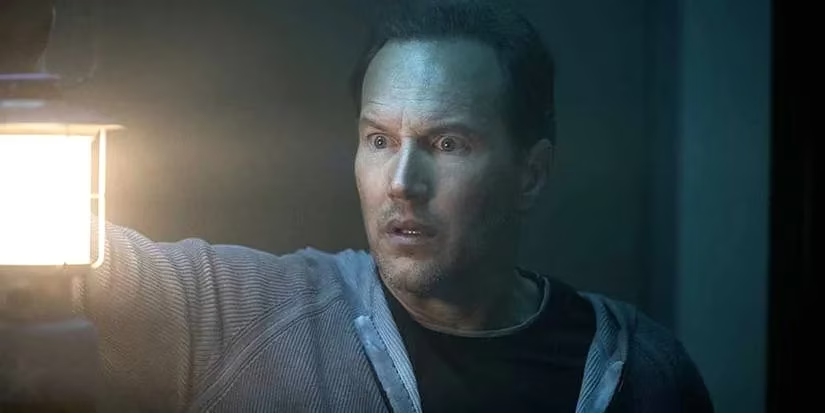
A significant aspect of her design process involved creating visual echoes between father and son. Dalton's incorporation of plaid shirts, a staple of Josh's wardrobe in earlier films, served as a subconscious sartorial link. "I wanted to tie them into each other, with them not knowing that they kind of influenced each other's style," Milan noted, using fabric to symbolize their unspoken, psychic connection. This thoughtful detailing helped fill the narrative void left by Dalton's memory loss, suggesting inherited traits and shared burdens without explicit dialogue.
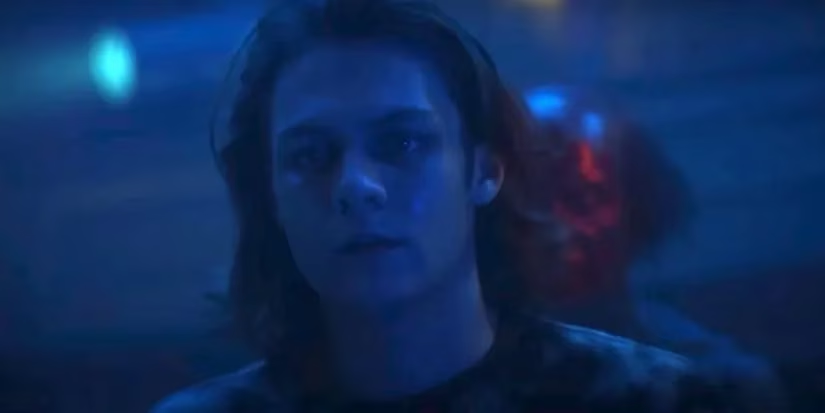
Perhaps the most vibrant creation was the wardrobe for Sinclair Daniel's character, Chris, Dalton's new college friend. Milan described Chris as a deliberate counterpoint to Dalton's brooding, artistically dark aura. "She really needed to be the opposite of Dalton," Milan stated, drawing inspiration from New York City's eclectic St. Mark's Place. Chris's style became a manifesto of individuality: bursting with color, pattern, and texture. Milan crafted a backstory for the character that informed a funky, eclectic wardrobe meant to showcase a person completely comfortable in her own skin. "She's going to be who she is, accept who she is, and present that to the world," the designer affirmed.
This vision culminated in one standout ensemble, which Milan cites as her personal favorite: Chris's outfit for the frat party. It was a bold mix of a Dries Van Noten abstract-painted shirt, Paco Rabanne polka-dot shorts, Doc Martens, and socks with a provocative message. "It was just so fun to do," Milan recalled, highlighting how the outfit's rebellious spirit perfectly matched the scene where Chris confronts another character. The contrast between Chris and Dalton's everyday wear and the party's pajama theme visually cemented their status as outsiders, enhancing the scene's tension and humor.
| Character | Design Philosophy | Key Style Elements |
|---|---|---|
| Dalton Lambert | Subconscious connection to past; dark, artistic trauma. | Plaid shirts, muted tones, layered looks reflecting internal struggle. |
| Josh Lambert | Weathered maturity; carrying familial guilt. | Practical, grounded clothing; evolution of his earlier style. |
| Chris | Energetic counterpoint; unapologetic individuality. | Bold colors, mixed patterns, eclectic accessories, vintage finds. |
| The Professor | Sinister, avant-garde academia. | Dark, architectural silhouettes inspired by figures like Michèle Lamy. |
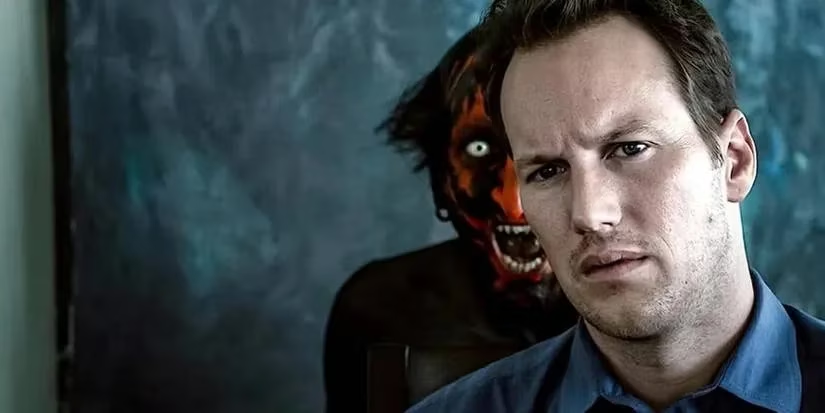
Beyond the principal characters, Milan played a vital role in amplifying the horror itself. Director Patrick Wilson was committed to practical effects, a philosophy that extended to the demonic entities inhabiting The Further. "It was all practical. That was a big thing for Patrick," Milan revealed. She contributed specific ideas for the ghastly costumes, ensuring they were tangible and terrifying on set. This hands-on approach underscored that costume design remains a foundational pillar of storytelling, whether for the living or the supernatural. "It's all a part of the storytelling," she emphasized, appreciating the opportunity to help build the film's frightening iconography from the ground up.
Reflecting on the project, Milan expressed immense gratitude for the experience and a strong desire to return to the franchise. "Absolutely. It was a fun project... If they decided to bring us all back, I would be first in line to come back." She also recounted eerie on-set occurrences while filming at a reputedly haunted location, adding another layer of authentic spookiness to the production. Looking ahead, Milan keeps her ambitions broad, refusing to be limited by genre. "I just love storytelling as a whole," she concluded, though her work on Insidious: The Red Door has undoubtedly left a lasting mark, proving that in a world of spectral threats, the clothes on a character's back can be just as expressive and haunting as the demons that pursue them.