Marvel's Phase 1 Costumes: A Gamer's Ode to Iconic Armor That Shaped My Universe
Let me tell you something, as a professional gamer who has spent more hours in virtual worlds than sleeping, I've seen my fair share of digital armor. But nothing—and I mean nothing—has ever hit me with the raw, unadulterated awe of Marvel's Phase 1 costumes back in the day. While other franchises were dressing their heroes in boring, monochrome tactical gear as if they were ashamed of the source material, Marvel Studios charged onto the scene like a bull in a china shop, screaming, "WEAR THE COLORS! EMBRACE THE SPANDEX!" From the very first frame of Iron Man in 2008 to the earth-shattering finale of The Avengers, these weren't just outfits; they were declarations of war against cinematic blandness. For a gamer, seeing these designs was like finding a legendary loot drop on the first quest—it set a standard that made every other cinematic universe look like they were playing on the easiest difficulty setting.
The Foundational Armor: Building Blocks of a Universe
Every great game needs a solid tutorial level, and for the MCU, that was Captain America's USO Tour Suit. I remember watching Steve Rogers strut on stage in that bright blue number, feeling secondhand embarrassment so intense it could power a small city. But then, the genius move: slap a leather jacket and some goggles on it, and suddenly, it transformed. That costume was like finding a common sword in a dungeon and, through sheer creativity, turning it into a +5 Weapon of Plot Advancement. It was authentically old-school, capturing the essence of a man out of time before he even knew he was one. Most of Cap's looks in The First Avenger were iconic, especially that padded suit with the red straps—it felt like practical, wearable history, not just a cosplay.
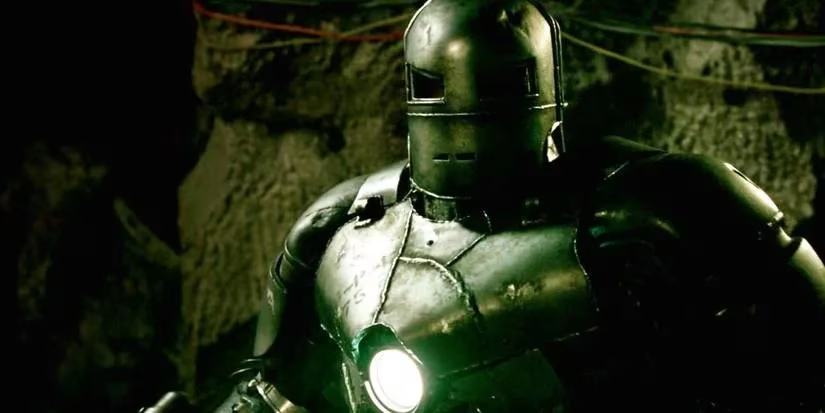
And then, the granddaddy of them all: The Iron Man Mark I. This wasn't just a suit of armor; it was a middle finger to physics, built in a cave with a box of scraps! As a gamer, I've crafted countless items, but Tony Stark's first suit was the ultimate player-crafted gear. It was clunky, loud, and welded together with pure desperation, yet it perfectly recreated the comic book origin. Seeing it on screen was like watching the very first pixelated sprite evolve into a high-polygon model right before your eyes. It was the foundational code for everything that came after.
The Supporting Cast: Armor That Stole the Show
The MCU's Phase 1 was masterful at teasing future content, much like a game hinting at DLC. Rhodey's journey to becoming War Machine was teased from the moment he eyed Tony's unfinished suit. When he finally suited up in Iron Man 2, it was a glorious payoff. The extra bulk, the shoulder-mounted minigun, the angry red eyes—it was like taking the standard Iron Man chassis and modding it for pure, unadulterated PvP. It looked intimidatingly different while still being recognizably Stark tech. Sure, the Hammer Industries tech glitched more than a day-one game patch, but the look was flawless, a bright spot in a film that sometimes felt like a side quest gone wrong.
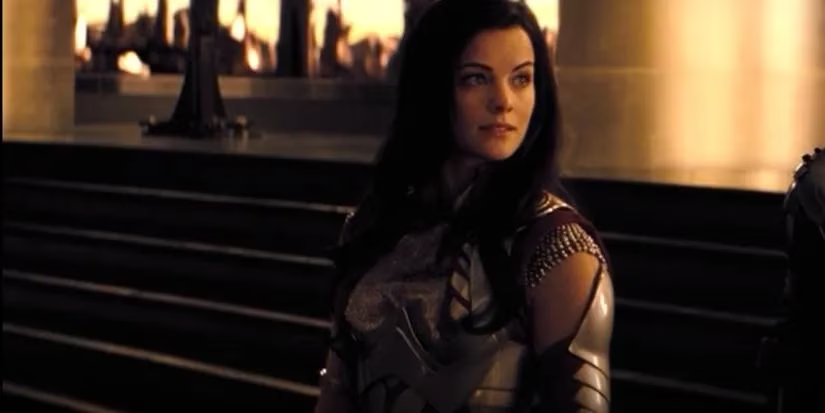
Speaking of flawless, let's pour one out for Lady Sif's battle armor in Thor. In the comics, she was often dressed for a beach party, not a battlefield. The movie gave her proper, functional plate armor with strategic gaps for mobility—pauldrons and chest plates that were visually stunning yet practical. It, along with the other Asgardian garb, felt believably alien, like armor from a high-fantasy RPG's premium faction. It respected the character as a warrior, which, in 2026, we recognize as the bare minimum, but back then, it was a revolutionary act.
Innovation & Simplicity: The Best of Both Worlds
Tony Stark was the king of situational gear. The suitcase armor (Mark V) from Iron Man 2 wasn't just a costume; it was a gameplay mechanic made flesh. Watching that silver-spined suitcase unfold around Tony on the Monaco racetrack was like witnessing a perfect combo move in a fighting game—each piece snapping into place with satisfying, tactile precision. It was innovative design that served the story, proving that even a film with narrative bugs could have perfect aesthetic programming.
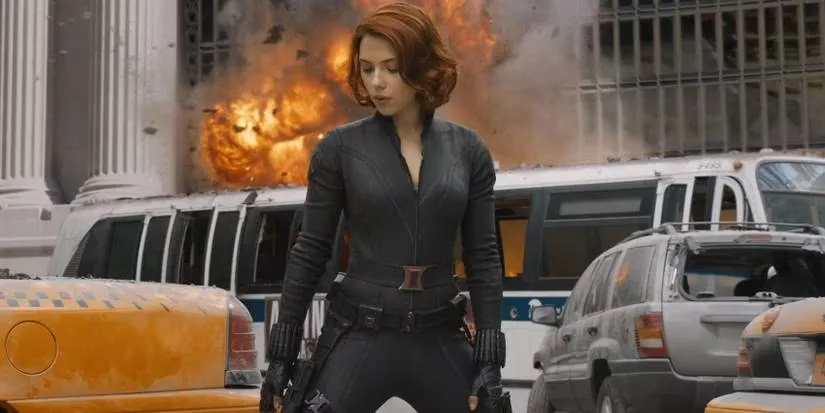
On the opposite end of the spectrum was Black Widow's suit in The Avengers. Sometimes, the most powerful build is the minimalist one. Her design was a masterclass in subtlety. The textured line work on the black suit added depth, preventing it from looking like a simple bodysuit. The wrist accessories and that iconic red belt with the hourglass symbol were the perfect "equipment loadout" touches. It was sleek, deadly, and perfectly translated from page to screen—a stealth character design done right.
The Gods & The Spymaster: Defining Visual Identity
Then there was Thor's Asgardian ensemble in The Avengers. On a team of scientists and soldiers, he was the literal god from another realm. His costume was big, bold, and unapologetically regal—a walking, talking visual effect. It made him look like a final boss who had wandered into a beginner zone, which was exactly the point. The costume walked the razor-thin line between majestic and slightly silly, making it cool enough to admire but also the perfect target for Tony Stark's sarcasm. It was a character-defining visual, as essential as his hammer.
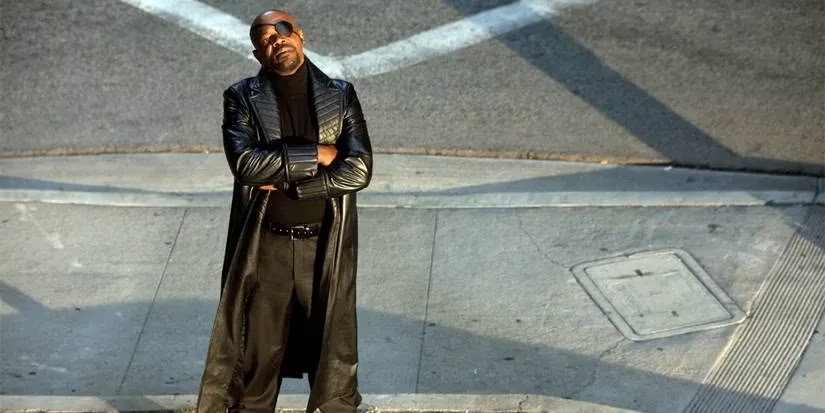
And we cannot forget the man who needed no armor: Nick Fury. His signature look—the long black trench coat and eye patch—was the ultimate "legendary skin." It conveyed more authority and style than a hundred sets of powered armor. He looked like the ultimate NPC quest-giver, the one who holds the keys to the entire endgame. The fact that the Ultimate comics version was modeled after Samuel L. Jackson meant the costume was tailor-made for him; it fit like a glove, or in gaming terms, it had perfect stat synergy with the actor.
The Pinnacle: When the Team Assembles
The crowning achievements, however, were the final suits our heroes wore when they first assembled. Captain America's Avengers suit was a revelation. After years of muted colors in superhero films, seeing Cap in that bright, vibrant, comic-accurate suit in the middle of New York was like the first time you enable full color after playing a game in monochrome. It was a statement: Marvel was not embarrassed by its roots. Avengers: Endgame later poked fun at it, but that initial reveal was pure, undiluted joy.
And finally, Iron Man's Mark VII. Of all the red and gold suits in Phase 1, this was the definitive version. It took the classic design, added sharper angles, more gold highlights on the chest and legs, and a bit of welcome bulk. In a world where later suits became almost too sleek and CGI-perfect, the Mark VII had weight and presence. It felt real. It was the perfectly optimized loadout for the final boss fight of Phase 1.
Looking back from 2026, these Phase 1 costumes are like the classic, genre-defining games we still revisit. They were bold, confident, and unafraid to be exactly what they were supposed to be. They built a visual language that a decade and a half of films have followed, a legacy as solid and enduring as Vibranium. For a gamer, they're the equivalent of finding that first perfect set of epic gear—you never forget the feeling, and nothing else ever quite measures up.