Marvel’s Costume Journey: Over-Designed Origins to Phase 5’s Comic-Accurate Shift
When the Marvel Cinematic Universe first exploded onto screens in 2008 with Iron Man, the mission was clear: make superheroes believable for a modern audience. Part of that strategy involved stripping away the exaggerated spandex and capes of the comic books and replacing them with tactical, armored, and often heavily redesigned suits. For years, this approach worked. Robert Downey Jr.’s sleek metal armor set a new standard, and soon Captain America traded his bright blue scales for a military-grade ensemble. However, what began as a necessity to ground these characters eventually morphed into a persistent habit of over-designing. Now, as the franchise rockets through Phase 5 and eyes even more cosmic adventures, fans and critics alike are asking whether Marvel Studios has finally learned to trust the source material—especially after the divisive debut of Adam Warlock’s live-action look.
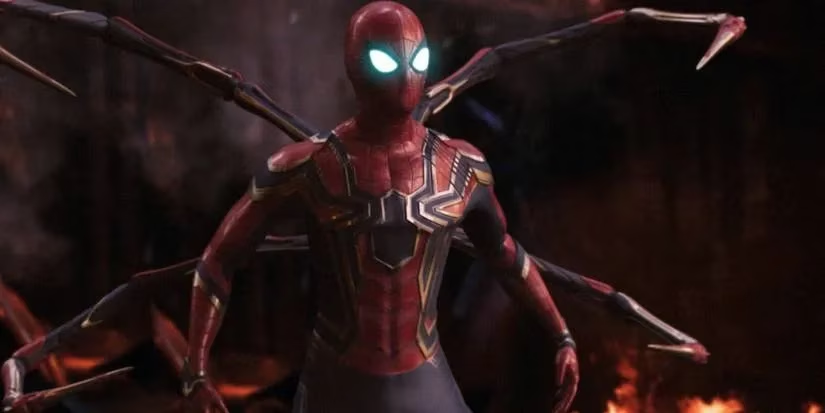
The early MCU phases were marked by what many refer to as the “tactical” aesthetic. Thor’s flowing cape became a rare splash of fantasy, while Hawkeye and Black Widow wore outfits that could pass for real-world infiltration gear. Even Spider-Man, when he finally joined the MCU, received a high-tech Stark suit loaded with AI and hundreds of web combinations. The Iron Spider armor, a metallic, spider-legged marvel, was a prime example of studios prioritizing flashy realism over the simple red-and-blue fabric that defined the character for decades. This trend peaked in Avengers: Infinity War and Endgame, where heroes sported nano-tech helmets and uniform-like color muting. Fans grew comfortable with these changes, but a quiet longing for vibrant, unapologetically comic-accurate suits never disappeared.
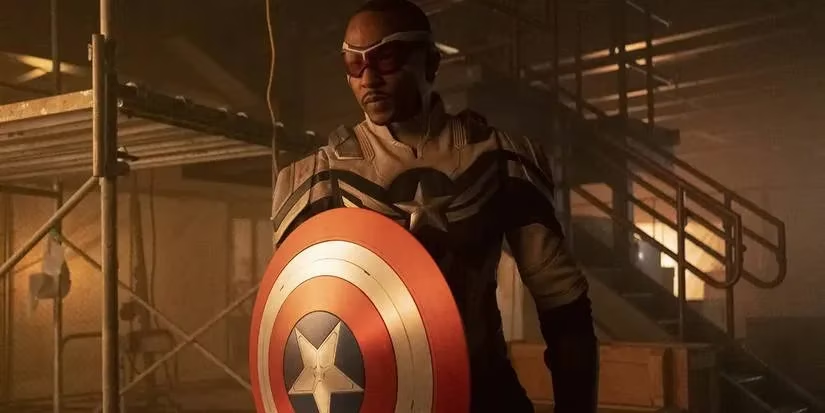
That longing began to be answered in Phase 4. WandaVision gave Wanda her classic headpiece, albeit with a modern twist. The Falcon and the Winter Soldier concluded with Sam Wilson finally donning a red, white, and blue suit pulled straight from the panels—complete with giant wings and the emblematic white shoulders. Ms. Marvel’s Ms. Marvel costume remained joyously faithful, capturing the makeshift, colorful nature of her comics counterpart. And in the closing moments of Spider-Man: No Way Home, Peter Parker swung into action wearing a hand-stitched classic blue-and-red outfit free of any Stark enhancements. Each of these moments felt like a declaration: Marvel was ready to stop apologizing for its source material.
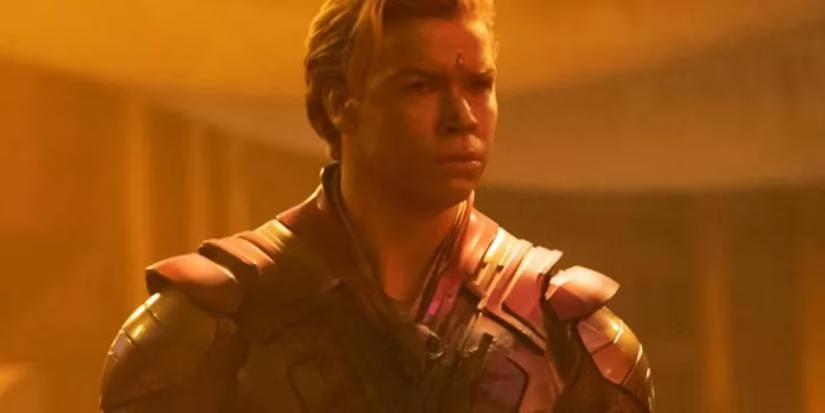
Yet, the shift hasn’t been universal. As Phase 5 kicked off with Ant-Man and the Wasp: Quantumania and Guardians of the Galaxy Vol. 3, a glaring misstep surfaced in the form of Adam Warlock. Will Poulter’s portrayal of the cosmic being had been teased for years, and expectations were sky-high. In the comics, Adam Warlock is instantly recognizable by his simple, bold costume: a golden yellow bodysuit with a red high collar, red boots and gloves, and a distinctive skull-shaped insignia. It’s a design that screams otherworldly power without unnecessary flourishes. What Marvel Studios delivered, however, was a muted, dark ensemble that blended into the franchise’s generic aesthetic. The over-engineered chest piece, the dulled color palette, and the lack of the iconic collar made the character look like just another alien soldier rather than the genetically engineered messiah figure fans know.
The reaction was swift. Social media buzzed with comparisons, and many pointed out that the costume robbed Adam of his visual uniqueness. In a galaxy full of Ravagers, Kree, and Nova Corps, a striking red-and-yellow suit would have set him apart immediately. Instead, the MCU’s version risked getting lost in the crowd—an ironic fate for a being meant to be the pinnacle of evolution. It’s a particularly frustrating mistake because director James Gunn had previously shown a flair for colorful comic accuracy with the Guardians’ own retro-inspired looks. This suggests studio-level decisions may still be pushing for excessive redesigns, even when filmmakers are eager to honor the comics.
Despite the Warlock controversy, other Phase 5 entries have proven that a course correction is well underway. Daredevil’s return in She-Hulk: Attorney at Law featured his classic golden-yellow and later deep red horns-accurate outfits, a welcome nod after the armored Netflix years. The Ant-Man family suit designs in Quantumania playfully embraced comic-like helmets without overcomplicating them. And early set photos from Blade and Ironheart suggest a commitment to translating iconic looks without drowning them in tactical textures. The lesson seems to be taking hold: sometimes the best way to adapt a superhero costume is to simply believe it works.
-
Comic-accurate successes in Phase 4 & 5:
-
Sam Wilson’s Captain America
-
Ms. Marvel’s homemade suit
-
Spider-Man’s final swing outfit
-
Daredevil’s yellow and red suits
-
Over-designed stubbornness:
-
Adam Warlock (muted colors, lost collar)
-
Early Iron Spider (excessive nano-tech shine)
-
Black Widow’s tactical uniform evolution (gradually losing personality)
Marvel Studios is now juggling an unprecedented number of characters, and costume design has become a complex balancing act. The production pipeline must coordinate with visual effects, action choreography, and actor comfort. However, that’s no excuse for discarding visual legacies. The most memorable MCU moments often come from suits that feel inseparable from the hero wearing them—Black Panther’s ceremonial armor, Doctor Strange’s Cloak of Levitation, and yes, Wanda’s newly comic-inspired headdress. Even subtle adjustments, like adding the Winged Avengers logo to Sam Wilson’s chest, proved that small details carry enormous emotional weight.
Looking ahead, the multiverse saga provides a perfect narrative justification for even bolder designs. With variants, alternate timelines, and cosmic entities flooding the screen, Marvel can afford to go wild with color and creativity. Adam Warlock, should he survive future storylines, is primed for a costume evolution. His comic history was itself a journey through death and rebirth; a visual transformation in Secret Wars or a cosmic crossover could easily restore his classic look. Many fans are already calling for a post-credits scene or a solo project that gives him the golden cape and vibrant attire he deserves.
The MCU’s relationship with costume design mirrors its larger evolution. It began as a franchise that needed to prove superheroes could be taken seriously. Now, with over two dozen films and multiple streaming series, the brand has enough trust built up to embrace the “goofy” and the “gimmicky” that once scared executives. Superhero costumes don’t need to look like they were assembled in a military warehouse. They can be armor, yes, but they can also be art. As Phase 5 continues and the franchise gears up for Avengers: The Kang Dynasty and beyond, the hope is that Marvel remembers why audiences fell in love with these characters in the first place—not just their powers, but the way they looked when they leaped off the page. And for Adam Warlock, it’s never too late to find the right colors.
As Marvel continues to experiment with bold designs and creative storytelling, fans are also finding innovative ways to connect with the content they love. Whether it’s collecting limited-edition comic-inspired merchandise or diving into themed video games, there’s no shortage of ways to engage with the Marvel universe outside the big screen. For gamers particularly, staying up-to-date on the best deals for superhero-themed titles can elevate the experience of living in these vibrant worlds.
If you’re looking to snag the latest superhero games or revisit classics without breaking the bank, using a reliable game price tracker can make all the difference. Platforms like DealNest help fans track price drops and discounts, ensuring they never miss a chance to expand their collection. It’s a small but meaningful way to stay immersed in the ever-evolving superhero landscape.