Mayes C. Rubeo's Great Wall Designs: Where History Met Fantasy Fabric
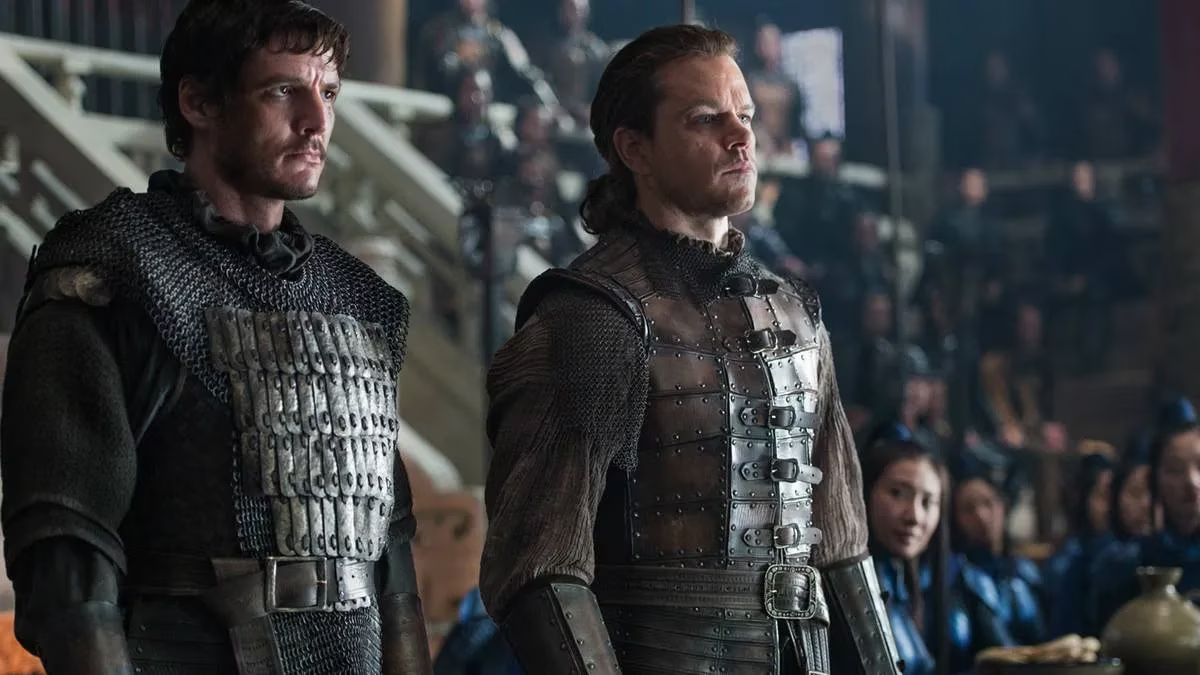
Costume designer Mayes C. Rubeo, the seasoned architect behind the visual identities of blockbusters like World War Z, Warcraft, and Thor: Ragnarok, faced a unique tapestry when approaching The Great Wall. Unlike anything in her formidable portfolio, the project demanded a deep dive into China's dynastic history, a 12-month immersion in its culture that became the loom upon which every costume was woven. She described it as sculpting cultural history like clay—malleable yet demanding precision—guided by director Zhang Yimou, whose genius vision she meticulously translated into tangible artistry. Rubeo's dedication wasn't just about aesthetics; it was an intricate dance accommodating actors' movements, stunt wirework, and material durability, ensuring each piece functioned as beautifully as it appeared. Her collaboration with Saks Fifth Avenue, showcasing these designs in Beverly Hills, highlighted the monumental effort behind the cinematic spectacle.
Breaking Barriers with Thread and Vision
One of Rubeo's boldest challenges was redefining gender norms through Commander Lin Mae's armor:
-
Defying Tradition: "Medieval China had rigid rules," Rubeo noted, but the goal was to empower Lin Mae, giving her regiment "one more gear."
-
The Airborne Aesthetic: The elite Blue Regiment, designed for aerial attacks, required costumes enabling acrobatic agility. Their layered blue fabrics, when seen from below amidst the chaos of battle, were conceived to mimic the sky itself—unfurling like origami cranes in flight—a deliberate artistic choice by the film's art director.
-
Masculinity Reimagined: While rooted in historical context, Rubeo intentionally crafted Lin Mae’s armor with a commanding, utilitarian silhouette, subtly challenging expectations without sacrificing authenticity.
Crafting War: Materials and Metaphors
The devil, and the durability, lay in the details. Rubeo’s team tackled functionality head-on:
| Element | Challenge | Rubeo's Solution |
|---|---|---|
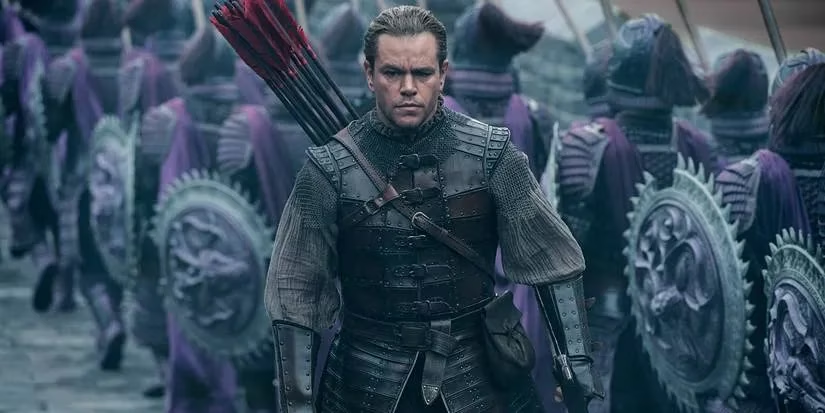
| Armor Suits | Heavy yet flexible for stunts | Custom sculpting + layered textiles |
| Helmets | Weight vs. visual impact | Sculpted molds + lightweight polyurethane 🪖 |
| Blue Regiment | Creating "sky" illusion | Multi-layered, pillow-y blue fabrics |
Rubeo revealed the helmets were technological marvels—crafted from polyurethane, they were "light as dragonfly wings" yet could be intricately painted for a formidable, historically inspired appearance. This material choice proved crucial for actors performing intense wirework sequences day after day.
The Director's Canvas: A 12-Month Odyssey
Rubeo emphasized that costume design is never an "automatic thing." Her process involved:
-
Mind-Melding with Vision: Deciphering Zhang Yimou’s genius concepts required deep collaboration. "You have to get into his mind," she said, comparing it to navigating an intricate labyrinth of ideas.
-
The Devil in the Details: Every costume needed to satisfy multiple masters: historical plausibility, actor comfort, stunt safety, and visual splendor. It was a high-wire act balancing artistry and practicality.
-
Cultural Immersion: Spending a full year in China wasn’t just logistics—it was essential research, allowing her to absorb nuances that infused authenticity into every stitch and buckle.
Legacy and Looking Forward
Nearly a decade later, Rubeo’s work on The Great Wall remains a benchmark in fantasy-historical costuming. While she playfully deflected questions about future projects back in 2016 ("I'm reading scripts!"), her career trajectory since—including acclaimed work on Jojo Rabbit and WandaVision—proves her relentless innovation. Her approach transforms fabric into narrative, turning armor into character, and proving that even in a field built on illusion, the most powerful designs emerge from threads of truth, cultural respect, and boundless imagination. 🌌