Moon Knight's Costume Secrets: Textures, Alters, and Egyptian Gods
When I first watched Marvel's Moon Knight in 2022, I assumed the hero's bright white outfit was mostly a visual gimmick. Revisiting the series in 2026, however, I now see just how much care went into every stitch, print, and hidden symbol. The show gives Oscar Isaac the difficult job of playing multiple alters linked to Dissociative Identity Disorder, and the costume department had to support that by making each persona feel distinct while keeping Moon Knight's iconic comic-book identity intact. The result is one of the most texturally rich superhero wardrobes Marvel has ever produced.
One thing that makes Moon Knight unusual is that his white suit is supposed to stand out. He is often compared to Batman, but he does not melt into darkness. In the comics, the white costume is an intentional warning: Moon Knight wants his targets to see him coming and to be afraid. That is a bold idea on screen because white fabric is notoriously difficult to light and make look practical. Marvel's costume designer Meghan Kasperlik and her team felt that pressure, and they responded with an obsessive level of detail.
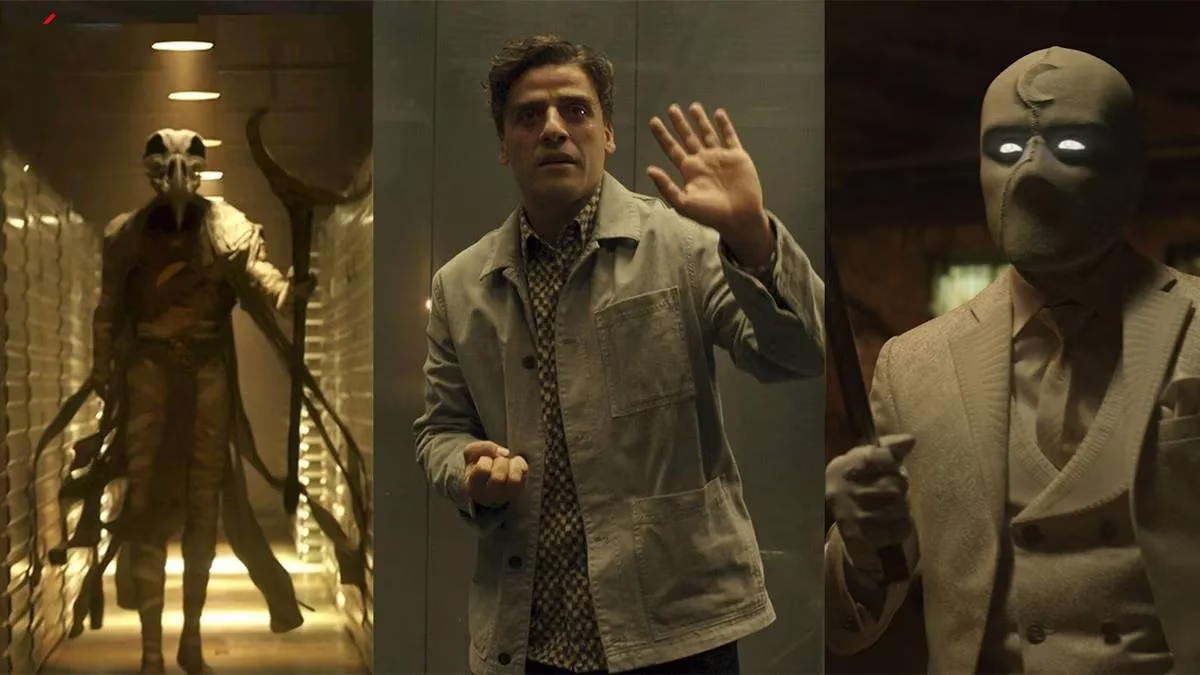
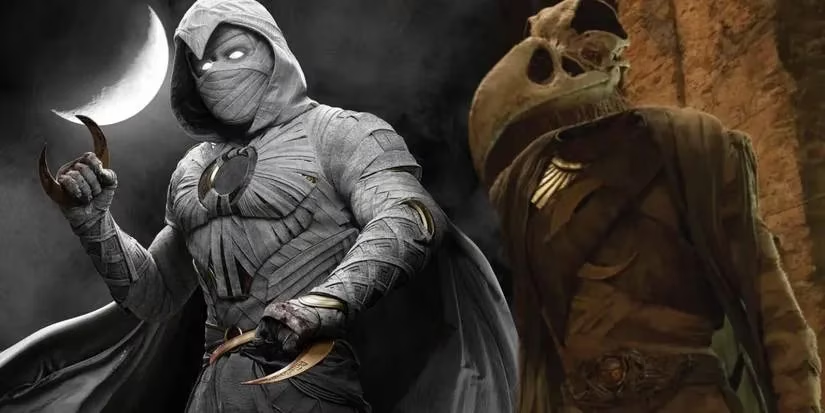
The main Moon Knight costume was not simply a white superhero suit. Kasperlik worked with Marvel to create custom fabrics from EuroJersey and used 3D printing handled by FBFX. The top portion of the suit combined two different colors and two different textures. Altogether, the patterned sections came to 803 individually cut pieces. That number still impresses me. For the bottom half, the team used four additional textures that were 3D printed and patterned. These choices give the suit a sense of armor and ritual without losing the character's clean, wraithlike silhouette.
Mr. Knight: A Luminous Three-Piece Suit
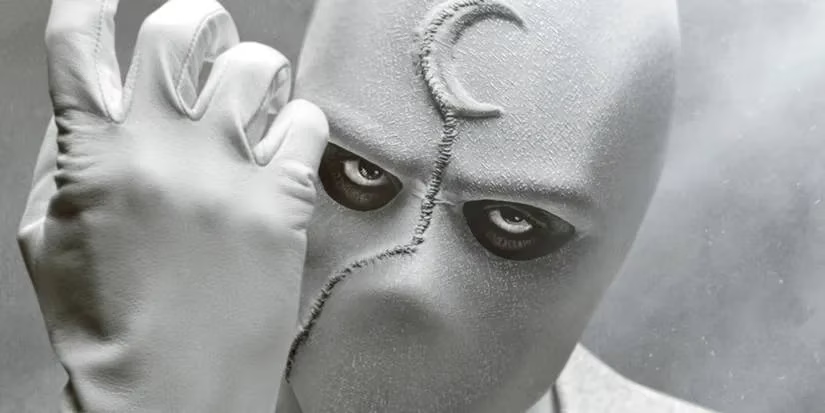
Mr. Knight offered a completely different challenge. In the comics, Mr. Knight wears a white three-piece suit, and Kasperlik admitted she was nervous about bringing that to live action because white formalwear does not always photograph well. She insisted on texture, but not so much that the fabric overpowered the character. The solution was an upholstery fabric with a subtle silver thread. At night, the light bounces off it and gives Mr. Knight a faint luminous quality. I remember noticing that glow in episode 2, and now I understand why it felt so effective.
The details were even more special up close. The lapels were reshaped into the Khonshu symbol. The waistcoat featured custom-made Khonshu buttons. The gloves and shirt were also custom-made. You have to look carefully to catch them, but those small details make the costume feel like a sacred uniform rather than just a white suit.
Marc, Steven, and Hidden Identity Cues
The everyday clothing also does a lot of quiet storytelling. Marc Spector and Steven Grant are not the same person, and their wardrobes had to reflect that. Kasperlik worked closely with Oscar Isaac to define both characters. Marc's hoodie, for example, is a soft gray tone rather than a random neutral. It includes pyramid shapes in the print, a subtle hint toward Egypt and Khonshu. Those little beats are easy to miss on first viewing, but they help connect the alters to the larger mythological world of the show.
| Character | Costume Detail |
|---|---|
| Moon Knight | 803 patterned pieces, two-tone top, four textures on bottom |
| Mr. Knight | Upholstery fabric with silver thread, Khonshu lapels and buttons |
| Marc Spector | Gray hoodie with subtle pyramid hints |
| Steven Grant | Softer, more ordinary choices befitting a gift-shop employee |
Arthur Harrow's Quiet Menace
Arthur Harrow is an interesting case because he is a minor figure in the comics. That gave the team more freedom to experiment. Ethan Hawke collaborated with Kasperlik to keep Harrow's look simple. She thought about monks and cult leaders, many of whom dress plainly rather than flashy. Harrow's silhouette is clean, but heavy sandals weigh the character down and give him a grounded, deliberate presence. He also wears bracelets on each wrist. Engraved into them is Ammit's death prayer, based on an ancient Egyptian death book displayed at the Met museum in New York. It is nearly impossible to see in every scene, but knowing the engraving is there changes how I view him.
Khonshu and Taweret: Gods in the Details
The gods were a separate costume achievement. Khonshu had CG elements, but a real physical costume was created and worn by an actor. Kasperlik used about six different fabrics, interwoven and mummy-wrapped to bring the comic design to life. The Budapest team hand-sewed the entire costume for stretch and movement, including gloves and shoes. A custom leather collar and leather strappings were hand-painted with the Khonshu symbol. The markings are faint, but they exist.
Taweret was the opposite in tone: more light, more color, more ornamentation. An in-house metalsmith hand-hammered and hand-placed pieces on the headpiece. The hieroglyphs running down the costume are hand-hammered, and the jeweled beetle on her chest was made by an in-house artist. Taweret's name connects to birth and mother, so the details function like a birth-stamp on her design. That kind of symbolic layering is why I love costume design that goes beyond simply looking expensive.
Revisiting Marvel's Moon Knight in 2026, I still think it is one of the best examples of superhero costume craftsmanship. The hidden engravings, silver-threaded fabric, 803-piece body suit, and hand-made godly garments reward close attention. But more importantly, each choice serves the story. The white suit is not just a color. Mr. Knight's glow is not just a lighting trick. Harrow's bracelets are not just jewelry. They are all part of a world that feels ancient, dangerous, and deeply personal.