My Journey Through Wolverine's Wardrobe: From Leather to Legendary Spandex
As a lifelong fan of the X-Men, my heart has always belonged to the gruff, adamantium-clawed loner, Wolverine. For over two decades, I've watched, analyzed, and debated every stitch of fabric and piece of armor that has graced his formidable frame across screens big and small. In 2026, looking back at the cinematic and televised tapestry of Logan's attire is a journey through hits, misses, and a long-awaited homecoming to his iconic roots. It's a story of adaptation, evolution, and finally, in the era of the Marvel Cinematic Universe, faithful celebration.
My earliest cinematic memory of Wolverine is tinged with a slight disappointment. 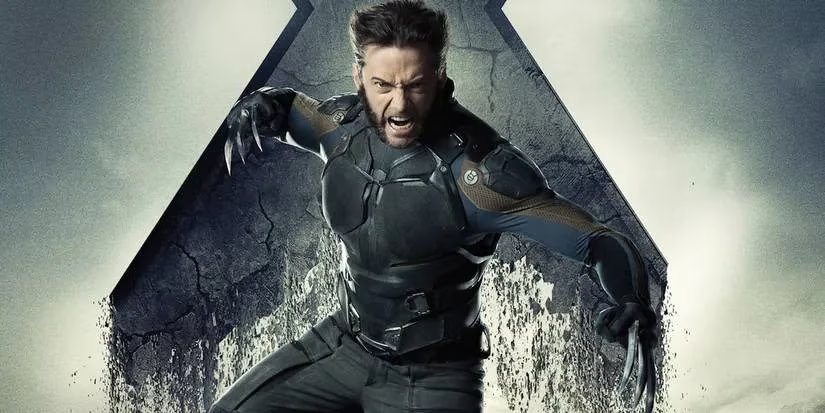 The initial X-Men film franchise, for all its groundbreaking success, dressed its mutants in uniform black leather. While functional and aiming for a gritty realism, this ensemble felt like a betrayal of the vibrant, individualistic spirit of the comics. Hugh Jackman's magnetic performance shone through, but the costume itself was a lackluster, monochromatic shell. It prioritized a somber aesthetic over the signature flair that made Wolverine visually pop from the comic book page. This era represented a cautious, perhaps overly serious, approach to bringing superheroes to life, where distinctive color was sacrificed at the altar of perceived believability.
However, the evolution began. X-Men: Days of Future Past introduced a tactical armor that felt like a course correction. It was still dark and sleek, but it incorporated texture and subtle design motifs that whispered of the classic yellow and blue. For the first time in live-action, I saw a suit that attempted to bridge the gap between cinematic realism and comic book inspiration. It felt appropriate for the dystopian setting—a pragmatic upgrade for a warrior in a war-torn future. This was a positive shift, proving that Wolverine's suit could be both credible and visually compelling.
The animated realms, however, were where Wolverine's wardrobe truly began to experiment and play with his legacy. X-Men: Evolution offered a youthful, streamlined take. The vibrant orange and black suit was a bold departure. It wasn't my personal favorite, but I admired its audacity. It maintained the core silhouette and spirit while embracing a contemporary palette, showing that the character's visual identity could be flexible. The show didn't stop there; it also gave him a slick black and gold uniform. This ensemble was particularly sharp, transforming his classic animal-print triangles into gleaming gold accents. It felt edgy, modern, and perfectly integrated with his team, yet unmistakably Logan.
Other animated series explored different corners of his comic book history. Ultimate Spider-Man presented his yellow and brown suit, a direct pull from his 80s and early 90s appearances. While the animation style made it look a bit clunky, the faithfulness was satisfying. It was a welcome reminder that his iconic look wasn't his only look. Similarly, the 2011 X-Men anime series offered a stylized, simplified black suit with yellow accents—a cool, minimalist interpretation that worked within its unique artistic framework.
But the true live-action revelation for me came with X-Men: Apocalypse. 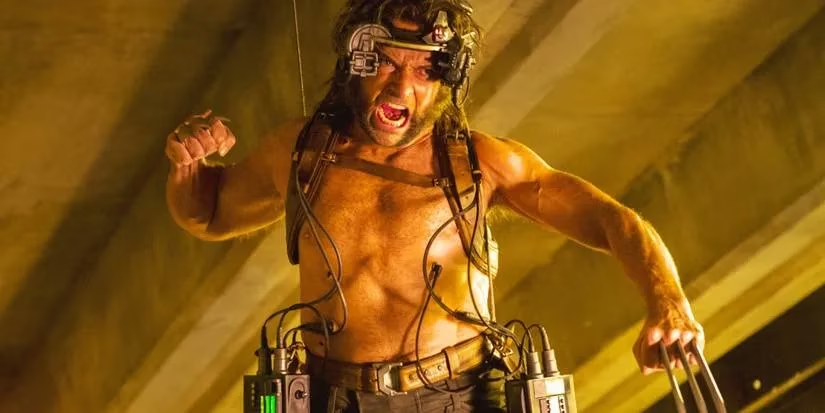 The brief, ferocious appearance of the Weapon X costume was a visceral punch of comic-accurate glory. The simplified headgear, the tubing, the computer packs—it was a menacing and incredibly faithful translation from page to screen. This wasn't an adaptation ashamed of its source material; it was a brutal, beautiful embrace of it. It stood as a testament to what could be achieved when filmmakers trusted the original designs.
Throughout all these iterations, one version has always been the gold standard in my mind: the classic yellow and blue suit from X-Men: The Animated Series.  Its vivid canary yellow, deep blue, iconic mask, and those sharp black triangles captured the quintessential essence of Wolverine. It was simple, bold, and perfect. This was the suit that defined the character for a generation, proving that a faithful adaptation could be timeless and beloved. It set the benchmark that all others would be measured against.
For years, I wondered if we'd ever see Hugh Jackman don that iconic spandex in a major film. The wait, it seems, is gloriously over. The upcoming integration into the MCU, heralded by Deadpool 3, has finally answered that decades-long fan plea. From the previews and promotional material, it's clear: Wolverine is getting his yellow and blue. The modernized touches, like the added sleeves and the removal of the over-the-top blue underwear, are subtle nods to contemporary sensibilities without diluting the costume's powerful, classic identity. Seeing him walk side-by-side with Deadpool, finally clad in his most famous colors, feels like a monumental, celebratory moment. It's the culmination of a long sartorial journey, a promise that in the MCU, these characters can be both realistically grounded and joyfully, authentically themselves.
Reflecting on this wardrobe history, it's clear Wolverine's costumes tell a story beyond fabric. They chart the evolution of superhero cinema itself:
| Era / Outfit | Key Traits | Faithfulness to Comics | My Personal Rating |
|---|---|---|---|
| Original X-Men Films (Black Leather) | Gritty, uniform, "realistic" | ⭐☆☆☆☆ | 👎 |
| Days of Future Past (Tactical Armor) | Textured, dynamic, a bridge | ⭐⭐☆☆☆ | 👍 |
| X-Men: Evolution (Orange/Black) | Youthful, streamlined, modern | ⭐⭐⭐☆☆ | 👍 |
| Weapon X (Apocalypse) | Menacing, visceral, brutal | ⭐⭐⭐⭐⭐ | 🤩 |
| X-Men: TAS (Yellow/Blue) | Iconic, vibrant, quintessential | ⭐⭐⭐⭐⭐ | 🏆 |
| Deadpool 3 / MCU (Yellow/Blue) | Classic, modernized, celebratory | ⭐⭐⭐⭐⭐ | 🎉 (Highly Anticipated) |
From the muted leather of the early 2000s to the vibrant, promised spandex of the MCU's future, Wolverine's journey through costume design mirrors our own growing comfort with the colorful, fantastical essence of superheroes. It's been a long road, with some regrettable detours into dullness, but also thrilling pitstops of accuracy and innovation. Now, as we stand in 2026, on the cusp of seeing the most iconic version stride into the world's biggest cinematic universe, I can't help but feel a nostalgic joy. The suit isn't just clothing; it's a symbol. And finally, after all these years, the symbol is right.