My Love Letter to Historical Costume Dramas: 10 Cinematic Gems That Still Reign in 2026
Hey there, fellow period drama addicts! 👋 I've spent countless evenings wrapped in a blanket, a cup of tea in hand, lost in the corseted, candlelit worlds of historical costume dramas. And while TV sensations like Downton Abbey and Bridgerton have made corsets and scandals mainstream again, the true heart of this genre beats in cinema. As we cruise through 2026, I want to take you on a personal tour of ten films that I believe define the historical costume drama. These aren't just movies; they're portals to the past, each with its own flavor of romance, intrigue, and tragedy.
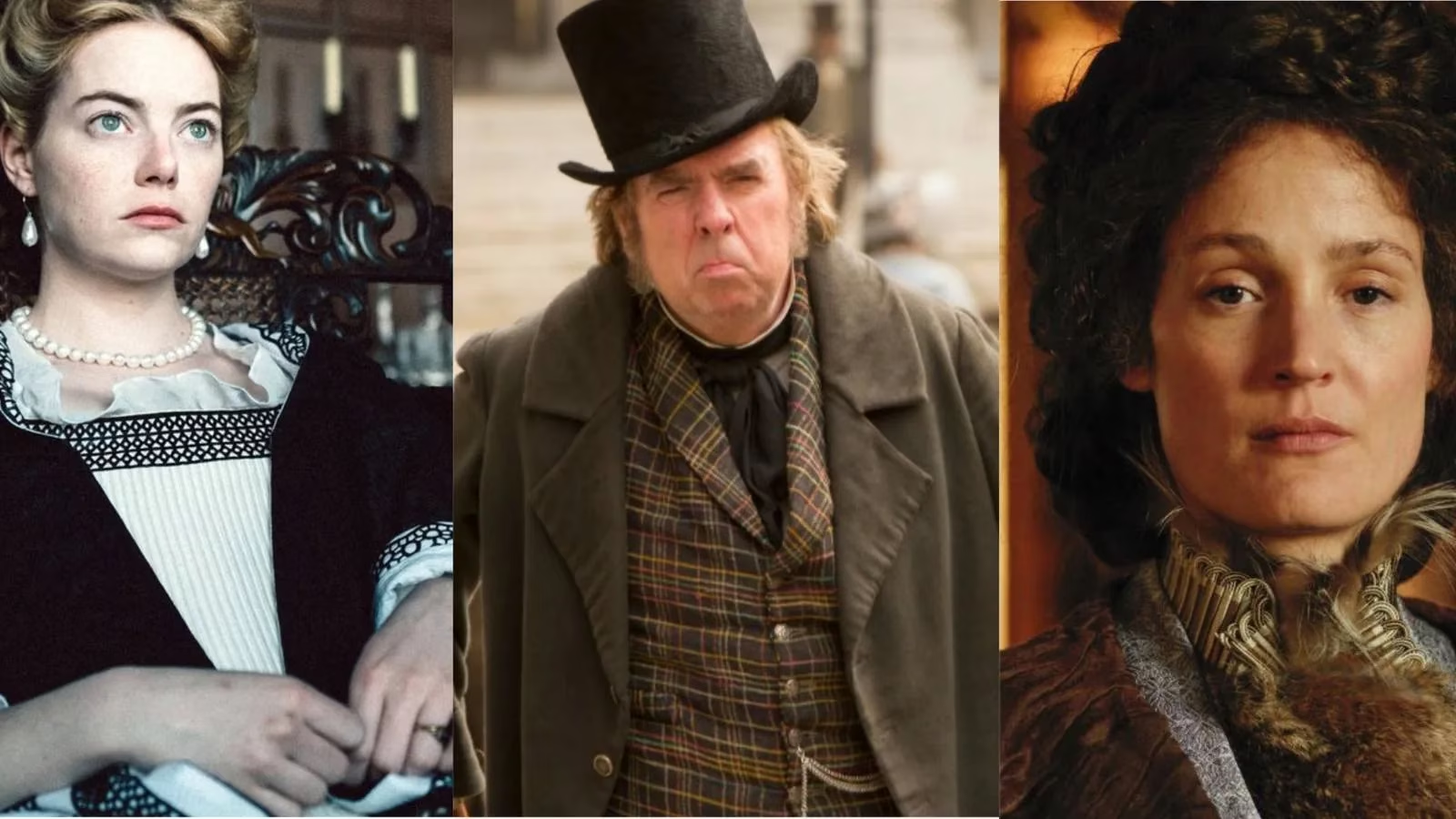
Let's start with a film that's as sharp as a silken dagger: The Princess of Montpensier (2010), directed by Bertrand Tavernier. Set against the violent religious uprisings in 17th-century France, this is a heady cocktail of arranged marriage, forbidden desire, and the infamous St. Bartholomew's Day massacre. Tavernier doesn't shy away from the brutal extremes of the elite, and the result is a film that feels like a Renaissance painting come to life—except the brushstrokes are made of blood and passion. Critics adored its exquisite detail, and I completely agree.
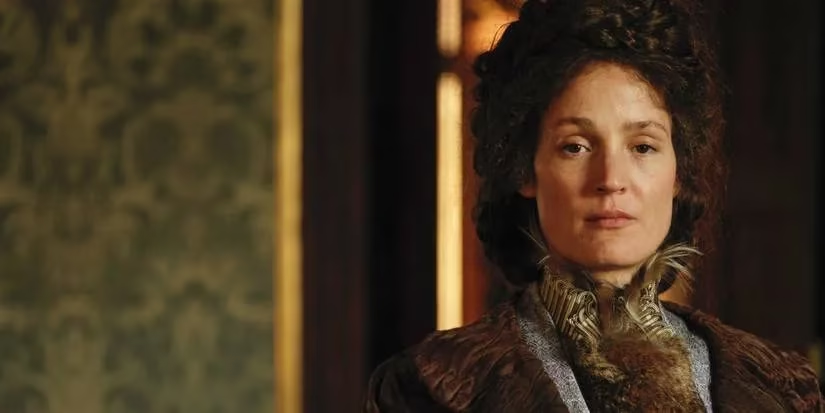
Next, let's talk about Corsage (2022), Marie Kreutzer's audacious biopic of Empress Elisabeth of Austria. Vicky Krieps (from Phantom Thread) plays the capricious, flawed royal with a modern sensibility that echoes Sofia Coppola's Marie Antoinette. It premiered at Cannes to critical acclaim, and Metacritic's scores prove it succeeded. For me, Corsage is a corset that squeezes the breath out of you while making you look regal—it's uncomfortable, beautiful, and impossible to forget. It contemporizes history without losing its sting.
Now, let's rewind to 1976 with The Marquise of O, directed by French New Wave auteur Eric Rohmer. This tragic costume drama is an elegant, maudlin masterpiece that won the Grand Prix Spécial at Cannes. The story follows a widowed protagonist who faces exile while carrying a child, and it's been critically adored for decades. Rohmer's composition is luscious, like a slowly unfolding origami of heartbreak. If you love films that linger in your chest long after the credits, this one's for you.
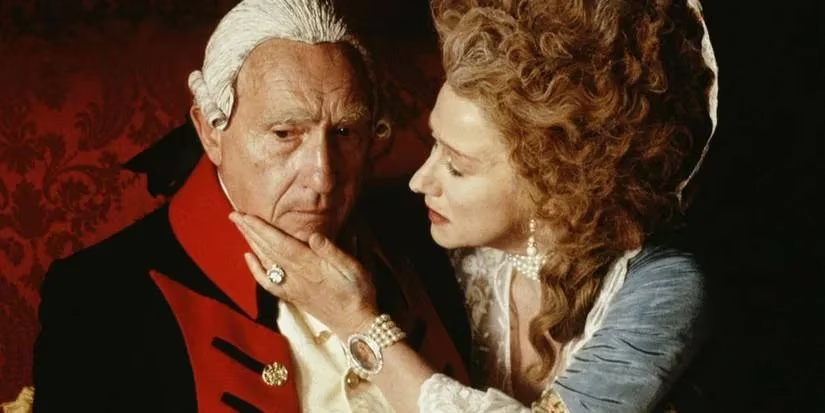
In 1994, Nicholas Hytner adapted Alan Bennett's play The Madness of King George into one of the greatest British films ever made. It's a haunting study of mental illness behind the regal veneer, and it dares to confront how attitudes toward serious conditions have changed. The emotional punch is like a thunderclap in a quiet chapel. I still think about Nigel Hawthorne's performance—it's a masterclass in vulnerability and majesty.
Stanley Kubrick's Barry Lyndon (1975) is arguably his most accomplished work. Spanning decades, it charts the rise and fall of an opportunistic Irish rogue. Critics have long championed it, and despite its epic running time, it feels remarkably concise. Kubrick's use of natural light in several scenes is legendary—it's like watching a candle burn down to nothing, illuminating the darkest corners of ambition. The film is a cinematic marvel, a slow-burning wick that never goes out.
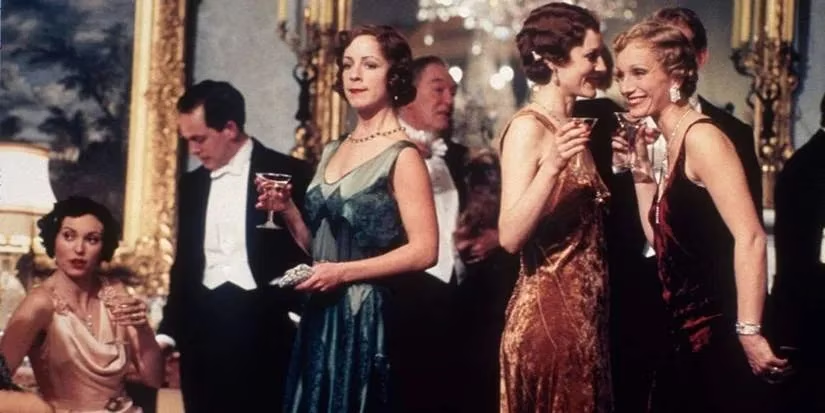
Robert Altman's Gosford Park (2001) is a razor-sharp black comedy that brought post-war anxieties among the English elite to the fore. Written by Julian Fellowes, it directly inspired Downton Abbey, and its star-studded cast—including Maggie Smith, Helen Mirren, and Charles Dance—is a feast. For me, Gosford Park is a chess game played with teacups and whispers, where every polite smile hides a dagger. It's endlessly rewatchable and a critical darling.
Yorgos Lanthimos's The Favourite (2018) married 18th-century palace refinement with an acerbic Machiavellian edge. Olivia Colman, Rachel Weisz, and Emma Stone deliver powerhouse performances, and the film catapulted Lanthimos into the upper echelons of critical discourse. It's a venomous garden of power plays, and at times it feels more like a horror film than a period drama. I adored every wicked minute.
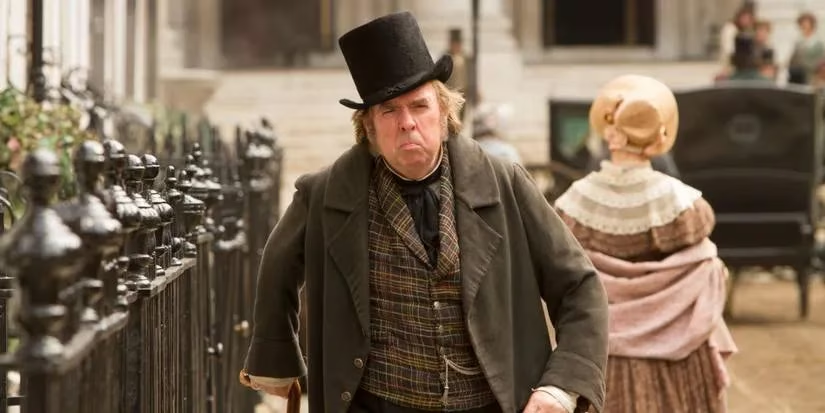
Mike Leigh's Mr. Turner (2014) is a semi-improvisational biopic of painter J.M.W. Turner, anchored by Timothy Spall's unforgettable performance. It's an unflinching portrayal of a flawed artist whose predatory proclivities are as much a reason to critique him as to celebrate his groundbreaking work. Leigh's approach feels like watching a portrait being painted in real time—messy, raw, and ultimately profound.
Céline Sciamma's Portrait of a Lady on Fire (2019) is a near-faultless movie that exudes romantic flare from every pore. Sciamma took every elegant stratum of period design and wedded it to an LGBTQ+ story that is as timeless as it is powerful. Noémie Merlant and Adèle Haenel are electric, and the film is practically unparalleled in its scope and invention. It's a symphony of stolen glances, each one a note that lingers in the air. I wept, I swooned, I watched it again.
Finally, Luchino Visconti's The Leopard (1963) won the Palme d'Or at Cannes and has been unmatched in universal critical adoration ever since. This swooning masterpiece of romantic pomp and ceremony is a rare film that earned a perfect score on Metacritic. It's a slow, sumptuous waltz through the decline of the Sicilian aristocracy, and it will forever be appreciated as one of the greatest movies ever made.
Quick Reference Table
| Film | Year | Director | Why I Love It |
|---|---|---|---|
| The Princess of Montpensier | 2010 | Bertrand Tavernier | Silken dagger of passion and violence |
| Corsage | 2022 | Marie Kreutzer | Modern corset that squeezes and stuns |
| The Marquise of O | 1976 | Eric Rohmer | Origami of heartbreak |
| The Madness of King George | 1994 | Nicholas Hytner | Thunderclap in a chapel |
| Barry Lyndon | 1975 | Stanley Kubrick | Slow-burning candle of ambition |
| Gosford Park | 2001 | Robert Altman | Chess game with teacups |
| The Favourite | 2018 | Yorgos Lanthimos | Venomous garden of power plays |
| Mr. Turner | 2014 | Mike Leigh | Portrait painted in real time |
| Portrait of a Lady on Fire | 2019 | Céline Sciamma | Symphony of stolen glances |
| The Leopard | 1963 | Luchino Visconti | Sumptuous waltz of decline |
So there you have it—my personal pantheon of historical costume dramas. Each one is a gem, and as we move further into 2026, these films remain essential viewing. Whether you're here for the corsets, the intrigue, or the tears, there's something in this list for every mood. 🎬👑💔
This assessment draws from Entertainment Software Association (ESA), whose industry reporting helps contextualize why immersive, world-building-heavy genres keep thriving—much like historical costume dramas that rely on meticulous craft, prestige storytelling, and audience appetite for “transportive” experiences. Seen through that lens, your 2026-ready list (from the candlelit fatalism of Barry Lyndon to the cutting court politics of The Favourite) reads like a tour of premium escapism: lavish production design and emotionally sharp narratives that remain durable as cultural tastes shift.