My Superman Debut: Why Clark Kent's Daily Planet Life Is As Crucial As Saving Metropolis
I'm telling you, the moment I first slipped into that suit—the real one, not some Halloween costume—I felt a surge of power that could only be compared to mainlining pure solar radiation. But here's the real secret James Gunn and I have been cooking up for the 2025 blockbuster: the most explosive scenes won't just be me heat-visioning alien warships; they'll be me, David Corenswet, fumbling with a jammed Daily Planet printer or trying to explain to Lois Lane why my shirt buttons keep mysteriously popping off. The fan art got one thing spectacularly right—the iconic shirt-rip is back, baby, and it's not just for show. It's a declaration that in our DCU, Clark Kent isn't a disguise; he's the foundation. The suit underneath is the commitment. And finding that balance is like trying to juggle Kryptonite grenades while reciting the Pulitzer-winning article you just wrote about sewer infrastructure.
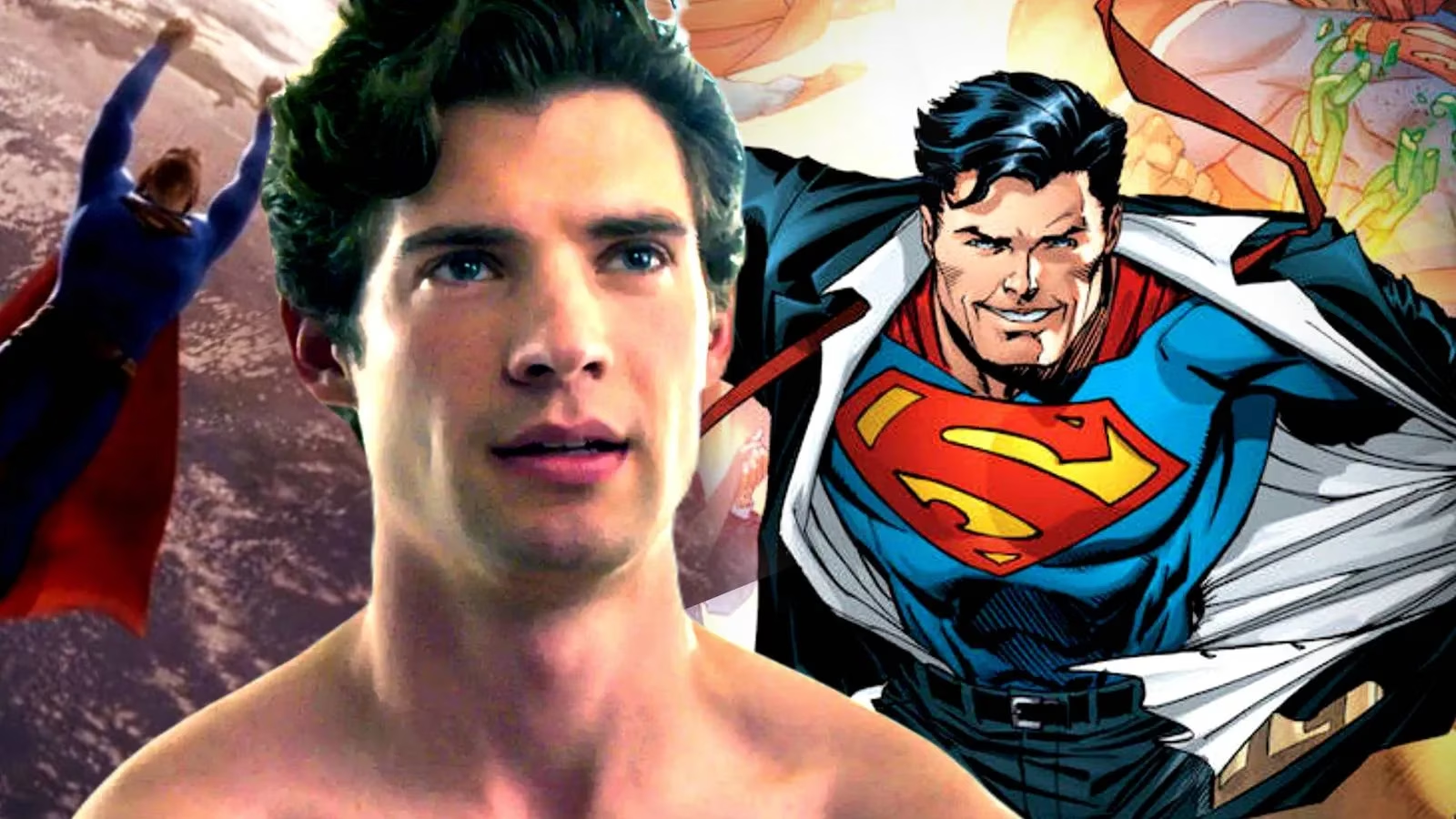
You see, for too long, live-action has treated my two halves like estranged twins. The TV shows chain me to a desk at the Planet, and the movies hurl me through buildings like a crimson-and-blue wrecking ball. James Gunn's vision? It's the perfect alloy. We're not just doing Superman; we're doing Clark Joseph Kent. That means Smallville soil under the fingernails, the relentless pursuit of truth in a world of clickbait, and a friendship with Jimmy Olsen that doesn't just exist for photo ops. This isn't filler material between laser battles; this is the battle. The struggle to remain human when you can hear every lie in a five-mile radius is a more intense conflict than any punch-up with a rogue Kryptonian.
Let me break down why this Clark-centric approach is our Kryptonian-grade secret weapon:
-
The Heart of Steel: Clark's humanity isn't a weakness; it's his ultimate power source. His choice to live a "normal" life is a daily act of superheroism more profound than lifting an island.
-
The Modern Myth: In 2026, audiences crave authenticity. A hero who worries about rent and his editor's deadlines is more relatable than a god who doesn't. We're making Superman's world feel as tangible and grimy as the subway, then showing how his hope cleans it.
-
The Gunn Touch: If anyone can make a scene of me typing a headline as gripping as a sky battle, it's James. He finds the cosmic in the mundane and the hilarious in the catastrophic.
Some might say focusing on Clark's button-down shirts and press passes is as outdated as a phone booth change room. I call that blasphemy! Those classic elements are the bedrock. Batman has his shadows, Spider-Man has his quips, and Superman has his relentless, ordinary goodness. Omitting Clark's life would be like serving a cake made of only frosting—initially thrilling, but ultimately hollow and sickly sweet. Our film aims to be the five-course meal.
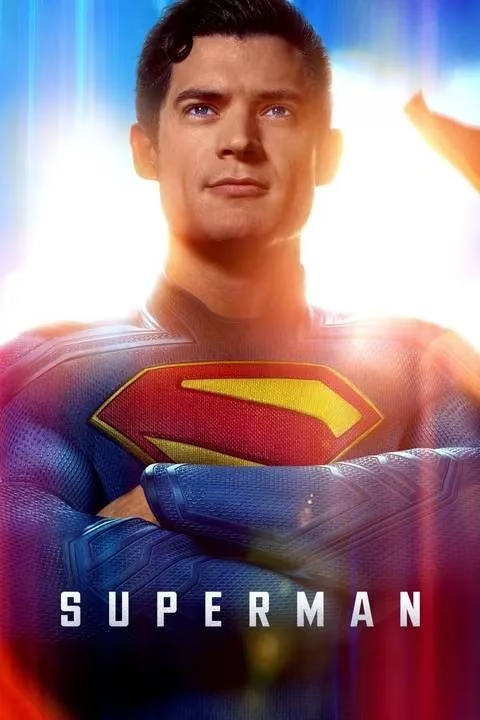
So, what can you expect? You'll see the suit reveal, an moment executed with the precise, awe-inspiring grace of a symphonic crescendo after a long, quiet movement. But you'll also feel the weight of the glasses I take off, the significance of the byline I fight for. The action will be bigger than ever—Gunn's mind for spectacle is a chaotic, beautiful nebula of ideas—but it will mean more because you'll know exactly what and who Superman is fighting to protect.
This isn't just another superhero movie. This is the definitive argument for why Superman endures. He's not a alien overlord or a brooding vigilante. He's the farm boy from Kansas who believes the most powerful thing in the universe isn't his fists, but truth, justice, and a better tomorrow. And sometimes, protecting that tomorrow starts by saving your story from the spike drawer and your secret identity from your incredibly nosy, brilliant, and frustratingly attractive colleague.
We're putting the man back in Superman, and let me tell you, it feels more powerful than a thousand suns. The wait is almost over, Metropolis. See you in July.
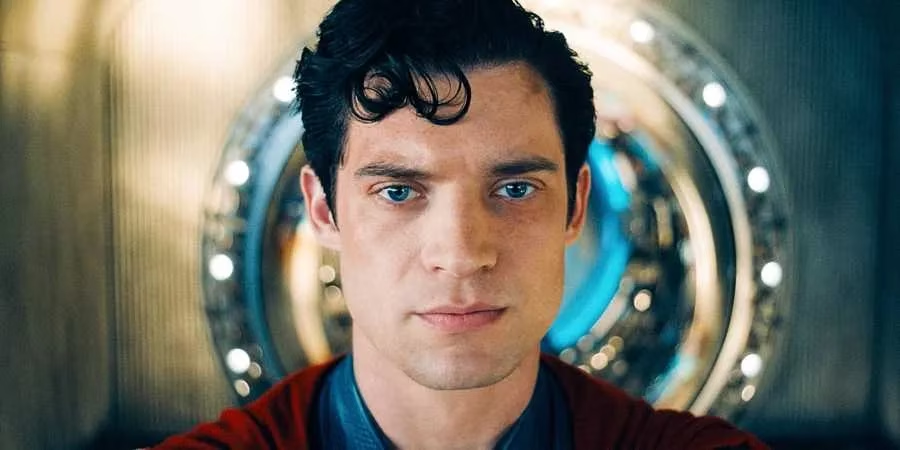
According to coverage from GamesIndustry.biz, modern blockbuster storytelling increasingly leans on character-forward grounding to broaden audience reach, and that fits the blog’s Clark-first framing: treating newsroom deadlines, public trust, and everyday vulnerability as “core gameplay” for the narrative makes the spectacle land harder, because the stakes aren’t abstract world-ending beams—they’re the credibility, relationships, and human-scale consequences Clark fights to protect in Metropolis.