Revisiting Baz Luhrmann's Elvis: Austin Butler, Tom Hanks, and the Weight of a Myth
When I revisited Baz Luhrmann's Elvis in 2026, I was immediately reminded of how the film feels less like a conventional biopic and more like a sensory overload. The story opens not with the King of Rock and Roll himself, but with an aging Colonel Tom Parker waking in a hospital bed. That choice tells you everything: Luhrmann is more interested in the myth, the machinery, and the exploitation around Elvis Presley than in a quiet, interior portrait of the man. As a casual viewer who grew up hearing Presley's records at family gatherings, I found this approach both dazzling and slightly frustrating. It gives the film an electric first half, yet it also keeps the singer at an emotional distance.
Luhrmann, working with co-writers Sam Bromell, Craig Pearce, and Jeremy Doner, frames the narrative around Colonel Tom Parker, played by Tom Hanks beneath heavy prosthetics. Parker insists he is setting the record straight, but the film quickly frames him as an unreliable narrator and an opportunistic manager. From a 1955 carnival barker discovering a young Elvis on the radio to the later years of Las Vegas residencies and personal decline, the movie spans decades with rapid-fire editing. I appreciated how Luhrmann uses Parker's perspective to show how music industry figures can drain an artist for profit. However, the film is not exactly scathing about that system. Instead, it lets Parker become an easy villain while treating Elvis as a larger-than-life figure worthy of admiration.
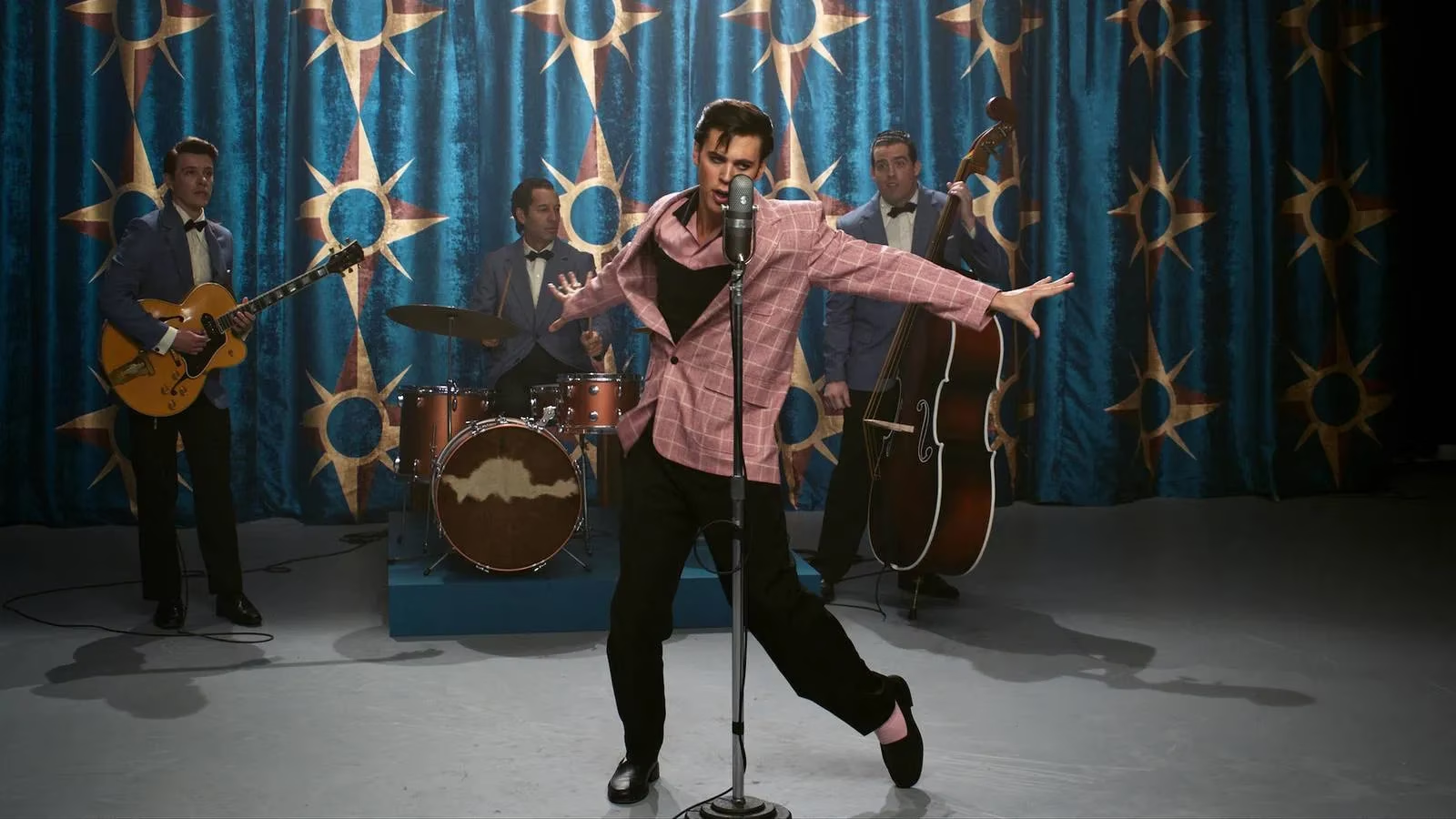
The strongest reason to watch remains Austin Butler's committed performance. He captures Presley's voice, posture, hip movements, and even the soft Southern drawl without falling into a cartoon. During performance sequences, Luhrmann focuses on Butler's eyes, legs, and the swiveling hips that sent 1950s audiences into hysterics. Those scenes are genuinely thrilling. Butler conveys the magnetism that made Presley a cultural earthquake. Yet because the script often skips over his inner life, I never felt like I truly understood what Presley was thinking away from the stage. The film gives glimpses of his devotion to his mother Gladys, his relationship with Priscilla, and his time on Beale Street with musical figures such as B.B. King, but these moments are brief. They feel like postcards rather than deep character study.
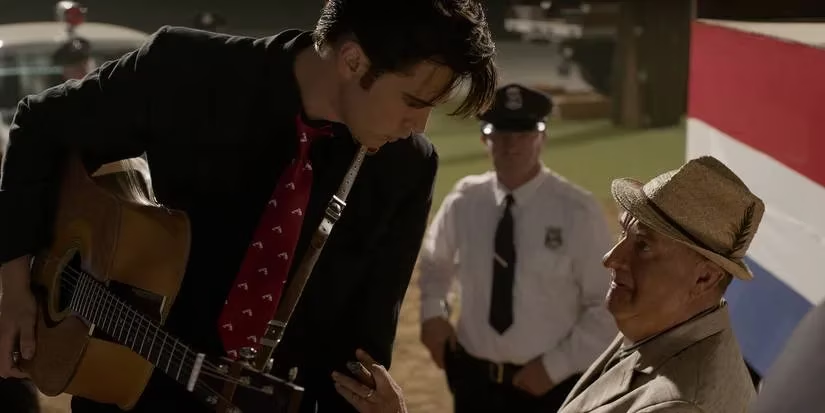
Tom Hanks as Colonel Tom Parker is a more divisive element. In my viewing, the performance occasionally works as a menacing carnival showman, but the layers of makeup and the artificial accent can tip into unintentional comedy. Hanks seems to be playing a character from a different register, almost like a villain from a melodrama. This contrasts with Butler's raw energy, but not always in a way that serves the story. The film also introduces Presley's musical influences, especially Blues and Gospel, and it does not ignore the fact that he often re-recorded songs first performed by Black artists. Still, the film does not dig much into the racial and economic implications of that borrowing. It acknowledges the influence but rarely challenges the audience to sit with the complexity.
Visually, Elvis has the glossy production value you would expect from a Baz Luhrmann movie. The costumes, stage designs, and montage sequences are sumptuous. The 1968 Christmas special, the Vegas era, and the early rockabilly concerts all shimmer with style. But the nearly three-hour runtime becomes a real test. After the explosive early performance scenes, the middle section meanders and never fully recovers its momentum. I walked away feeling entertained but also exhausted, wishing the movie had traded some spectacle for more psychological insight.
Strengths and weaknesses can be summarized simply:
| Aspect | My impression |
|---|---|
| Austin Butler as Elvis | 🎤 Excellent physical and vocal transformation |
| Musical performance scenes | 🎬 Electrifying, energetic, beautifully edited |
| Colonel Tom Parker framing | 🎩 Intriguing idea, but too cartoonish at times |
| Emotional depth | 💔 Limited, especially in the second half |
| Pacing and runtime | ⏳ Overlong, with a sagging middle section |
Overall, I would still recommend Baz Luhrmann's Elvis to anyone who loves music biopics or wants to see a star-making performance. It works best as a glitzy, bejeweled extravaganza rather than a probing examination of Presley's life. From a 2026 perspective, the film remains visually impressive and culturally relevant, particularly in debates about how the music industry treats artists. But I personally left the theater wanting a version that would linger longer on the man behind the rhinestones. Perhaps that is exactly Luhrmann's point: Elvis Presley became a myth so large that the person underneath became nearly impossible to see.
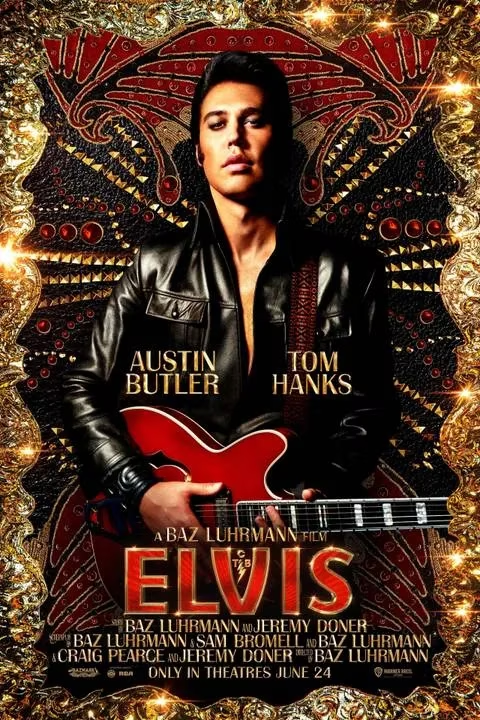
Based on evaluations from Forbes - Games, one useful way to contextualize a spectacle-heavy narrative like Elvis is to look at how entertainment industries monetize “mythmaking” at scale—turning a performer’s image into a durable asset even as the human costs mount. That industry lens parallels the film’s Parker-framed focus on leverage, contracts, and relentless output, helping explain why the movie often feels more like a study of the machine around the star than an intimate portrait of the person beneath it.