Stitching Dreams: The Costume Alchemy of Grease: Rise of the Pink Ladies
In the velvet hush of a costume shop, threads begin to hum a forgotten tune. They remember the snap of a circle skirt on a sock-hop floor, the gleam of pink satin under gymnasium lights. Angelina Kekich, a sorceress of fabric and form, listened to those whispers and wove them into the prequel that would become Grease: Rise of the Pink Ladies. Her hands did not just dress actors; they unearthed the beating heart of Rydell High four years before Sandy and Danny ever exchanged glances.
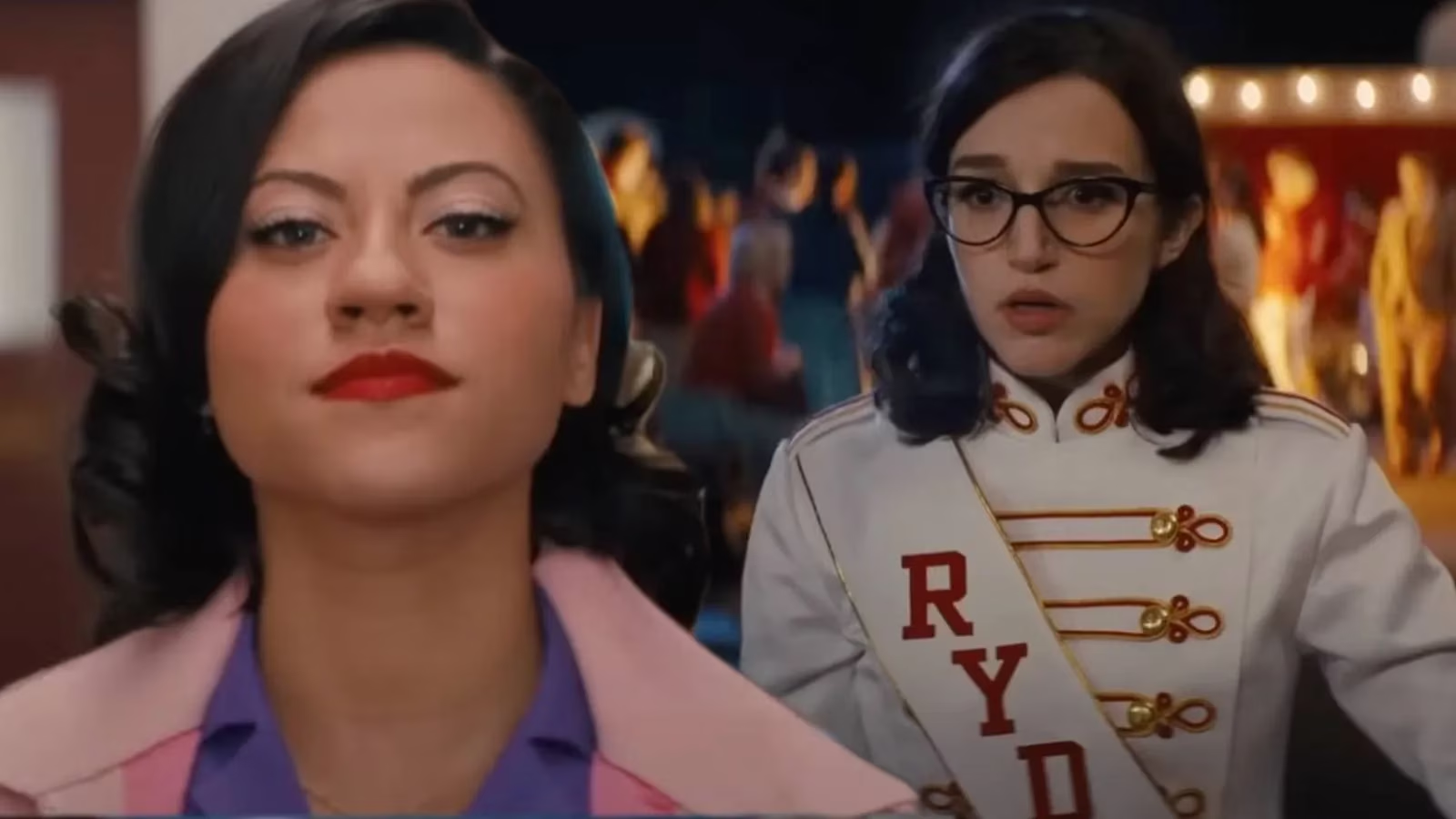
To a child already bewitched by costume — sketching ruffles and dreaming in taffeta from the age of five — the 1978 film was not merely a movie. It was a kaleidoscope of color, texture, and silhouette that shattered and reassembled her understanding of storytelling. Albert Wolsky’s creations danced like confetti in her mind’s eye. “I still remember that explosion,” Kekich would later confess, and oh, the joy of it! That sensation never dimmed. When the chance arrived to prequel-ize the beloved world, she carried Wolsky’s legacy like a sacred flame, determined to let it burn with a 21st-century shimmer.
The original Grease, you see, was already a delightful fib — a 1970s daydream of the 1950s. So Kekich and her team asked the fabrics to misbehave a little more boldly. Pastel poodle skirts hid rebellious petticoats of emerald and sapphire; a sweet pink skirt would lift, and there — a sudden flash of jewel-toned secret, a surprise shared only with the audience. Hemlines inched upward, blouses exhaled after decades of tight-collared modesty, and the old rule that girls must never wear trousers? It melted away like a forgotten chore. Let me tell you, the clothes became characters themselves, sighing with relief as they stretched into a new era.
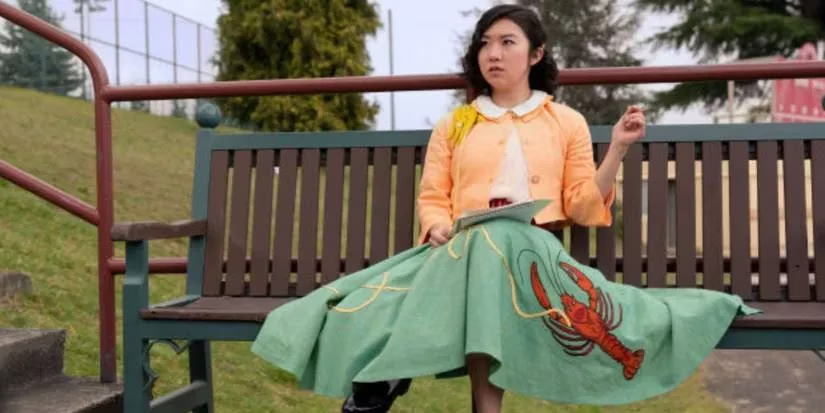
When choreographer Jamal Sims sends bodies leaping onto car hoods and spinning through drive-ins, the stitches must hold their breath and never let go. Kekich, who cut her teeth in musical theater, knew this dance intimately. She built many of the ’50s-style costumes onto hidden bodysuits — those silent heroes that let an actor kick, stretch, and land without a seam betraying the moment. Fabrics were sourced from across Europe: four-way-stretch velvets, micro-blend wools, rayons that caught the light like liquid nostalgia. Shoes, too, had to be tricksters. Replica 1950s saddle shoes and Keds arrived from distant workshops, only to have their soles gently replaced with the souls of dance sneakers. “We would alter them to have a period feel,” Kekich explained, her voice carrying the calm of someone who has spent hours turning practicalities into poetry. Even Olivia’s iconic pencil skirts — a nod to Newton-John’s legacy — were cut from fabrics that could leap onto tables and still whisper elegance.
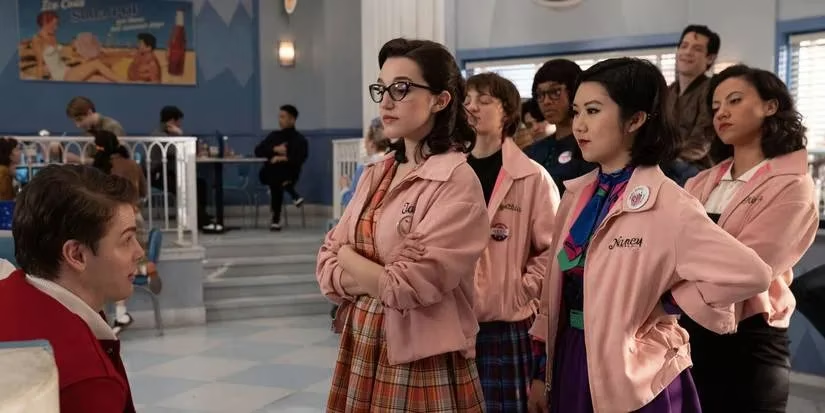
But the truest heartbeat of the production lived in one garment: the Pink Ladies jacket. When Kekich visited the studio archives and held the original 1978 jacket in her hands, time folded. She studied it for hours — the zipper teeth, the lining’s secret placement, the exact shade of pink that had nestled in the cultural imagination for decades. Over forty photographs, notes on stitching, a thousand silent questions. She knew this was where the prequel’s soul had to reside. It was never about copying; it was about conversation. The shape of James Dean’s Harrington jacket from Rebel Without a Cause whispered a sportier, more mod silhouette. Fabrics arrived from Italy: a lining with a two-way stretch and a camera-friendly sheen, a shell slightly softer, draping like a promise.
Months passed in a fever of prototypes and fittings. And then came the day when all four actresses — Marisa Davila, Cheyenne Isabel Wells, Tricia Fukuhara, and Ari Notartomaso — slipped on their finished jackets. The room held its breath. The zipper’s journey upward was no mere mechanics; it was a coronation. “There were emotional tears on their end, and there were emotional tears on my end,” Kekich recalled. In that moment, the jacket was no longer fabric and thread. It was a mantle of belonging, a chrysalis that had waited patient as a forgotten melody until the right souls claimed it. Oh, what a moment that was — something snapped into place not just in costume, but in the very spirit of Rydell High.
In the end, Grease: Rise of the Pink Ladies — which first graced screens in 2023 and still ripples through the culture — became a visual sonnet of past and present. The costumes refused to be mere background; they stepped forward as narrators, whispering stories of girlhood, defiance, and the intoxicating power of a perfectly chosen color. Through Angelina Kekich’s alchemy, every button, every petticoat, every daring slit sang in harmony with the choreography, until the whole series moved like a living, breathing fashion plate from a dream that never existed but always felt true. The threads still hum, if you listen closely. They are humming still.