Stitching Pandora: How a Non-Gamer Brought Borderlands to Life
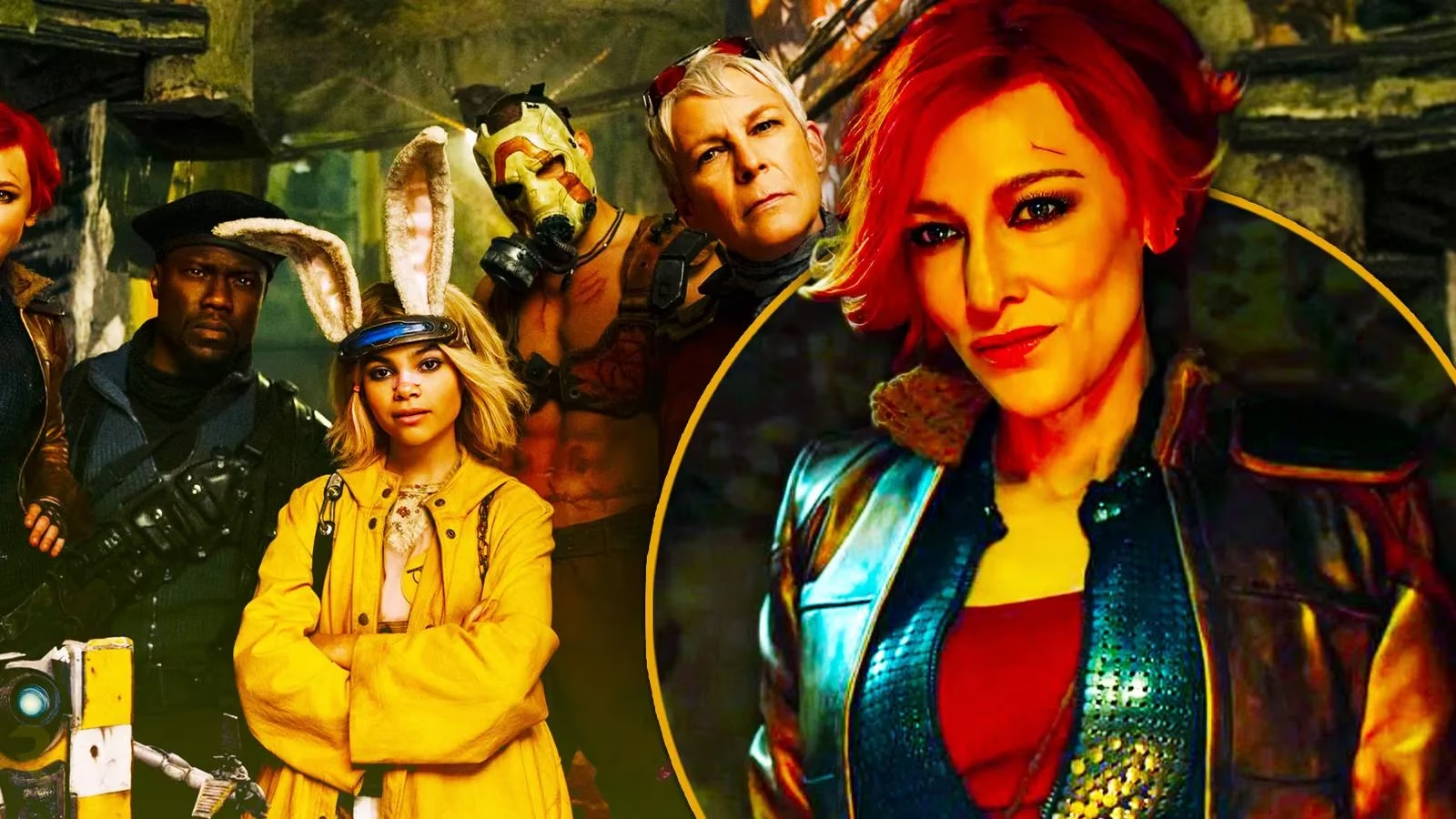
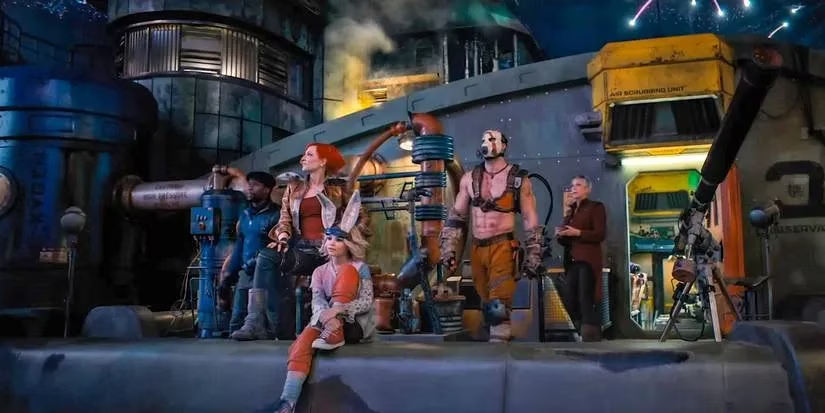
In 2024, Eli Roth's Borderlands finally vaulted from our screens into theaters, bringing the chaotic, cel-shaded world of Pandora to life. The film follows a ragtag crew of misfits—Lilith, Roland, Tiny Tina, Krieg, and the ever-chatty Claptrap—on a madcap quest to find a missing girl who holds the key to a legendary vault. But long before the first explosion rocked the big screen, a different kind of alchemy was happening in fitting rooms and workshops. The man tasked with translating the game's iconic, exaggerated style into wearable, functional film costumes was Daniel Orlandi, a seasoned costume designer with credits like Logan and Jurassic World under his belt. Here's the twist: Orlandi isn't a gamer. Not even a little bit. His journey to authentically clothe the vault hunters involved deep dives into YouTube playthroughs, international Zoom calls, and a crucial lesson learned from Robert De Niro about the power of a single sock.
From YouTube to the Big Screen: The Research of a Non-Gamer 😄
Daniel Orlandi's admission is a delightful curveball. "I'm not a gamer. Never been a gamer," he confesses. But what he lacks in personal gaming experience, he made up for with sheer, dedicated research. His primary tool? YouTube. He spent countless hours watching other people play Borderlands, absorbing the aesthetic, the movement, and, most importantly, what fans loved about the characters' looks. "It was so much fun," he recalls. "Watching them, it was like, 'Okay, we have to make sure we have that.' We had to make sure we had what they were excited about." This wasn't about renting leather jackets off a rack; it was about creation from the ground up. Every stitch, every buckle, every piece of worn-out armor was custom-made to capture that specific, beloved video game essence.
The Art of Collaboration: Fittings, Zooms, and Moving in Chainmail 🤝
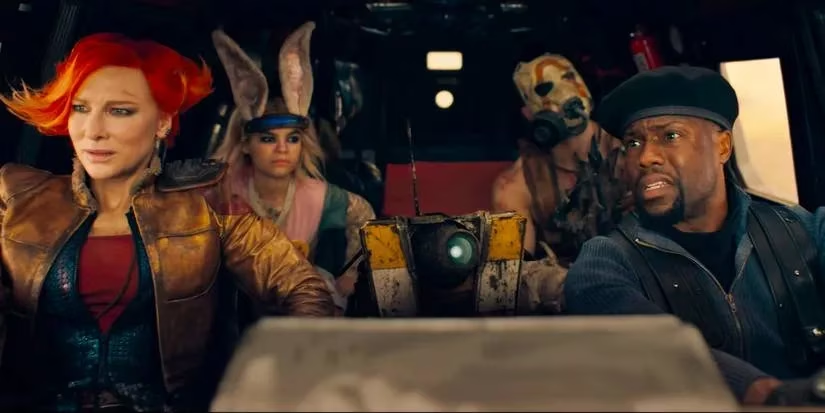
Designing for film is a team sport, and Orlandi emphasizes it's a massive collaboration between the costume department, production designers, and, most crucially, the actors. The goal is never a stiff impersonation of a digital model, but to help the actor inhabit the character's essence. Comfort is king, especially in an action-packed film like Borderlands. "You try to make [the costumes] as comfortable as possible, because the actors have to move so much in them," he explains.
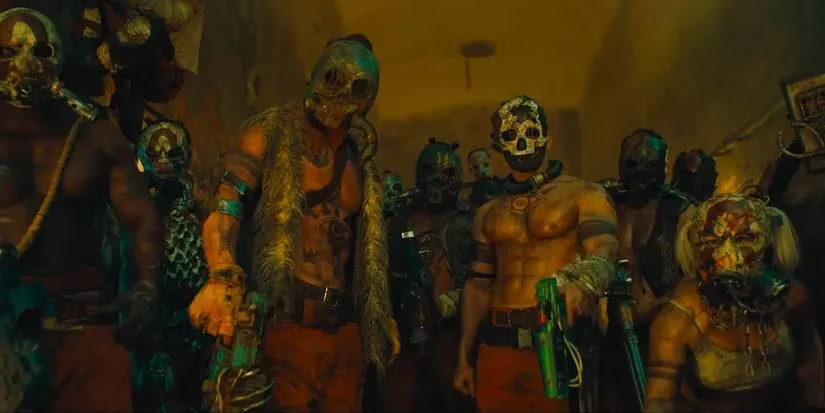
This led to some creative, long-distance problem-solving. With Cate Blanchett (Lilith) in London and the production in Budapest, they shipped pants and boots for a virtual fitting over Zoom. Together, they worked out the kinks to ensure she could perform her stunts with the agility of a Siren. For Florian Munteanu's hulking Krieg, the costume stayed remarkably true to the game, a project Orlandi describes as "fun to do and bang together" with the help of amazing Budapest leatherworkers. For Janina Gavankar's Moxxi, measurements were taken in New York and the costume assembled in Budapest, with countless adjustments to ensure the right fit and mobility. Orlandi's philosophy is simple: "I never want an actor to feel uncomfortable. I want them to feel like the character."
The Triple-Threat Challenge: Game, Script, and Actor ⚔️
The biggest challenge, according to Orlandi, was the balancing act. The costumes had to be true to three masters simultaneously: the iconic video game source material, the demands of the live-action script, and the physicality of the actors cast. It's a delicate dance. "Some things are pretty close to the game and then some things are not so close," he notes. Take Cate Blanchett's Lilith. The film version needed to feel like a tougher, more grounded badass. They incorporated elements like chainmail to convey that, while using the color and shape language from the game to maintain the visual connection. It was about evolution, not just replication.
Pandemic Pressures and the Shortage of Spares 😷
Action films typically require multiple copies of each costume—hero versions for close-ups, stunt doubles, and backups for when things get inevitably torn, singed, or covered in (virtual) mud. Borderlands, however, faced a unique hurdle. Filming in Budapest during the pandemic meant supply chains were strained. "The supply chain was like, 'Yeah, we have enough fabric to make three. And that's all you got,'" Orlandi laughs. This scarcity added pressure, but for him, that pressure is part of the fun. It forced ingenuity and careful planning, a testament to the problem-solving nature of the job.
The De Niro Doctrine: It's All in the Details (Even the Socks) 🧦
One of the most enduring lessons of Orlandi's career came from one of his first films, working with the legendary Robert De Niro. The lesson? No detail is too small. "He taught me that every detail of his costume is important," Orlandi shares. "In the morning, his costume would be in his trailer, and he would check that these were the socks we chose." This obsessive attention to character through clothing left a permanent mark. Orlandi now loves to include a secret, personal detail for the actor, something that connects them to their character even if the camera never sees it. He once gave a grown-up character his father's ring from flashback scenes, creating a tangible, invisible thread between performances. It's these hidden layers that build a performance from the inside out.
Looking Ahead: From Pandora to Venom 🕷️
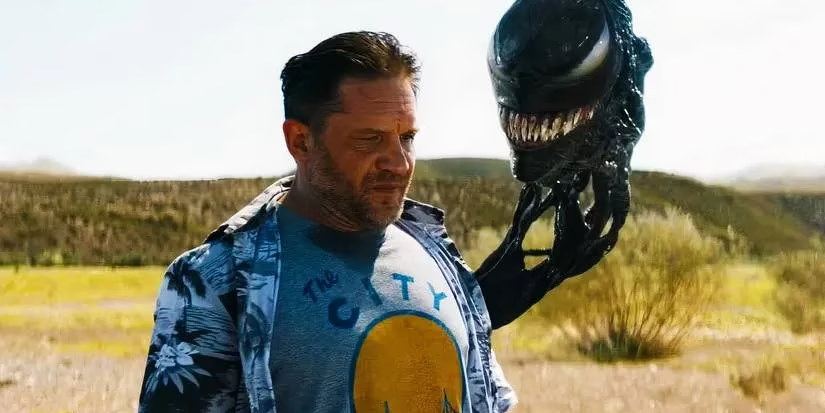
While reflecting on the chaotic world of Borderlands, Orlandi also has his sights set on another universe. He served as the costume designer for the upcoming Venom: The Last Dance. While he's tight-lipped on specifics, his tease is tantalizing. "I can't tease anything except it was super fun. It's going to surprise everybody," he says with a grin, noting the trailer is already generating buzz. It's a reminder that for a costume designer, every project is a new world to build, stitch by stitch.
The Final Stitch
Bringing Borderlands to life was a feat of collaborative alchemy. It required a non-gamer to become an expert in Pandoran fashion, demanded costumes that could survive both a script and a stunt sequence, and operated under the very real-world constraints of a pandemic. Through it all, Daniel Orlandi's guiding principles remained clear: collaborate deeply, prioritize the actor's connection to the character, and sweat the small stuff—because sometimes, the right pair of socks can make all the difference. The result, as seen on screen, is a vibrant, faithful, and wearable translation of a video game classic, proving that sometimes, the best person to build a world is someone seeing it with fresh eyes.
| Character | Actor | Costume Design Approach |
|---|---|---|
| Lilith | Cate Blanchett | Enhanced badassery with chainmail; long-distance Zoom fittings for mobility. |
| Krieg | Florian Munteanu | Very close to game design; built by expert leatherworkers in Budapest. |
| Moxxi | Janina Gavankar | Measurements from New York, construction in Budapest; multiple adjustments for fit. |
| Roland | Kevin Hart | Designed for comedic action and movement, balancing game aesthetic with actor's style. |
| Tiny Tina | Ariana Greenblatt | Captured the character's chaotic, explosive energy in a practical, stunt-friendly outfit. |
Key Takeaways from the Vault of Costume Design:
-
Research is Key: Even without being a fan, immersion in the source material is non-negotiable.
-
Comfort = Character: An actor who can't move can't perform; costumes must be built for action.
-
Collaboration is Everything: It's a conversation between designer, director, actor, and prop master.
-
Details Matter: From the socks up, every element helps build the character's reality.
-
Adaptability is a Superpower: Whether facing a pandemic supply chain or a last-minute script change, flexibility saves the day.
In the end, the costumes of Borderlands are more than just clothing; they are the bridge between a pixelated legend and a living, breathing (and often exploding) cinematic reality. They are the result of a designer who listened to fans, partnered with actors, and remembered that even on a lawless planet like Pandora, the devil—and the hero—is in the details. 🎬✨
This discussion is informed by coverage from The Verge - Gaming, a go-to source for how game IP gets adapted across film and TV; seen through that lens, Borderlands costume work reads as a practical translation problem—preserving the game’s loud silhouettes, color cues, and signature props while re-engineering materials (like leather, armor panels, and chainmail touches) for stunt mobility, pandemic-era scarcity, and actor comfort, so the final look feels faithful to Pandora without trapping performers in unwearable “cosplay.”