The Evolution of Iconic X-Men Costumes: From Leather to Legacy
For over two decades, the cinematic journey of the X-Men has been as much a story of visual evolution as it has been of mutant heroism. Bringing these beloved comic book characters to life on the big screen presented a unique challenge: translating their vibrant, often flamboyant, costumes into a live-action aesthetic that felt both believable and respectful to the source material. The journey began with pragmatic, unified leather in the early 2000s and gradually embraced the colorful legacy of the comics, creating a tapestry of iconic looks that define the franchise's visual identity. As we look back from the vantage point of 2026, these costumes are more than just clothing; they are visual shorthand for character, era, and the ever-shifting battle between human prejudice and mutant pride.
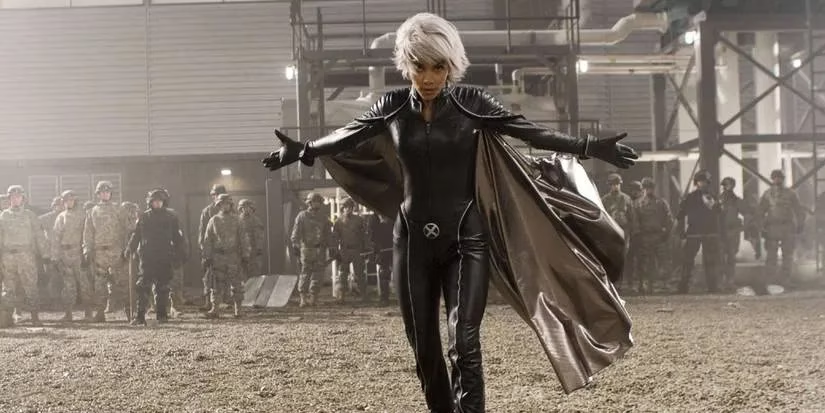
The original trilogy, starting with 2000's X-Men, opted for a tactical, unified approach. The now-iconic black leather suits, while initially controversial among purists, served a narrative purpose. They presented the team not as circus performers, but as a sleek, professional unit. Yet, even within this uniformity, individuality shone through. Halle Berry's Storm elevated the basic ensemble with a dramatic silver cape, a regal accessory that billowed majestically as she commanded the skies. It was a subtle hint of the flamboyance to come, setting her apart while maintaining team cohesion. Similarly, the feral menace of Tyler Mane's Sabretooth was perfectly captured in a costume that blended frontier trapper aesthetics with untamed animalistic fury, a direct and effective homage to the pages of the comics.
As the franchise expanded and timelines were rewritten, the costumes began to boldly reclaim their comic book roots. The prequel films, set in the 60s, 70s, and 80s, became a playground for retro-inspired designs. Lana Condor's Jubilee finally made her cinematic debut in X-Men: Apocalypse wearing her signature yellow jacket and pink sunglasses—a flawless piece of fan service that felt perfectly at home in the 1980s setting. This era also gave us Michael Fassbender's Magneto in his most detailed and regal attire. His Apocalypse suit, rich in dark purples and reds and intricate metallic detailing, visually represented the complexity and grandeur of his conflicted character far more eloquently than simple dialogue ever could.
Some costumes achieved greatness through sheer technical artistry and commitment to character essence. The makeup and prosthetics required to bring Mystique to life, for both Rebecca Romijn and Jennifer Lawrence, represented a monumental effort. The head-to-toe blue skin, detailed with dark markings and crowned with vibrant red hair, is one of the most faithfully and impressively realized comic book looks in all of superhero cinema. It’s a testament to practical effects work that remains stunning. Likewise, Alan Cumming's Nightcrawler in X2 was a masterpiece of design. Beyond the classic trench coat, it was the painstakingly applied, intricate blue skin and elaborate tribal markings that transformed the actor into the gentle, spiritual teleporter, making him an instant fan-favorite.
The franchise also excelled at designing its antagonists. The Sentinels of Days of Future Past received two distinct and brilliant looks. The 1970s models were a wonderful, bulky retro-futuristic interpretation of the classic comic design, while the future versions evolved into sleek, adaptive killing machines—a terrifying visual representation of technological evolution. Ian McKellen's Magneto, in his later years, adopted a minimalist’s approach. In The Last Stand, his simple dark gray tunic and cape, anchored by the iconic helmet, spoke volumes. This look communicated a man who had stripped away all pretense, seeing himself and his mission with stark, uncompromising clarity.
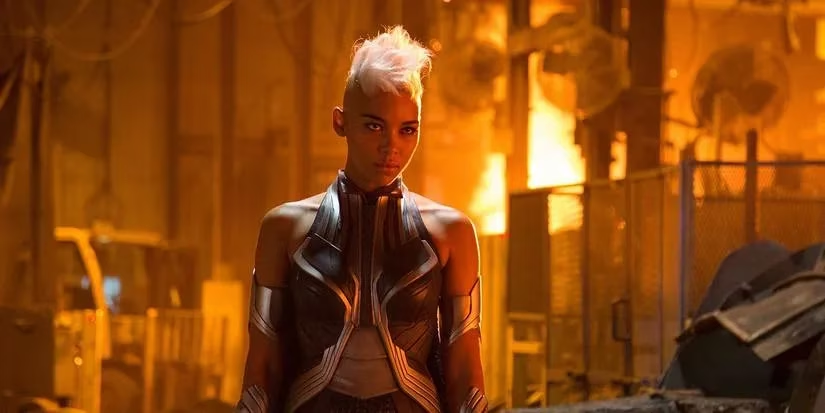
Perhaps the most symbolic evolution came with the attempted return to classic colors. 2019's Dark Phoenix, despite its narrative struggles, presented the X-Men in vibrant blue and gold jumpsuits emblazoned with a large yellow "X." This was a deliberate and bold rejection of the franchise's drab leather origins, a full-throated embrace of the team's colorful comic book legacy. The suits visually declared the X-Men as classic superheroes, a bright beacon against the film's dark cosmic storyline. Similarly, Alexandra Shipp's Storm in Apocalypse sported a radical mohawk, leather, and cape look that differentiated her from Halle Berry's version and tapped directly into the character's iconic 80s comic book era, showcasing a fiercer, more rebellious iteration of the weather goddess.
Looking back, the costume history of the X-Men films is a fascinating parallel to the franchise's own growth. It tells a story of initial caution giving way to confident experimentation, of balancing realism with comic book spectacle. From unifying leather to individualized armor, from practical prosthetics to symbolic color palettes, each costume serves as a chapter in the visual story of mutantkind. They have defined eras, highlighted character arcs, and provided some of the most memorable images in superhero cinema. As the X-Men now prepare for their inevitable future within a new cinematic universe, the bar for their visual representation has been set extraordinarily high by two decades of iconic, evolving style. 🎭✨
Key Costume Eras & Their Hallmarks:
| Era / Film Series | Costume Philosophy | Iconic Example |
|---|---|---|
| Original Trilogy (2000-2006) | Unified, tactical, minimalist leather; subtle comic nods. | Storm's silver cape, Nightcrawler's makeup. |
| Prequel Era (2011-2019) | Retro-inspired, detailed, embracing comic color and flair. | Magneto's Apocalypse armor, Jubilee's yellow jacket. |
| Legacy Sequels (2014-2019) | Hybrid designs; symbolic returns to classic colors. | The Dark Phoenix X-Suits, young Storm's mohawk. |
The legacy of these designs endures, reminding us that in a world of superpowers, what you wear is never just fabric—it's identity, ideology, and iconography all woven into one.