The Evolving Canvas: A Poetic Journey Through the Hulk's MCU Incarnations
The emerald giant, a tempest of gamma radiation and human fragility, has cast a long, verdant shadow across the tapestry of the Marvel Cinematic Universe. From hunted beast to cosmic gladiator, and finally, to a being of integrated consciousness, the journey of Bruce Banner and his other self is a saga painted in shifting hues of green, each brushstroke on the cinematic canvas revealing a different facet of the struggle between man and monster. The forms he has taken are as varied as the stories they inhabit, a visual chronicle of an evolution forced by circumstance, trauma, and a desperate search for peace. Some designs resonate with the primal power of the comics, while others adapt, mutate, and sometimes stumble in their translation to the screen, each one a chapter in the ongoing epic of the strongest Avenger.
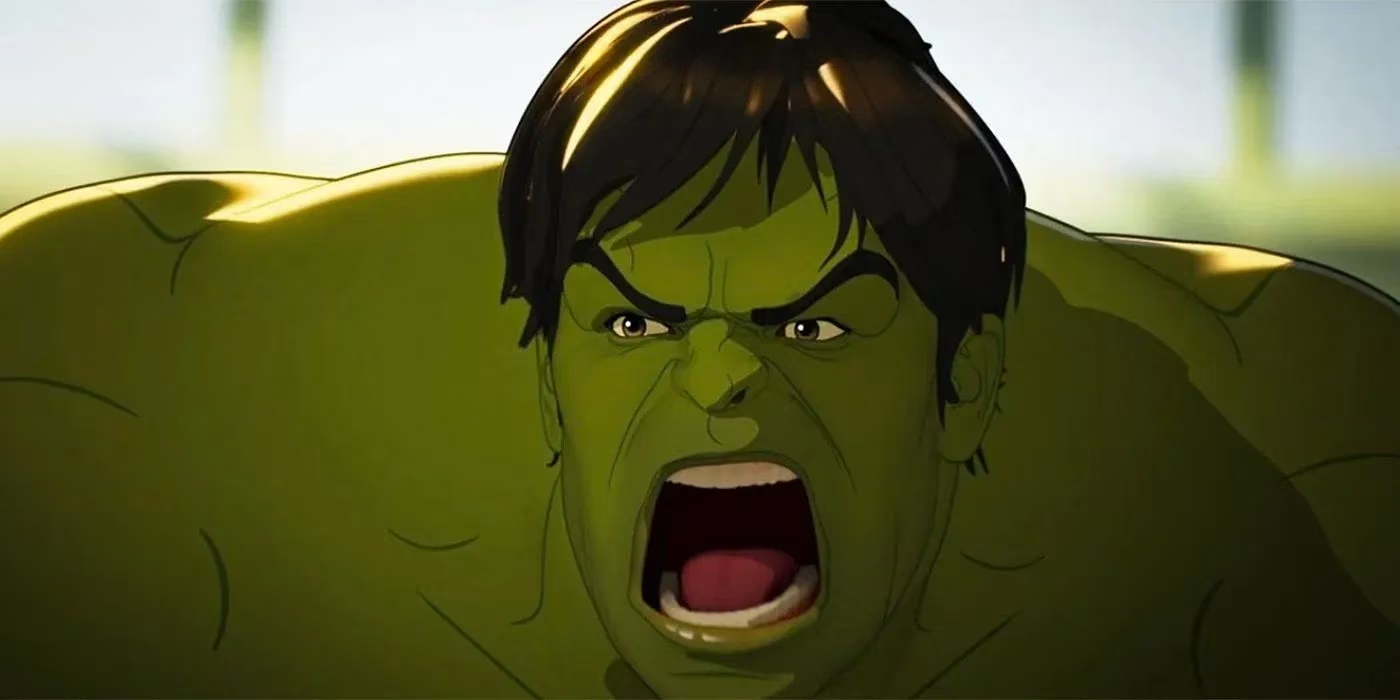
The multiverse, viewed through the solemn eyes of Uatu the Watcher, offered a prism through which to refract familiar heroes. In the first season of What If...?, the Hulk was revisited, his classic form translated into the series' distinctive cell-shaded animation. Yet, this translation was not a graceful one. The gamma-fueled behemoth, a sculpture of defined muscle in live-action, became an awkward, bulbous collection of vague green shapes, a form lacking the visceral texture of rage. A curious, almost whimsical alteration crowned this awkwardness: his close-cut hair was replaced by a strange, middle-parted mop, a bowl cut that clashed comically with his monumental physique, rendering him a paradoxical figure of immense power and boy-band aesthetics.
A later temporal twist in the series' second season, Marvel 1602, transported the Avengers to a past of doublets and intrigue. Here, the Hulk's design remained largely unchanged, a shirtless force of nature out of time. Yet, context granted dignity to his wild appearance. His overgrown hair, now accompanied by a full, unkempt beard, spoke not of poor design but of narrative purpose—a visual testament to Bruce Banner's prolonged captivity in the dungeons of this alternate Renaissance, a wild man shaped by centuries-old chains.
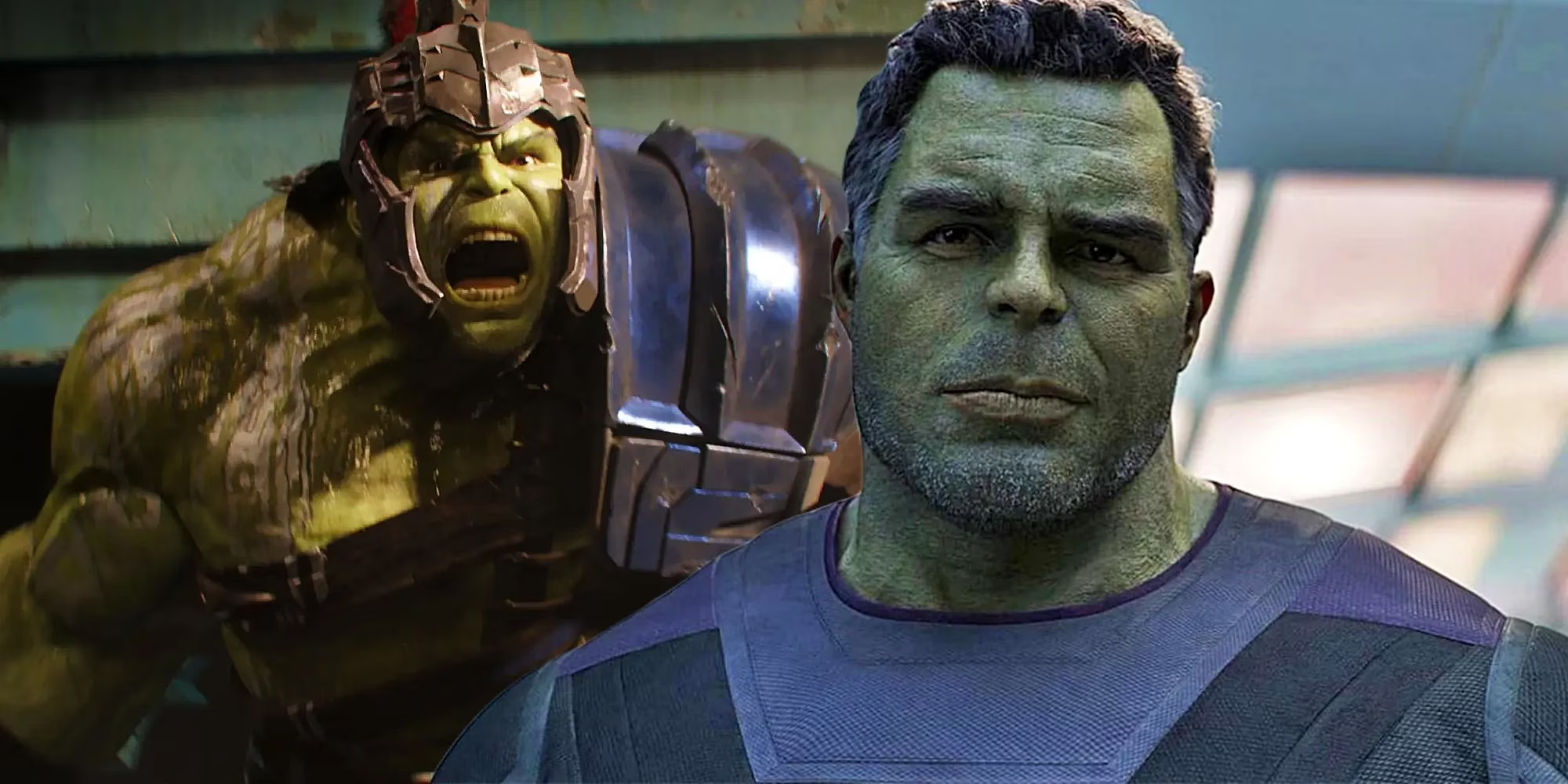
The Snap of Thanos' fingers wrought a silent, five-year blight upon the universe, and from that ashes emerged not a monster, but a resolution. Smart Hulk was born—a fusion, in Banner's own triumphant words, of the brain and the brawn. This being, where Banner's consciousness piloted the Hulk's formidable form, became the new default state. Visually, he was an imposing yet charming figure; Mark Ruffalo's endearing dorkiness was mapped onto a frame of incredible power. The scholarly glasses, the thoughtful stubble, the telling streaks of gray in his hair—these were brilliant details that painted a portrait of hard-won harmony.
Yet, for all its cleverness, this incarnation sometimes stretched credibility. His seemingly endless wardrobe of custom-made, stretchable clothing and his effortless navigation of a human world felt like a narrative convenience. While an interesting adaptation, Smart Hulk could not shake the faint aura of a compromise, a way to retain the character's power while sidestepping the terrifying, fascinating chaos of his purely bestial side. He was stability, but at the cost of a certain thrilling danger.
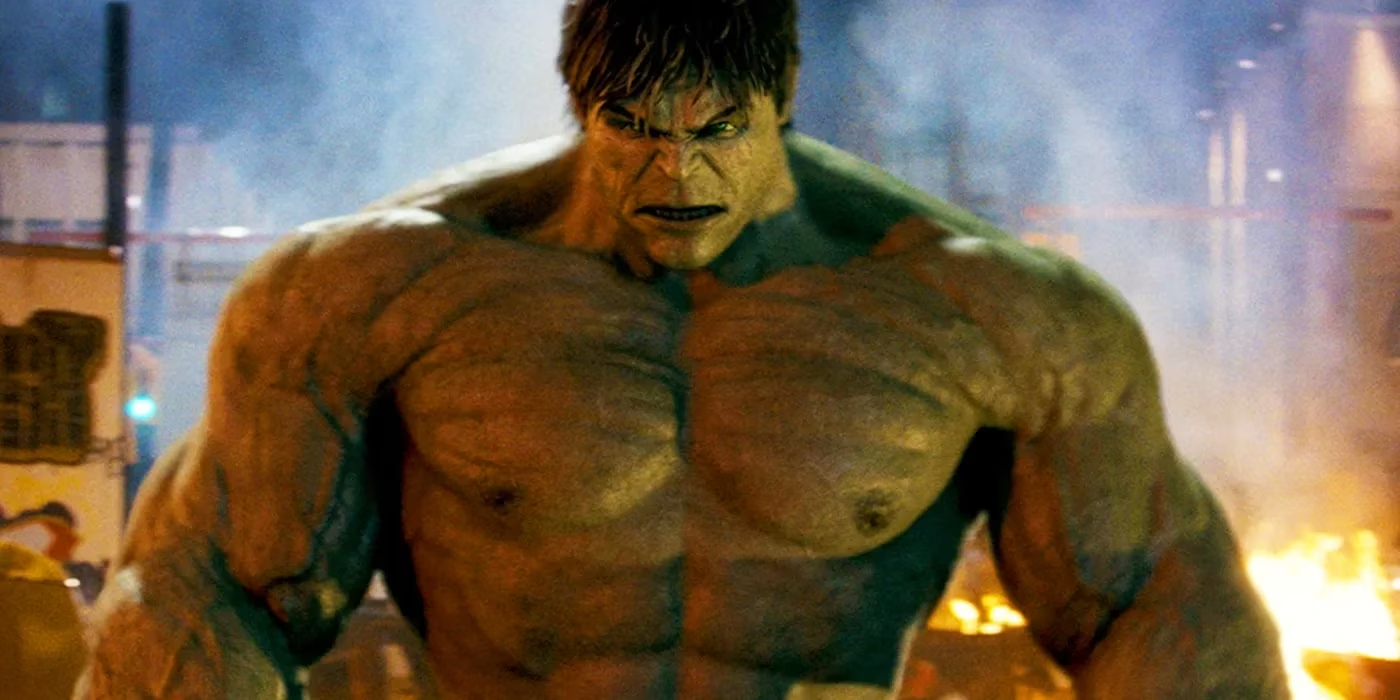
In the MCU's formative years, a different giant roared. Edward Norton's Hulk, from the 2008 film The Incredible Hulk, stands as a forgotten monument to an alternate path. His visage bore the clear imprint of Norton himself, a distinct divergence from the Ruffalo template that would later dominate. This was a Hulk of different texture:
-
A More Human Anatomy: He appeared more hypertrophied, with pronounced vasculation and a physique reminiscent of a shredded bodybuilder, contrasting with the more primal, simian proportions of his successor.
-
Shaggier Demeanor: His hair was wilder, longer, adding to a sense of untamed, raw power.
-
A Costume Misstep: Tragically, this iteration lacked the iconic torn purple shorts, opting for simpler navy pants—a deviation that still feels like a missed opportunity for comic-book purists.
This version presented a more human-looking beast, a path not taken, whose evolution through the Infinity Saga remains one of the MCU's great unanswered questions.
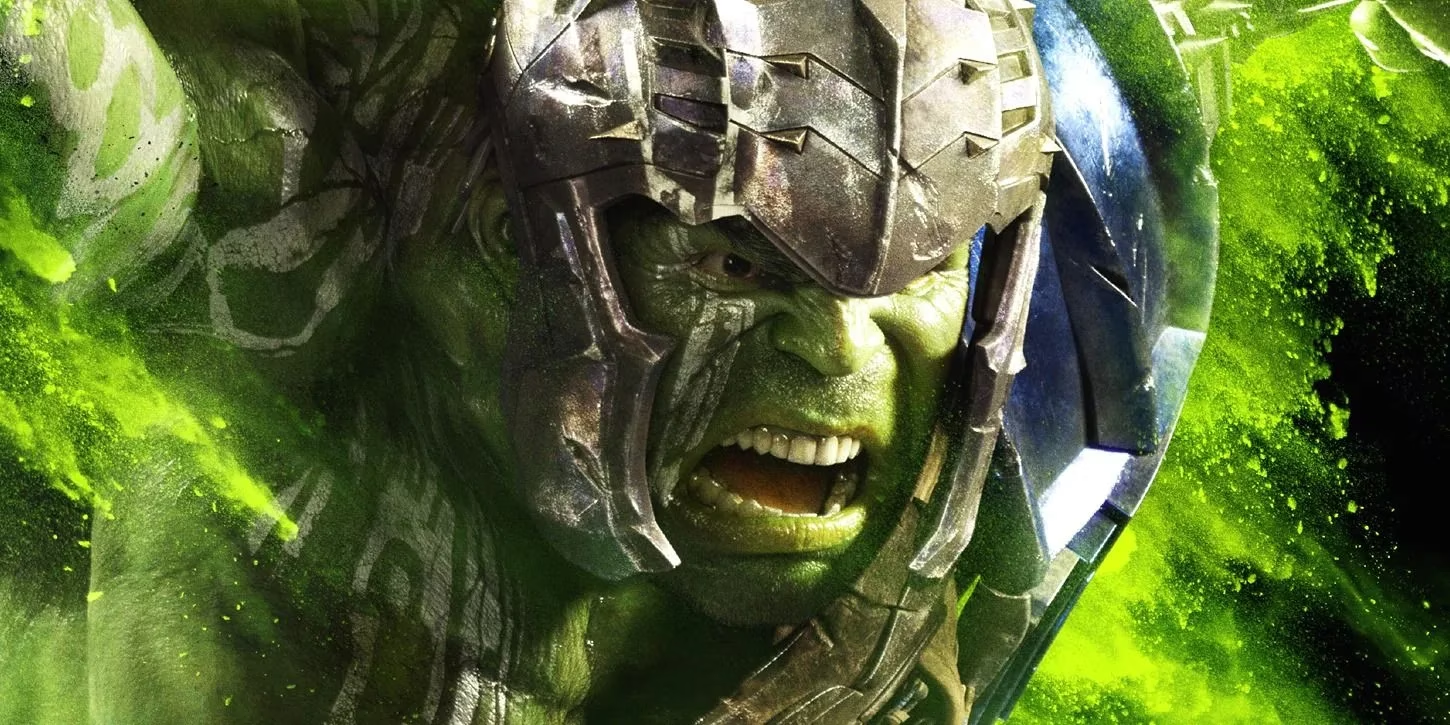
Denied a solo arena by rights entanglements, the Hulk found his grand stage on the far-off world of Sakaar. In Thor: Ragnarok, he was reborn as the Gladiator Hulk, a champion draped in the regalia of cosmic combat. This was not just a costume; it was a narrative, a homage to the legendary World War Hulk saga. Every piece told a story:
| Armor Piece | Significance & Homage |
|---|---|
| Spiked Shoulder Guard | Iconic symbol of his gladiator status, a direct lift from the comics. |
| Centurion Helmet | Evoked ancient warriors, framing his face with a crown of battle. |
| Engine-Block Hammer | A weapon of brutal, improvised power, perfectly suiting his style. |
| Sakaarian Body Markings | White paint denoting his long reign as the planet's uncontested champion. |
| Knee-High Sandals | A nod to the Peplum genre, echoing the classical gladiatorial spectacle of his fight with Thor. |
This incarnation was pure spectacle—a fusion of myth, comic-book glory, and raw, unadulterated power. He was a figure of history and might, a king of the alien colosseum.
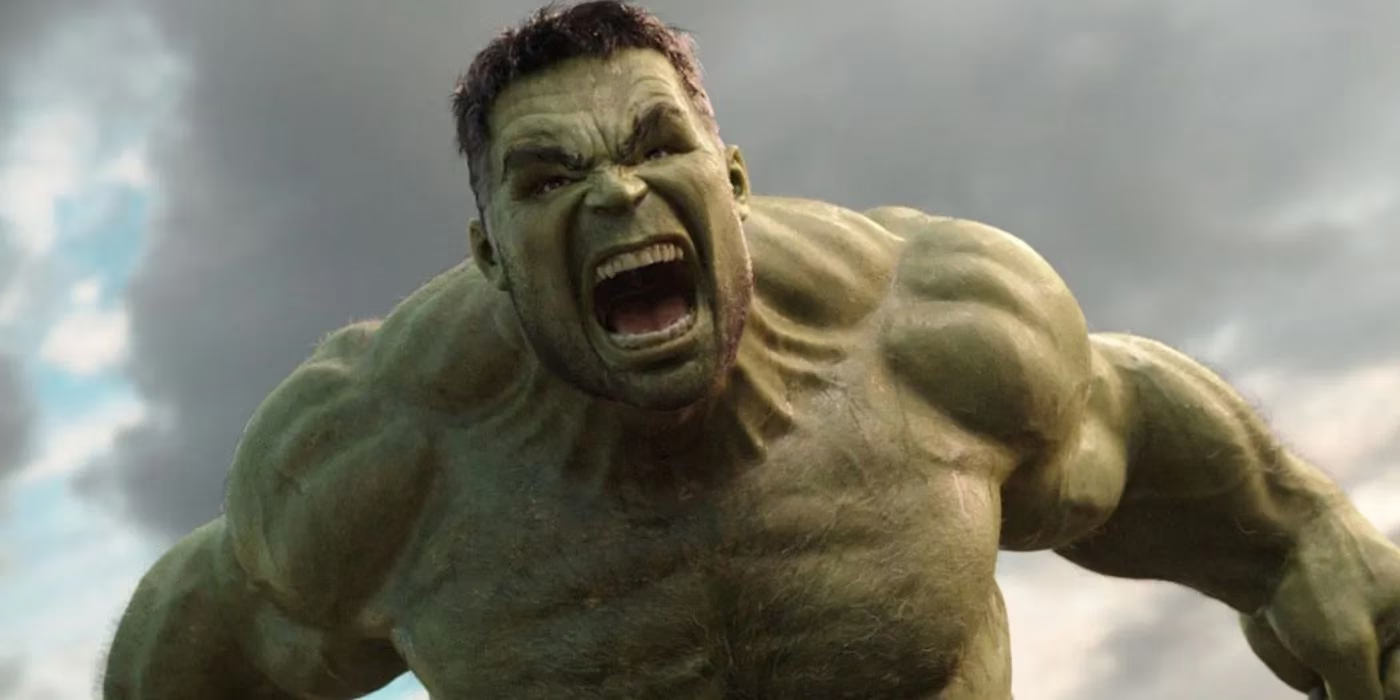
Yet, sometimes, perfection lies in foundational simplicity. The classic Hulk of The Avengers and its immediate sequels remains the visual zenith. This was the character leapt, fully formed and roaring, from the four-color page onto the silver screen. The design was a masterful blend of fidelity and innovation:
-
Comics-Accurate Foundation: The torn purple pants, the heavy neanderthal brow, the massive, defined musculature—it was all there.
-
Expressive Soul: Crucially, through Ruffalo's motion-capture performance, this Hulk had a face. It was a visage of surprising expressiveness, conveying rage, confusion, and even flickers of dry humor with a grunt or a glare.
-
Primal Essence: This early Hulk moved with a bestial, gorilla-like gait and roared with the fury of a lion. He was not just strong; he was the physical manifestation of suppressed, animalistic rage, a force of nature barely contained.
Muscular, massive, and emotionally resonant, this classic incarnation captured the dual essence of the Hulk—the uncontrollable monster and the tragic hero—with a visual power that has yet to be surpassed. It set a standard, a green benchmark against which all other cinematic iterations are, and will be, measured.