The Fabric of a Legend: Arianne Phillips' Epic Journey Weaving Bob Dylan's Style in 'A Complete Unknown'
The very soul of a bygone era is stitched into the seams of every garment that graces the silver screen in James Mangold's monumental biopic, A Complete Unknown. For costume designer Arianne Phillips, the task was not merely to dress actors, but to resurrect the palpable, gritty texture of 1960s New York and the seismic cultural shift embodied by a young, scruffy visionary named Bob Dylan. This was no simple historical reenactment; it was an archaeological dig into the wardrobe of a generation on the brink of revolution, with Timothée Chalamet as the vessel for one of music's most enigmatic icons. Phillips, a veteran of Mangold's cinematic universe and the Oscar-nominated visionary behind Walk the Line, embarked on a years-long odyssey that would test her creativity, patience, and profound understanding of how clothing defines identity and destiny.
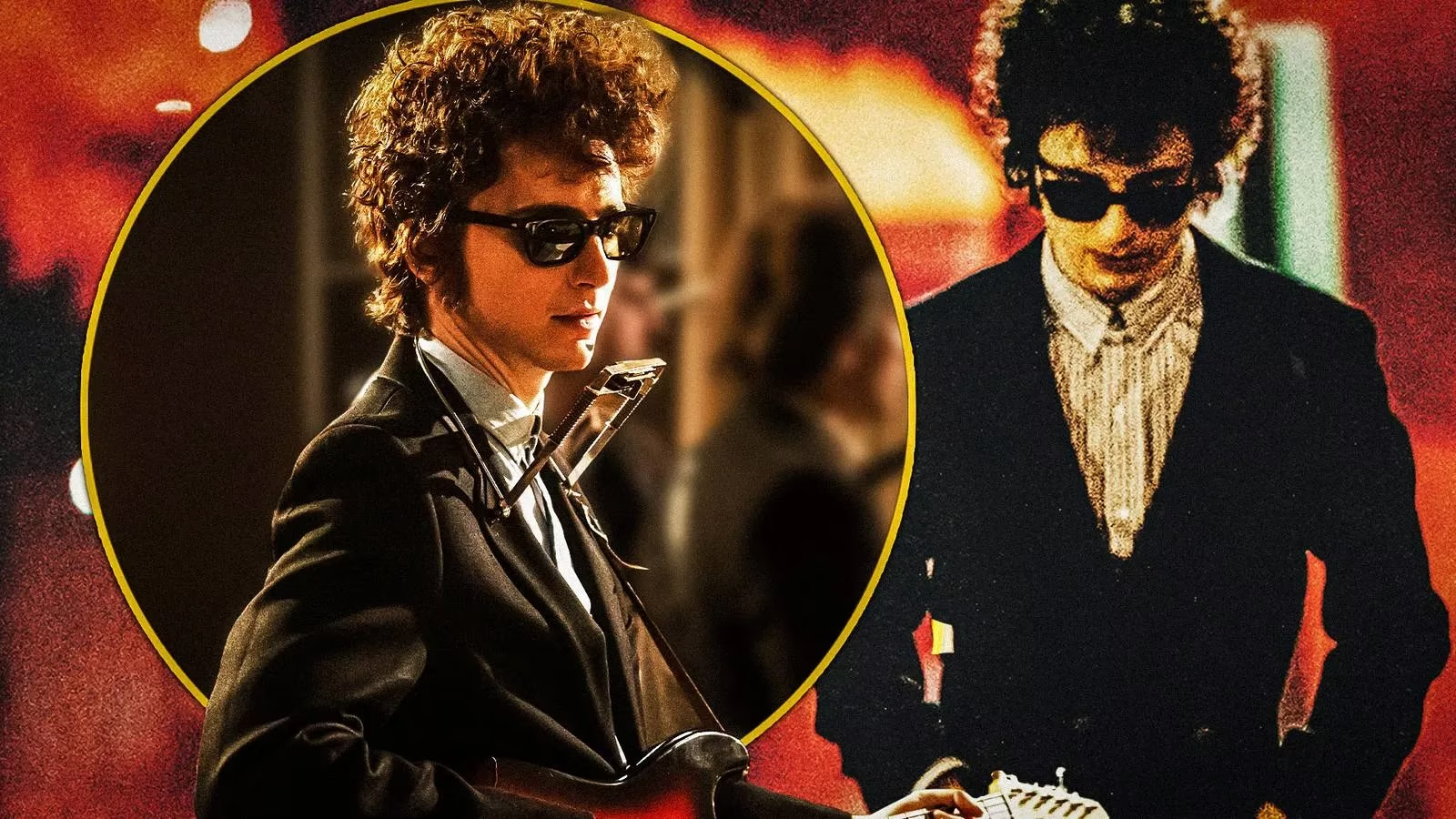
The challenge was colossal, historical, and intensely personal. Phillips wasn't just replicating outfits; she was deciphering the visual DNA of real people at a pivotal moment. "We are recreating real events and real people," she emphasized, acknowledging the immense pressure of portraying legends like Pete Seeger, Joan Baez, and Johnny Cash. For the public moments—the legendary Newport Folk Festival performance, the Freewheelin' album cover—there was a treasure trove of documentation. Yet, the film's heart also beats in the private, unseen spaces. "We unfortunately didn't have access to any private photos," Phillips revealed, forcing her to become a narrative detective, forensically breaking down the script to bridge the gap between public icon and private young man.
What followed was an immersion of epic proportions. Joined to the project in 2019, Phillips endured pandemic delays and industry strikes, a frustrating period that ultimately became a gift of time. "It afforded me a lot of time to really understand who 19-year-old Bob Dylan was showing up in New York City," she reflected. Her research was exhaustive: devouring biographies, studying every photograph, and listening to countless interviews to grasp not just what people wore, but why. She sought to understand the aesthetic of an entire movement, from the beatnik jazz clubs to the burgeoning folk scene, a youth culture that was the fertile ground for the Summer of Love still years away.
😲 The sheer scale of the undertaking was mind-boggling:
-
67 costume changes for Timothée Chalamet alone, charting Dylan's evolution from Woody Guthrie-obsessed kid to iconic troubadour.
-
120 speaking parts and over 5,000 extras, requiring Phillips to define the entire visual texture of early-60s America.
-
A narrative compressed into just four transformative years, making every sartorial shift critically significant.
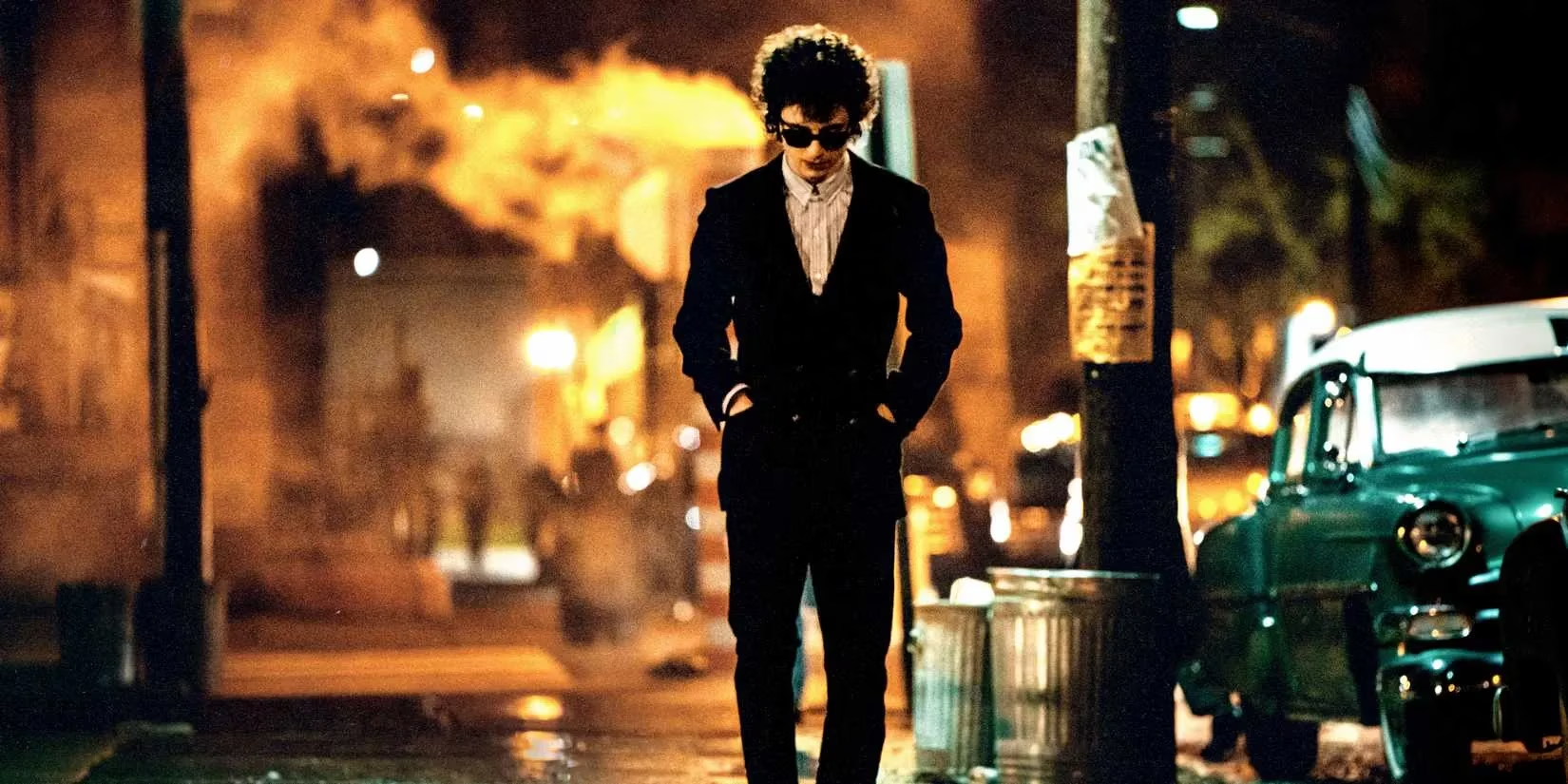
For Phillips, this was a rare second chance at history. Having designed the iconic looks for Joaquin Phoenix's Johnny Cash in Walk the Line nearly two decades prior, she now had the surreal opportunity to revisit the Man in Black through Boyd Holbrook in A Complete Unknown. "I don't know if I'll ever have that kind of opportunity again," she mused, deeply moved by the thematic connection. She saw in the Cash-Dylan friendship a powerful torch-passing of artistic integrity. "I love that connection... the encouragement that he gave Bob to find his own path and don't be deterred." This personal identification with the story of authentic self-expression fueled her work, making Walk the Line feel like a divine preparation for this even grander challenge.
The collaboration was the engine of this creative machine. Director James Mangold, with whom this marks a sixth collaboration, fostered an environment of unparalleled creative freedom. "I would basically follow him off a cliff no matter what," Phillips declared. Their long-standing shorthand allowed for a "free flow of information" across departments, from cinematography to casting. This synergy was crucial when working with the cast. Chalamet and Monica Barbaro (Joan Baez) were deeply immersed in learning instruments and vocals, making their costume fittings the final piece of the character puzzle.
Phillips's process was tactile and intuitive. She began by hunting for genuine vintage pieces—real Pendleton shirts, worn-in denim—to understand the authentic drape and feel of 1960s fabrics. "Our modern bodies are different," she noted, explaining the delicate art of merging an actor's physique with the historical silhouette. For Dylan's early Guthrie-inspired look, they mixed a real vintage shirt with meticulously crafted jackets and caps. "Being able to mix it so it has a sense of authenticity," she described, was key to creating what she calls a "beam me up suit"—costumes that physically transport the actor into the character's skin.
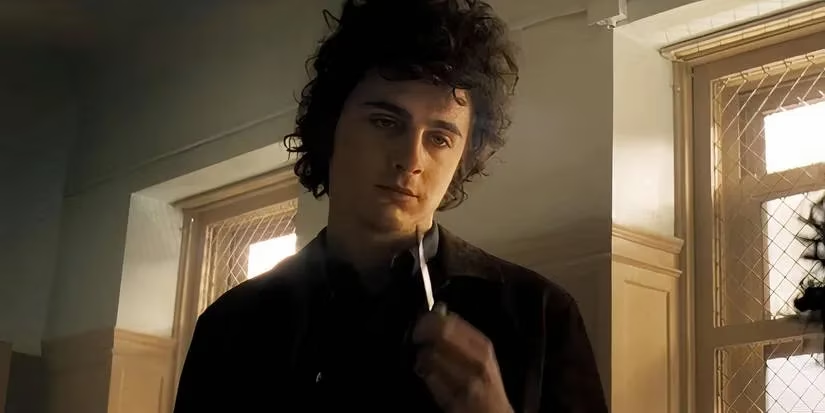
As 2026 audiences look back on this cinematic achievement, the buzz around Phillips's work is a testament to its power. For her, any awards recognition serves a singular, glorious purpose: to get people into theaters. "We want people to see this at the theater... there's nothing like it," she insists, emphasizing the film's rich auditory and visual texture meant for the big screen. She believes in the timeless quality of Mangold's films and sees A Complete Unknown as a "narrative, cinematic testament to a young man finding his voice"—one she hopes will ignite a new generation of Dylan fans.
Ultimately, Arianne Phillips did more than design costumes; she wove the very fabric of a legend. Each thread in Timothée Chalamet's 67 outfits, each vintage find, and each collaborative breakthrough was a step in resurrecting the rebellious spirit of 1960s New York. From the wool of a Pendleton shirt to the leather of a boot, she built a wardrobe that doesn't just clothe a performance but breathes life into history itself, proving that sometimes, to tell the truest story, you have to start with what a person wears on their back.