The Flash's DIY Batsuit: How a Spray-Painted Keaton Suit Became a Multiverse Masterstroke
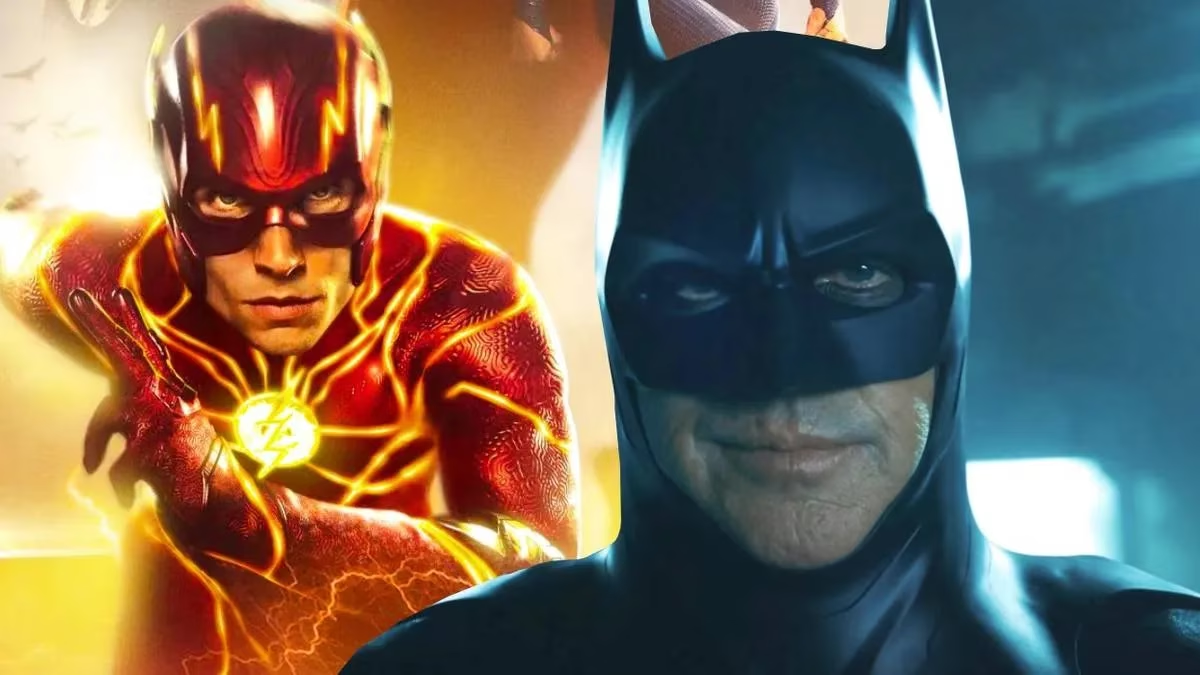
In the sprawling pantheon of DCEU costume designs, few have generated as much affectionate ridicule and subsequent fan admiration as the alternate Barry Allen's improvised Flash suit in 2023's The Flash. What looked at first like a budget cosplayer's last-minute convention panic has matured into a cult-favorite artifact—a raccoon rummaging through the Batcave's dumpster and emerging wrapped in a repurposed legend. Now, three years after the film's anarchic sprint through timelines, newly released high-resolution stills and behind-the-scenes interviews from the Total Film archives have given fans their most detailed look yet at the suit that turned a Michael Keaton-era batsuit into an accidental speedster uniform.
The image underscores the multiversal mayhem that the Scarlet Speedster accidentally triggers when he tries to rewrite the past and save his mother. The film—a decade in gestation, jostled by directorial changes, pandemic delays, and the controversial off-screen behavior of its star—finally sprinted into theaters on June 16, 2023. It delivered a Barry Allen face-off: the familiar, wiser hero alongside a younger, untested double plucked from a timeline where his mother never died. This second Barry had never donned a superhero costume because, without tragedy, he had never been a speedster. The lightning-strike scene, a direct nod to the Flashpoint comic, shows both Barrys being struck simultaneously by a bolt that gifts the alternate Barry his powers. That instant promotion from civilian to meta-human left him without a tailor-made suit, prompting a frantic scavenger hunt in Wayne Manor.
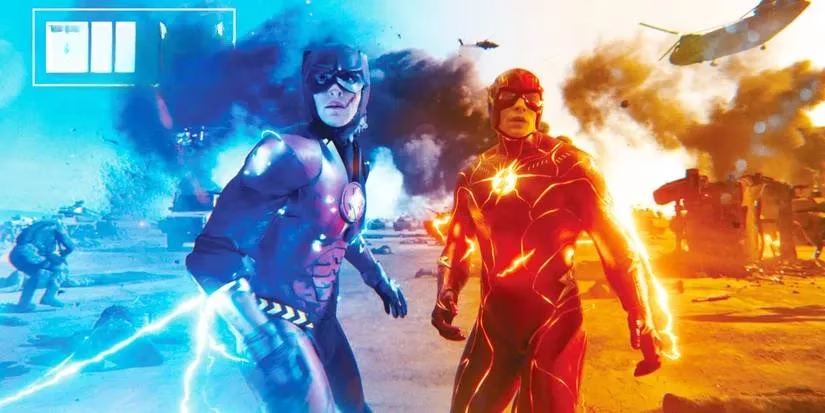
The result is a suit that looks like a classically restored muscle car that got ambushed by a street-art collective: the iconic black bat-cowl had its pointed ears sheared down to stubs, the chest emblem was erased, and the entire torso was slathered in a chaotic pattern of red and yellow spray paint. Wide strips of reflective tape, hastily applied, catch the light like a construction worker's vest attempting to channel the Speed Force. It's the superhero equivalent of a gourmet dish being doused in ketchup by a hungry child—sacrilegious to purists, yet oddly endearing.
The Anatomy of a rushed transformation
Why did the second Barry require such a crude outfit? According to the film's narrative, a Kryptonian invasion led by General Zod forces the two Flashes, Supergirl (Sasha Calle), and an aging Batman to mount an immediate defense. There is no time for precision tailoring or vibranium-weave upgrades. The Batcave becomes a crash workshop, and the original Batsuit—presumably the spare or trophy suit from Keaton's run—is the only viable base material. The suit's original dark aesthetic is overpowered by the Flash's color scheme: red for the hero's core, yellow for the lightning sigil, with the spray nozzle serving as an airbrush of desperation.
This visual gag is more than just comic relief; it's a meta-commentary on the lore itself. The batsuit's pointed ears have been a symbol of predatory intimidation since 1989. Filing them down turns Batman's fear tactics into a traffic cone, reducing the garment to a blank canvas. The resulting look is what would happen if a Rubik's Cube were solved with a hammer— functional but jarringly asymmetrical. The suit hangs a little loose in the shoulders, suggesting the alternate Barry hasn't filled out the frame of a veteran vigilante. It creates a silhouette that is both heroic and ridiculous, a dichotomy that actor Ezra Miller reportedly leaned into with theatrical delight during filming.
From embarrassment to icon
Upon the film's release, fan reactions cycled through the typical stages of superhero-movie critique: initial bewilderment, memetic explosion, and eventual reverence. Social media platforms flooded with comparisons to duct-tape repairs and Halloween costumes thrown together at 11 p.m. Yet over time, the suit's very ungainliness became its charm. It reflects the core theme of The Flash—that even flawed, makeshift solutions born out of love and desperation can be powerful. In a universe of pristine nanotech helmets and perfectly molded spandex, the spray-painted Bat-Flash is a neon reminder that heroism sometimes shows up wearing whatever fits.
Practical details unearthed in 2026 from costume designer Alexandra Byrne's notes reveal the surprising sophistication behind the supposed mess. The reflective tape was placed along ergonomic seams to mimic the Flash's speed-lines, and the spray-paint gradient was carefully designed to echo the heat signature of a speedster in motion. The shaved-down cowl, though absurd on first glance, actually improves peripheral vision—something a novice speedster desperately needs. It's a masterclass in deliberate clumsiness, a recipe for instant fan-art that continues to appear on convention floors and custom action-figure projects today.
A legacy of hacked icons
The alternate Barry's batsuit retrofit also stitched itself into the broader tapestry of DCEU costuming by paying homage to the Tim Burton aesthetic. Keaton's original Batsuit, with its art-deco muscle plating and near-immobile neck, was an artifact from a more operatic era of superhero cinema. To see it vandalized for a Multiversal crisis is akin to watching a priceless Stradivarius being used for a punk-rock concert—the chords are wrong, but the noise is unforgettable. In 2026, with the DC Universe undergoing yet another reinvention under James Gunn, this improvised suit stands as a relic of a time when the DCEU embraced irreverence at full tilt.
The suit also served a narrative function beyond the humor. It visually differentiated the two Barrys instantly, preventing audience confusion during rapid-fire action sequences. The classic suit, with its gold-tipped earpieces and sleek contouring, speaks of experience. The second suit screams of inexperience, yet its red and yellow defiance mirrors the same symbol that unites them. It's a twin-suit dynamic rarely attempted on screen—like giving identical twins wildly different haircuts to make them distinguishable, except here one twin is drenched in budget-graffiti.
Looking back from 2026, the Bat-Flash costume has outlived much of the DCEU's shinier, more expensive designs. It demonstrates how superhero movies can find heart in the hasty and the handmade. In a genre often criticized for taking itself too seriously, a spray-painted bat-cowl and reflective-tape lightning bolt remind us that behind every multiverse-shattering crisis, there might be a guy in a borrowed suit, hoping nobody notices he modified it with a can of Krylon. And sometimes, that's enough to save reality.
| Element | Original Batsuit | Alternate Flash Suit |
|---|---|---|
| Cowl | Pointed bat-ears, rigid | Ears shaved down, more flexible |
| Color | All-black | Red/yellow spray paint with reflective tape |
| Chest emblem | Bat symbol | Hidden beneath paint, replaced by lightning bolt suggestion |
| Purpose | Stealth, intimidation | Speed, visibility, quick assembly |
| Material | Armored, legacy | Same base, but haphazardly modified |
As the DCEU era fades into memory, the image of two Flashes—one pristine, one gloriously jury-rigged—remains a perfect snapshot of the franchise's ambitious, often messy, but always memorable journey through time.