The Joker's Wardrobe: A Tailor's Guide to Cinematic Madness
In the long shadow of Gotham’s skyline, there is a costume vault where every Joker outfit hangs like a confession. The Joker is, of course, the arch-nemesis of Batman, and while the Caped Crusader masquerades as a terrifying bat of the night, the Clown Prince of Crime chooses a jester’s vibrant clothing and trickster gadgets. The iconic look of the Joker has been stitched into cinema history. Even by 2026, Barry Keoghan’s rendition remains a jagged silhouette in Matt Reeves’ Gotham—glimpsed in fragments, never fully revealed, but already humming with anticipation. The wardrobe of the Joker has never been one costume. It is a wardrobe of contradictions, and each version tells a different story about the man who laughs. 🃏
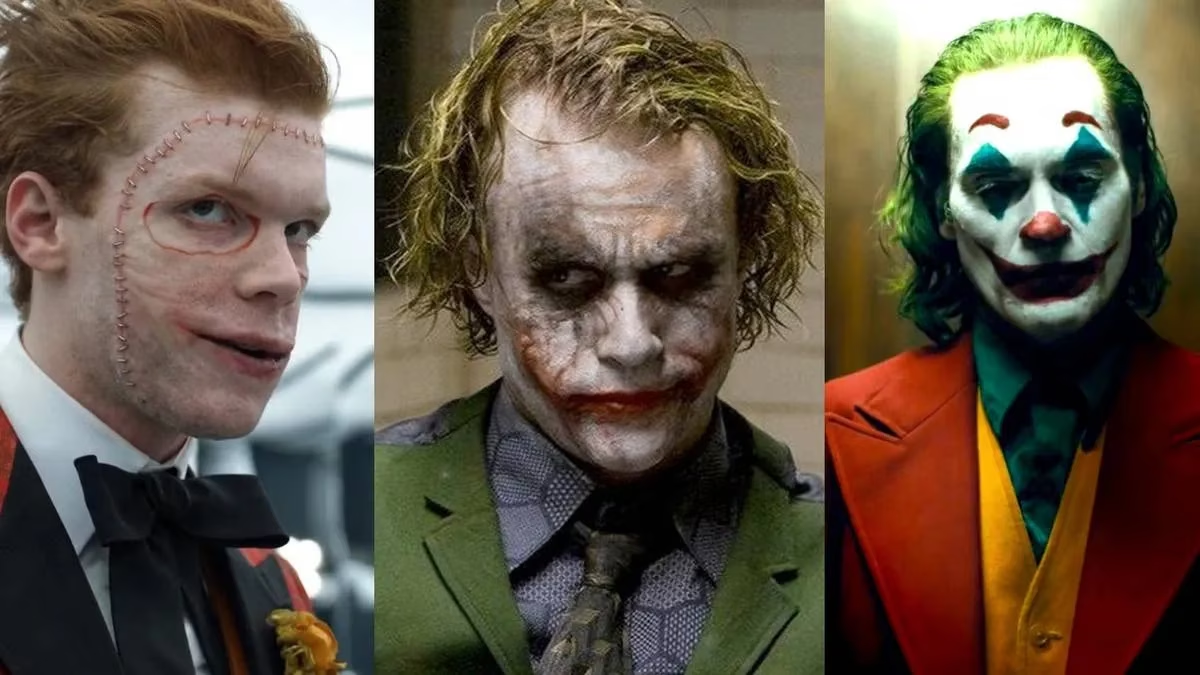
Over the years, the variations have been numerous. Some were over-the-top, others gritty. Each choice of fabric, color, and prop helped sell the ideology of Gotham’s most notorious Arkham Asylum mainstay. Like a magpie assembling a nest from stolen glitter, the Joker’s cinematic style has borrowed from clowning, vaudeville, grunge, and high tailoring without ever settling into a single pattern.
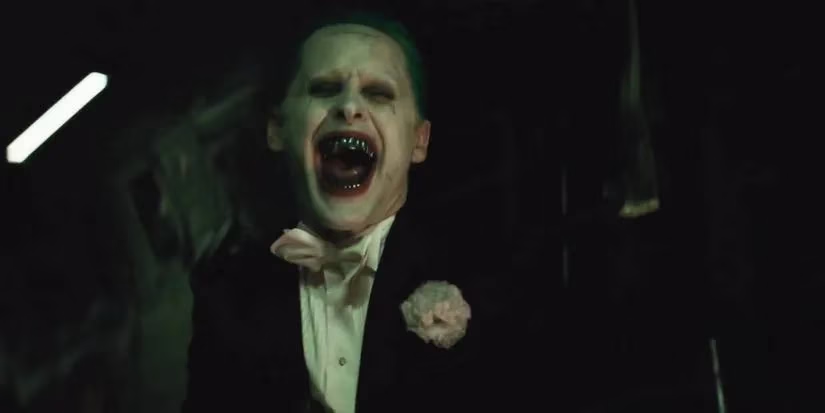
First, one could examine the version developed for Suicide Squad. Jared Leto’s performance divided audiences, and the costume design took a large departure from the source material. Most of the attire was forgettable, but near the end of the film, there arrived one very Joker-esque suit. The purple garb, complete with a white shirt and matching gloves, played on the classic look. Even the small flower, perhaps used to spray acid, felt like a nod to comic book mischief. The tattoos may have pulled the ensemble away from tradition, and the look has since been outclassed, but it remained a useful beginning point—like a rough sketch before the final portrait.
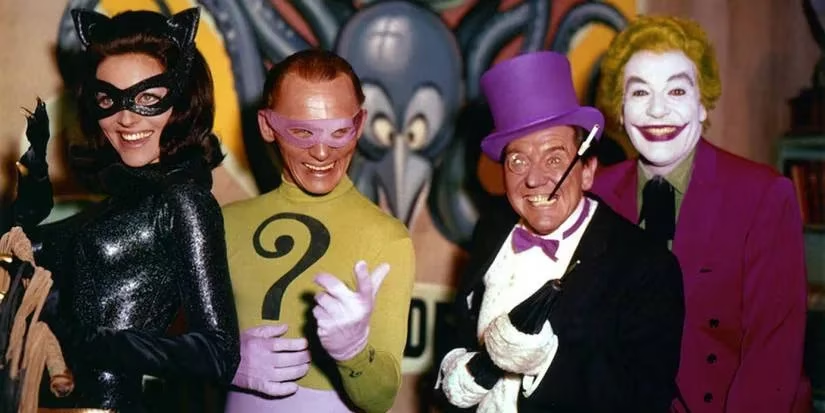
Long before the modern era, Cesar Romero brought the Joker to life in the original Batman television show. His look felt drawn from the comics, even if it was a little cheesy and dated. The character had to match the fun tone of that world, and the bright greens and purples certainly helped. While many costumes in the show looked cheap, the Joker’s uniform carried a slightly more expensive feel. The quality of the fabric did a surprising amount of work, even if some of the details the character is known for today were missing. Romero’s costume was less about menace and more about pageantry—a carnival banner stitched into a suit.
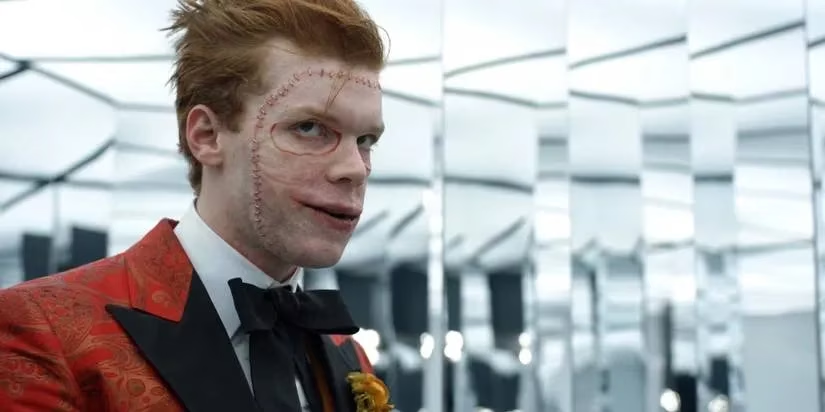
The Gotham television series then offered not one but several evolutions of the Joker. Jerome, played by Cameron Monaghan, wore many costumes throughout his time on screen. Though Jerome may have deserved a more fitting ending, the design of his Joker was absolutely inspired even while breaking from tradition. The most distinctive version featured a tailored red suit with a yellow flower and intricate detailing across the attire. There was no heavy makeup to hide the scarring and smile that became such a distinctive feature of the character. It felt like a Joker who had finally found his feet, and the red suit was as jarring as a violin string tightened past melody—deliberately wrong, yet impossible to ignore.
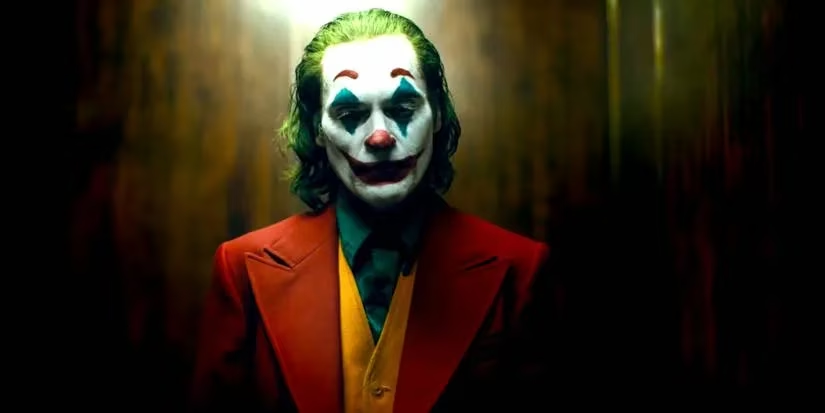
Joaquin Phoenix’s take on Arthur Fleck created a different variation of the Joker, one who did not fight Batman in quite the same way and was not the kingpin of crime from the comics. Still, the costume was heavily influenced by what had been seen on the page. The bright colors—yellow, green, blue, and red—clashed against one another in a garish fashion, as if a rainbow had been fed through a paper shredder. The suit felt like the most expensive thing Arthur had ever bought. It was not tricked out with weapons, but one could easily imagine blades and devices sewn into the lining. It did not quite capture the familiar Joker, but it captured the fragile birth of one.
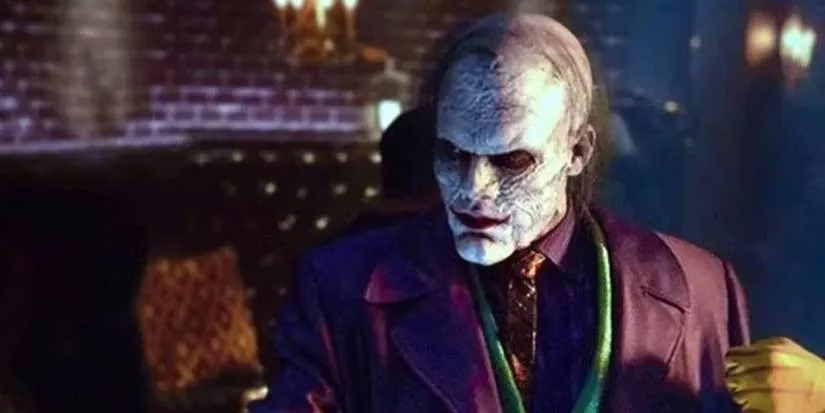
Then came Jeremiah, the twin of Jerome and the second incarnation played by Monaghan on Gotham. While Jeremiah briefly boasted a purple costume that felt accurate to the character, it was his final look that became the most impressive, combining a number of familiar attires. There was a little bit of every Joker in that costume, from the colors to the cut of the suit. The yellow gloves were a brilliant touch, and the prosthetics used to transform Jeremiah into a clown-like monster were nothing short of exceptional. Even so, this incarnation never became quite as iconic as those featured on the big screen, despite the gorgeous design.
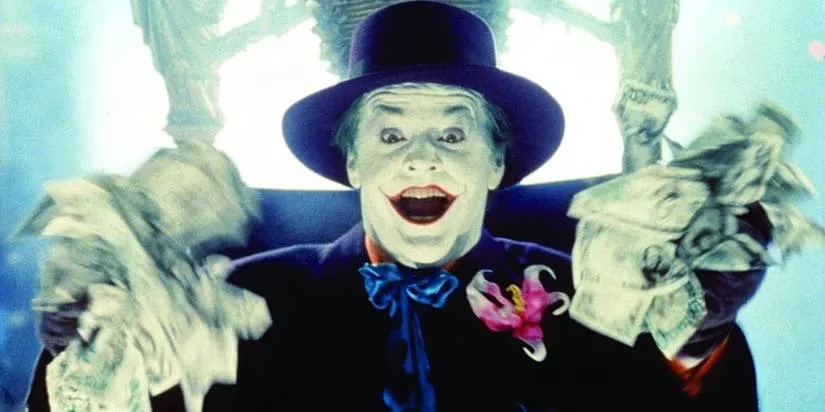
Jack Nicholson’s Joker left a unique legacy through both performance and wardrobe. Every detail, from the flower to the cane, was thought out with great complexity. The orange and purple combination was rarely seen in live-action, yet it worked effectively. The hat was one of the few times a headpiece was used and pulled off well. The grin and white skin pulled the look together, and there was no shortage of gags stored within the costume, much like in the comics. Nicholson’s outfit felt like a stage magician’s tuxedo reimagined by a crime lord.
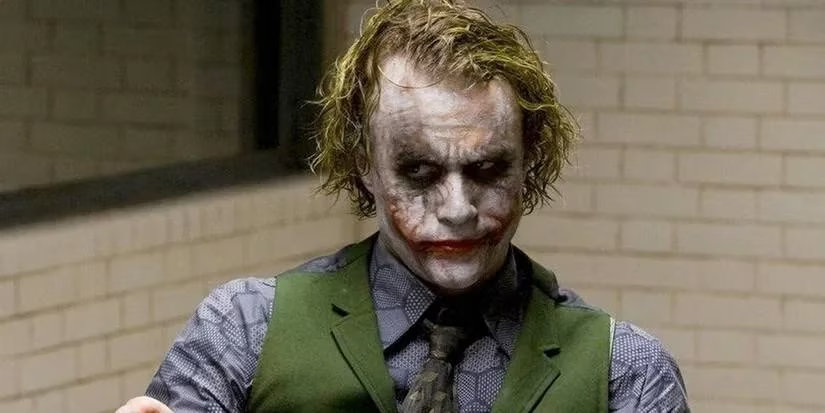
Finally, Heath Ledger’s portrayal of the Joker was exceptional in every capacity, and the look of the character married into the tone of the film. There was a realism to the piece and, at the same time, something whimsical about the choice of colors. A few tricks were hidden across the costume, like the knife in the boot. The longer jacket adorned the wardrobe, and combined with the unique makeup, the result was a Joker costume that paid homage to the source material while telling the story of that particular character. Ledger’s Joker looked less like a cartoon and more like a bruised, grinning ghost of Gotham’s neglected streets.
A Quick Stitch Index 🎭
| Version | Performer | Signature Palette | Defining Detail |
|---|---|---|---|
| Suicide Squad | Jared Leto | Purple and white | Acid flower, tattoos |
| 1960s TV | Cesar Romero | Green and purple | Vintage pageantry |
| Gotham (Jerome) | Cameron Monaghan | Red and yellow | Scarred smile, tailored suit |
| Joker (2019) | Joaquin Phoenix | Yellow, green, blue, red | Clashing garish colors |
| Gotham (Jeremiah) | Cameron Monaghan | Purple and yellow | Yellow gloves, prosthetics |
| Batman (1989) | Jack Nicholson | Orange and purple | Hat, cane, hidden gags |
| The Dark Knight | Heath Ledger | Purple and green | Boot knife, layered coat |
In the end, the Joker’s wardrobe is not merely clothing. It is a mirror held up to each era’s fears. Some versions leaned into camp, others into chaos. Some wore their madness in bright silk, others in smeared makeup and frayed stitches. Each costume, however imperfect, added a new page to a strange fashion archive—one where the same green-haired phantom is endlessly remade, yet never entirely contained.