The Most Brutal Martial Arts Masters in Cinema History: A Symphony of Pain
Step into the cinematic arena where bones shatter, necks snap, and the very air vibrates with the fury of unstoppable combatants. Beyond the flashy flips and choreographed dances of typical action flicks lies a brutal pantheon of stars whose fighting styles are not just about winning, but about utter, merciless annihilation. These aren't just actors; they are forces of nature, delivering pain with a precision that blurs the line between art and violence. From the blood-soaked streets of Jakarta to the disciplined dojos of Hong Kong, their on-screen personas have forever redefined what it means to be a true martial arts warrior, leaving audiences breathless and bruised just from watching. 😱 Their legacy isn't built on mercy, but on the unforgettable, visceral impact of every crippling blow.
The Unstoppable Juggernauts
When the screen flickers to life, some men don't just fight; they dismantle. Michael Jai White is a human wrecking ball, a seven-time black belt who discards fancy footwork for pure, unadulterated power. His philosophy is simple: meet force with overwhelming force. In Blood and Bone, he doesn't hesitate to turn a prison shank into a lethal tool, treating combat with the cold efficiency of a street execution. There are no rules, only results. Similarly, the legendary Chuck Norris built an empire on relentless endurance. His brutality is a slow, crushing tide—a physicality so immense that waves of attackers break against him. He doesn't evade; he absorbs and retaliates, a monument of sheer willpower clashing until nothing remains standing. His fights are less battles and more demonstrations of inevitable conquest.
-
Michael Jai White: Brute strength, street-fighter pragmatism, lethal improvisation.
-
Chuck Norris: Overwhelming endurance, offensive onslaught, zero evasiveness.
The Masters of Merciless Technique
Then there are the artists of agony, for whom martial arts is a deadly science. Iko Uwais is a whirlwind of Silat, an Indonesian storm where every movement has a singular purpose: permanent incapacitation. In The Raid 2, he doesn't stop at a knockout. Elbows shatter jaws, necks twist with finality, and the environment itself becomes a weapon in his ruthless hands. It's efficient, pragmatic, and terrifyingly final. From Thailand, Tony Jaa unleashes the bone-shattering reality of Muay Thai. His fights in The Protector are audio-visual assaults; the sickening cracks of limbs are as integral to the scene as the visuals. He doesn't just defeat opponents; he systematically breaks them, embodying the "Art of Eight Limbs" in its most visceral form.
| Fighter | Martial Art | Signature Brutality |
|---|---|---|
| Iko Uwais | Pencak Silat | Rapid, fight-ending joint breaks & weapon improvisation |
| Tony Jaa | Muay Thai | Devastating elbow/knee strikes, explicit bone-breaking sounds |
The Icons of Calculated Fury
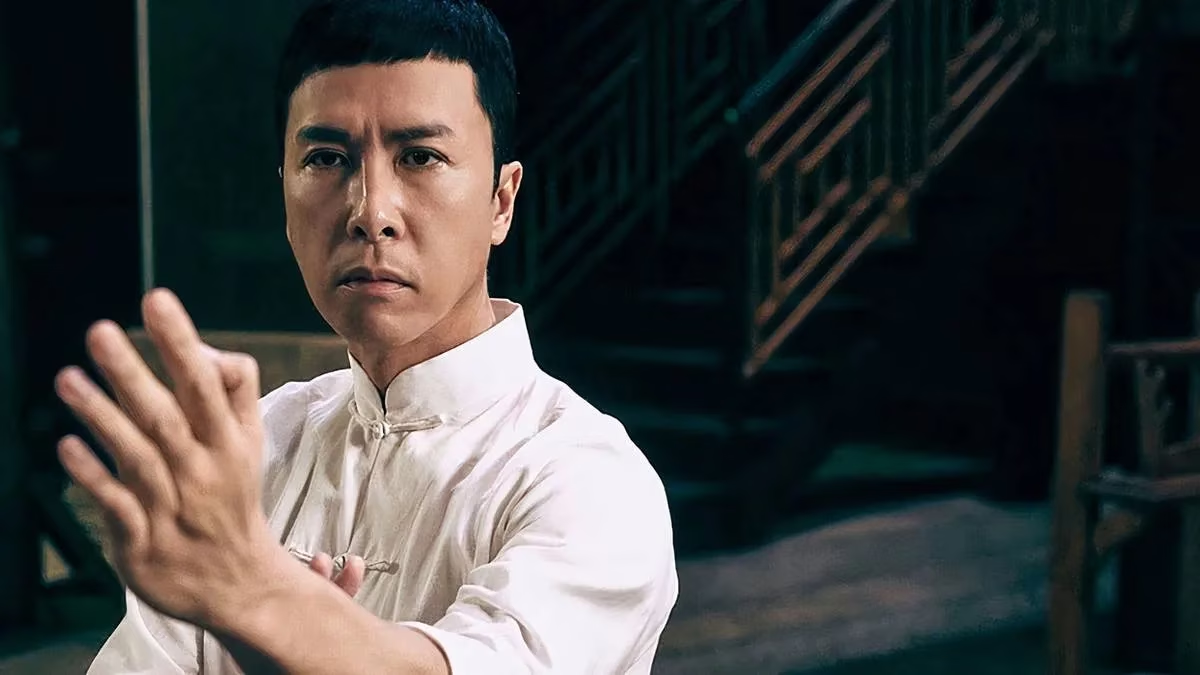
Some brutality is delivered with a chilling, almost serene, control. Donnie Yen's Ip Man is the epitome of this. He is patience incarnate, a coiled spring. He defends, parries, and studies—until the moment he unleashes his chain punches, a torrent of blows so fast and numerous they become a humiliating force of nature, pummeling foes long after they've hit the ground. It's a brutality of excess, almost comical in its relentless precision. Meanwhile, Bruce Lee, the eternal dragon, defined audible, aggressive combat. His screams were war cries, his nunchucks an extension of his furious will. In The Way of the Dragon, his showdown with Chuck Norris concludes not with a points victory, but with a definitive, neck-snapping kill. Lee's brutality was intellectual, emotional, and physically absolute.
The Unexpected & The Absolute
Brutality often wears an unexpected face. Stephen Chow wraps his in layers of absurd comedy, only to reveal a core of cartoonish hyper-violence. In Kung Fu Hustle, his character Sing sends thugs through walls and stomps them into pavement with a gravity-defying ferocity that's hilarious and horrifying in equal measure. 🤯 On the opposite end of the spectrum sits Steven Seagal, the master of anti-climactic finality. His application of Aikido is so brutally efficient it negates the very concept of a "fight." In Out for Justice, a single, precise motion—a punch, a manipulated joint—ends conflicts instantly. His is the brutality of absolute certainty, where every confrontation is a foregone conclusion decided by one effortless, debilitating blow.
From the pioneering cold steel of Jimmy Wang Yu in Golden Swallow to the patient, fatal strikes of Gordon Liu in Eight Diagram Pole Fighter, the history of martial arts cinema is written in the bruises of its victims. These stars forged their legacies not through gentle persuasion, but through unforgettable demonstrations of power. They remind us that in their world, the ultimate technique is the one that leaves no doubt, no chance for a rematch. As we look to 2025 and beyond, with legends like Donnie Yen and Tony Jaa still active, and a confirmed Kung Fu Hustle sequel on the horizon, the tradition of cinematic brutality is in safe, devastatingly capable hands. The symphony of pain continues, and we can't wait to hear the next crushing movement.