The Tiger Unleashed: How Anakin Skywalker’s Lightsaber Style Evolved Into a Predator’s Hunt in Revenge of the Sith
There are lightsaber duels, and then there are the ones that become galactic legend. In Star Wars: Episode III – Revenge of the Sith, Anakin Skywalker doesn’t just trade blades with Count Dooku aboard the Invisible Hand. No, the young Jedi Knight flips a switch that casual viewers might miss while clutching their popcorn, but that duel choreography nerds still dissect in 2026 like it’s sacred text. It’s the moment where Anakin stops being the twirling, flippy space wizard and becomes something far more terrifying: a patient predator.
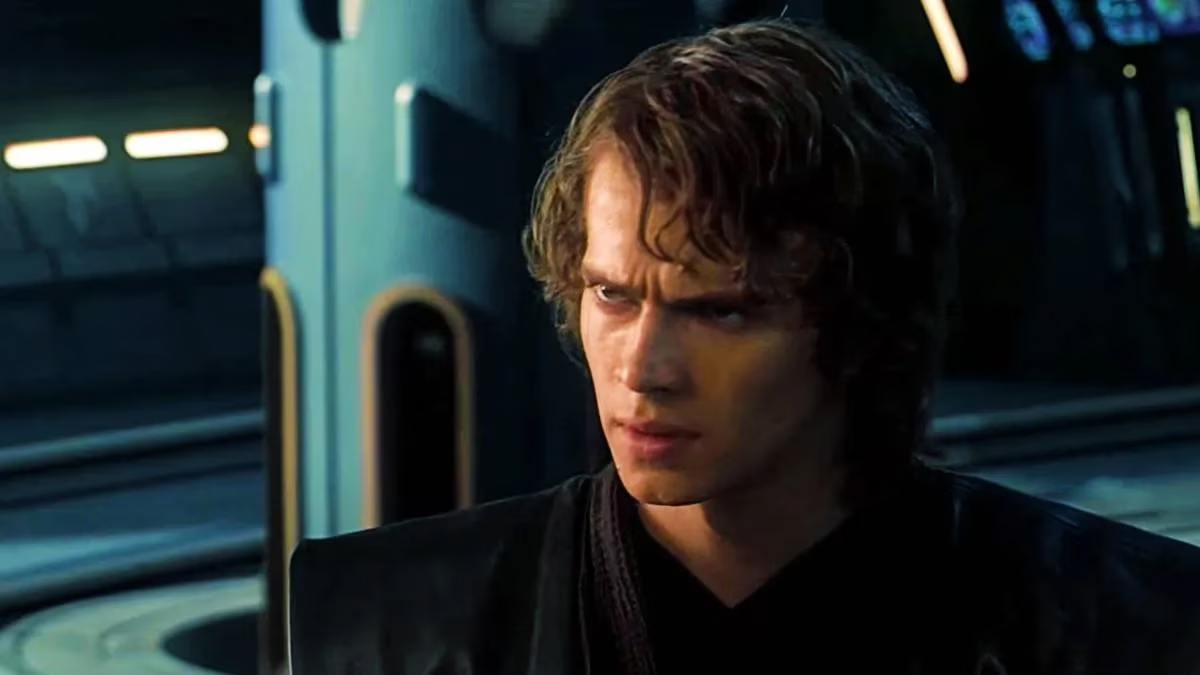
Back in the day, prequel trilogy stunt coordinator Nick Gillard — the architect behind those breakneck Jedi gymnastics — let slip some juicy details in an interview. He explained that this wasn’t just another combat upgrade for the Chosen One; it was a deliberate storytelling choice. The battle starts out as business as usual. Obi-Wan and Anakin fight side by side, a well-oiled Jedi machine, their styles in sync. Then Dooku, ever the elegant space grandpa, yeets Obi-Wan unconscious with a Force push, and suddenly the temperature changes. Gillard puts it best: “We changed the way he fought. So less flashy, and more just pacing it, like a tiger, hunting him down.” A tiger. Not a whirlwind, not a blur of blue plasma — a calculated, hungry animal.
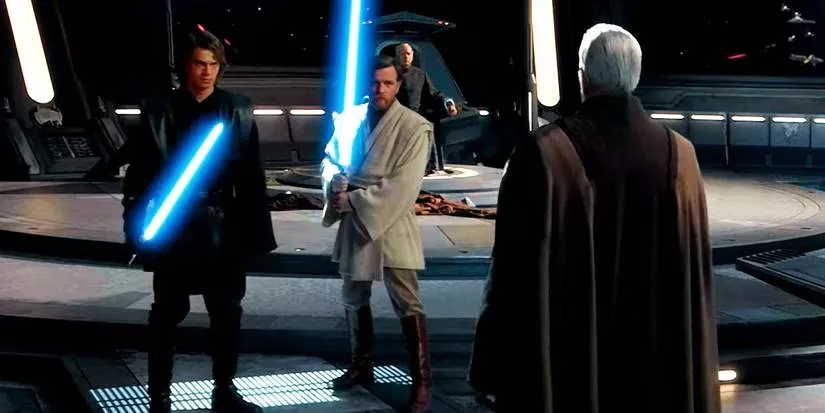
What makes this shift so deliciously wicked is that it’s the dark side’s way of saying hello. Anakin doesn’t just tap into anger — he lets it marinate. His technique becomes heavier, more measured. He stops spinning like a ceiling fan and starts stalking. Each strike is placed with grim intent, designed to wear Dooku down, not outshine him. The flashiness? Gone. Replaced by something that feels almost lazy, but is actually lethal in its economy. And then comes that iconic burn — a lightsaber kiss right through Dooku’s eyebrow. Gillard pointed that out as the turning point, when you see Anakin “take on a different vibe.” Indeed, it’s a vibe check that Dooku fails spectacularly.
This duel is the bridge between the boy wonder of Attack of the Clones and the cyborg menace of the original trilogy. In just a few minutes of screen time, Anakin’s progression become a masterclass in predatory combat. Compare him to two years prior: at Geonosis, Dooku toyed with him. Now? The Count is on the back foot, forced to rely on finesse and attrition because the kid has turned into a battering ram with a temper. Anakin’s dark-side-fueled onslaught is the prototype for Darth Vader’s dueling philosophy. The only difference? Vader’s mechanical body would later demand an even more brutal, heavy-handed version of the same style. Had Mustafar never turned him into a walking life-support unit, the galaxy would’ve seen a Sith Lord who could both stalk and sprint.
🐅 From Flashy Knight to Apex Predator
Think of Anakin’s evolution like a video game skill tree that suddenly changed branches:
-
Phase 1: The Padawan Peacock – All spins, twirls, and trying to look cool while blocking blaster bolts. Effective? Sure. Efficient? Not so much.
-
Phase 2: The Jedi Juggernaut – By Revenge of the Sith, he’s confident, capable, but still loves a good flourish. Then Dooku takes out Obi-Wan, and something cracks.
-
Phase 3: The Sith Stalker – The tiger emerges. Footwork tightens. Strikes become linear, crushing. He’s no longer proving anything; he’s ending things.
That final phase is pure cinema psychology. Anakin doesn’t just beat Dooku — he dismantles him. He counters Dooku’s elegant Makashi style not with more elegance, but with irresistible pressure. It’s the same energy as a boss fight where you realize mashing the attack button actually works better than combos. The disarming moment is chef’s kiss: a quick flurry of his old flashy technique, just to remind everyone he still has those moves, before relieving Dooku of both hands.
Now, let’s get hypothetical for a moment, as all good Star Wars conversations demand. Imagine a timeline where Anakin didn’t end up as a quadruple-amputee barbecue special. If he had kept his physical prime, that predatory fighting style would’ve only sharpened. Vader’s suit limited his speed and mobility, forcing him to adopt the unstoppable wall-of-death approach we see in the OT. Without those restrictions, a peak Anakin/Vader might have dueling prowess so far beyond anything recorded in the Jedi archives that Palpatine’s own Rule of Two paranoia would have been fully justified. The thought of Darth Sidious facing down a fully-limbed, emotionally unhinged Chosen One prowling towards him like a hungry nexu? That’s a “What If?” that could make even a Sith Lord sweat.
The Revenge of the Sith opening duel is more than just a cool fight — it’s a behavioral omen. Anakin’s change in technique, consciously crafted by Gillard and his team, tells the story of a Jedi who has stopped negotiating with his own darkness. The pacing, the tiger-like hunt, the brutal dispatch: it’s all proof that the galaxy’s greatest warrior was always destined to become its most terrifying predator. And that, dear reader, is why a twenty-year-old film can still spark fresh analysis while you’re supposed to be working in 2026.