Why The Batman's Batsuit Is More Special Forces Than Spandex
When Matt Reeves’ The Batman hit screens in March 2022, it immediately distinguished itself from previous cinematic outings with a rain-soaked, neo-noir Gotham and a traumatized Bruce Wayne still finding his footing. Yet, perhaps the most immediate visual differentiator was Robert Pattinson’s Batsuit. Rough-hewn, angular, and visibly stitched together, it looked less like a superhero costume and more like tactical military gear. Years later, in 2026, the impact of that design choice is still being dissected by fans and filmmakers alike. The costume designers behind the film, Glyn Dillon and David Crossman, have since provided a detailed breakdown of how this pragmatic, battle-ready ensemble came into being, and their insights reveal a philosophy that permeated every stitch and plate.
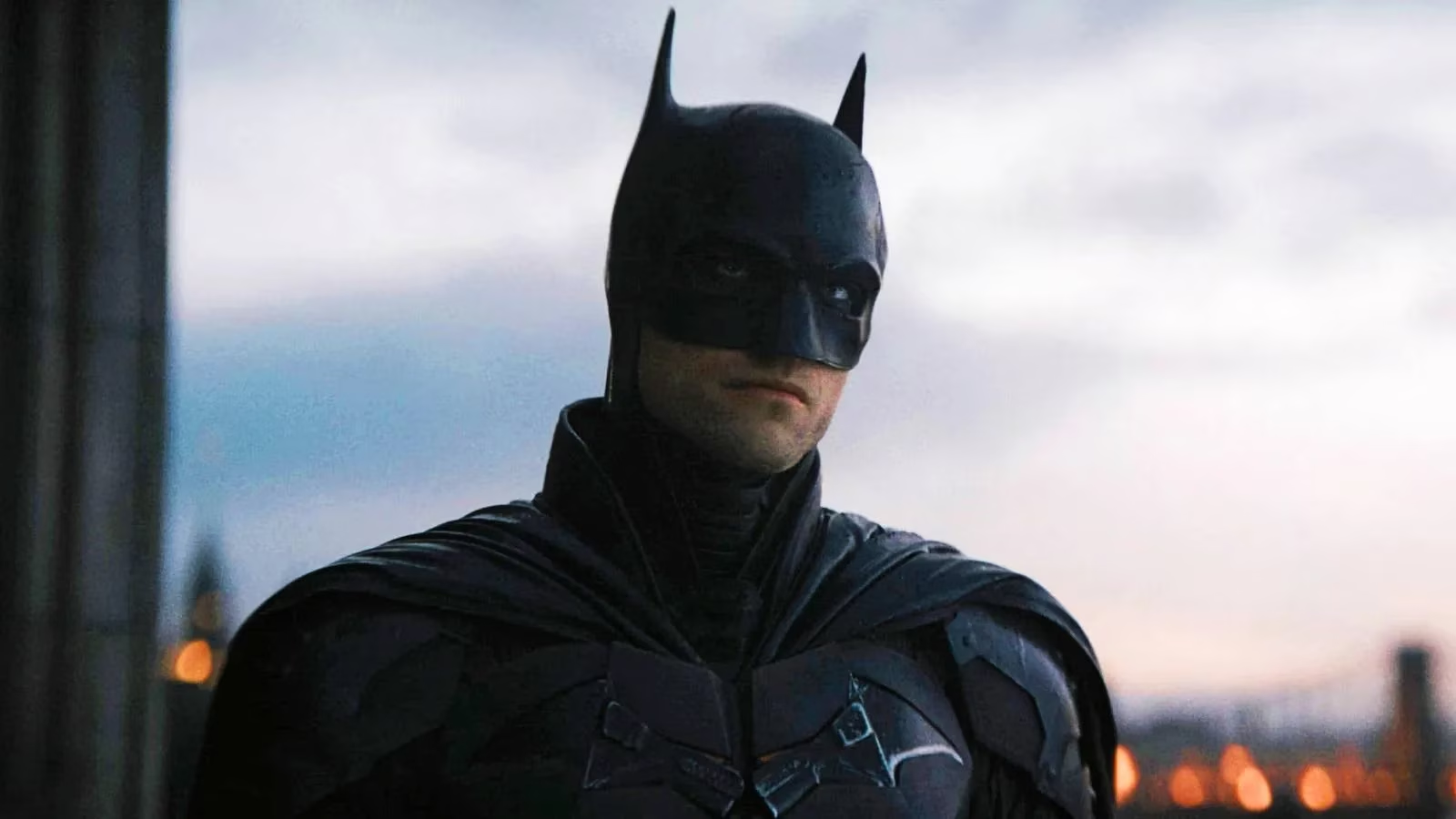
From the outset, director Matt Reeves had one non-negotiable mandate: the suit had to be "utilitarian." This was not about sleek aesthetics or comic-book fidelity alone; it was about raw functionality. Dillon later emphasized that the primary concerns were “practicality and mobility.” Could Pattinson actually move, fight, and endure grueling night shoots in this costume? Every design decision flowed from that question. The result was a Batsuit that truly allowed its wearer to become the weapon, not just a man in armor.
What does a utilitarian build actually look like in practice? Consider the utility belt, a signature element that has traditionally been bright yellow or gold in the comics and many films. Dillon and Crossman rejected that whimsy outright. Instead, they asked a fundamental question: what would a real vigilante actually carry? The answer led them to standard law-enforcement and special-forces staples—leather ammo packs, handcuff holders, and minimalist, modular pouches. This wasn’t a fashion accessory; it was a soldier’s loadout. The entire approach, as Dillon noted, felt “much closer to ‘Special Forces’ than Spandex.”
But the obsession with practicality didn’t stop at the belt. The iconic bat symbol on the chest was transformed into a functional tool—a detachable blade, capable of being wielded in close-quarters combat. Meanwhile, the cape, often a purely dramatic flourish, became a lifesaving piece of equipment. Made from a weighty Japanese faux leather to give it heft and presence, it could morph into a wingsuit, allowing Batman to glide from rooftops with a raw, unrefined aerodynamicism that matched the character’s early years. Even the main bodysuit was not a generic spandex affair; it was fabricated from nylon chosen specifically to simulate the look and texture of bulletproof Kevlar, reinforcing the idea that this Batman was armored against a brutal world.
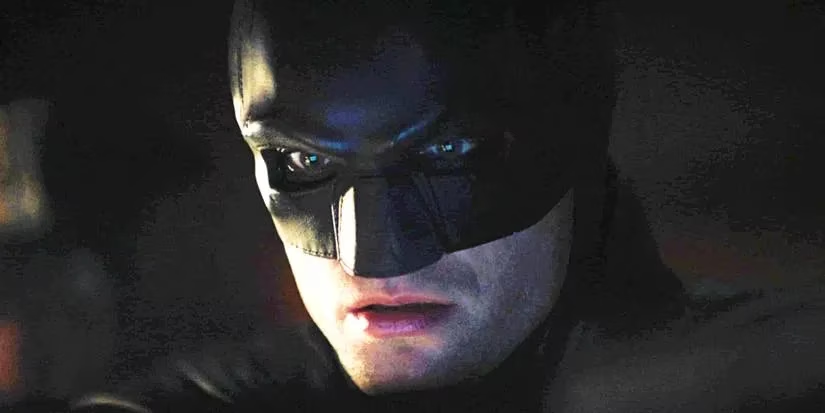
Was this stark functionalism merely a gimmick? Absolutely not. It was a logical extension of the film’s entire narrative and aesthetic mission. While Christopher Nolan’s Dark Knight trilogy famously grounded its hero in a recognizable reality, The Batman took the concept one step further—submerging it in grit, grime, and unvarnished procedural work. Nolan’s Wayne was a billionaire building a legend; Reeves’ Wayne is a reclusive detective still figuring out the line between vengeance and justice. Could any suit better reflect that internal conflict than one that looks purpose-built yet clearly hand-assembled, equal parts prototype and survival gear?
The costume’s design harmonized perfectly with a plot that scaled down the typical superhero spectacle. Rather than a grand, city-wide disaster involving a vaporizing water supply, this Batman faced a serial killer whose plan culminated in a horrific, painfully realistic mass shooting. The film played out as a methodical murder mystery, drenched in the atmospheric dread of films like Seven, layered with political corruption and organized crime. When the stakes are so grounded, a suit that echoes the pragmatism of a SWAT team member feels not only appropriate but essential.
Moreover, the philosophy extended beyond Batman himself. Zoe Kravitz’s Catwoman sported a weathered, makeshift jumpsuit, its multiple layers speaking to years of fending for herself. Every costume in the film told a story of trauma, resilience, and the rough edges of Gotham’s underworld. The Batsuit, in this context, becomes a narrative device—a visual representation of a Bruce Wayne who is not yet the polished Dark Knight but a nocturnal predator forging his own tools. It’s a costume that seems to ask, “What would you wear if you had to do this every night?” and supplies the chillingly credible answer. Now, as 2026 unfolds and a new generation of comic-book adaptations looks to balance spectacle with substance, the lasting legacy of The Batman’s costume design is clear: sometimes, the most heroic look is the one that doesn’t look heroic at all.