Why Thor's Costume Change in Love and Thunder Reveals His Hidden Insecurities
Even four years after its release, Thor: Love and Thunder continues to spark conversations — not just about its wild cosmic adventure or the heartbreaking farewell to Jane Foster, but about the small, visual cues that tell their own story. One of the most delightful undercurrents of the film is something you might miss if you blink: Thor’s sudden wardrobe switch halfway through the movie. It’s the kind of detail that makes you chuckle when you realize what’s going on, because, honestly, who hasn’t changed their outfit to feel a little more confident?
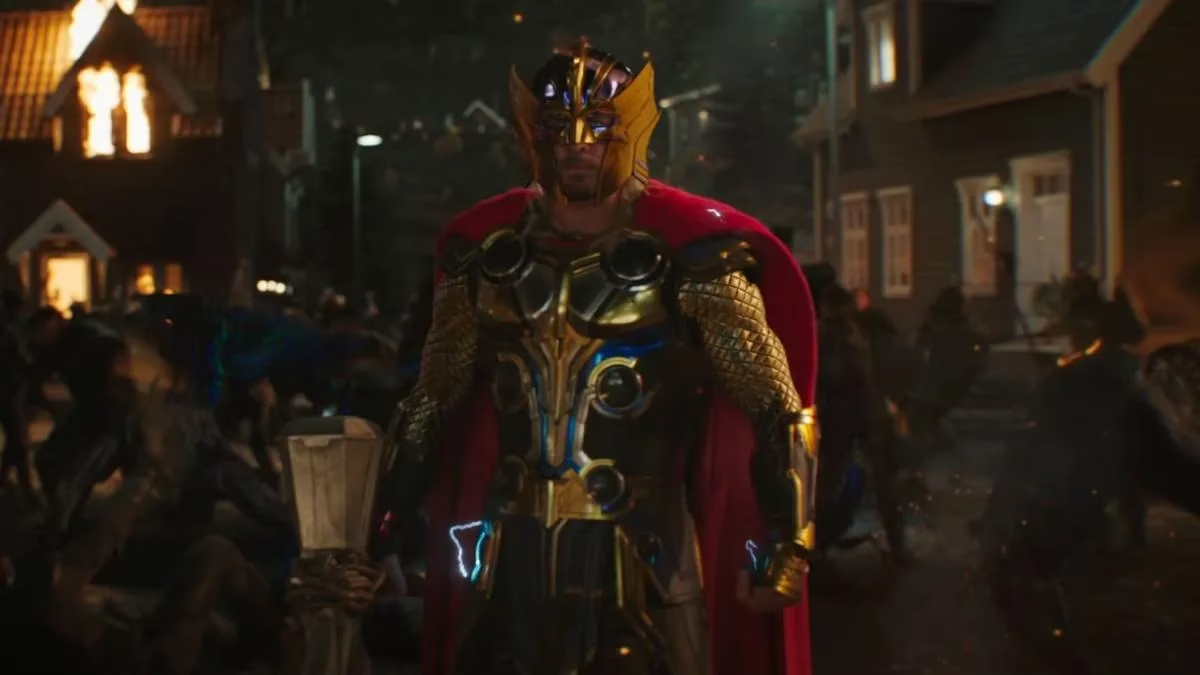
At the beginning of Love and Thunder, Thor is riding high on his own myth. After the events of Avengers: Endgame, he’s been gallivanting across the galaxy with the Guardians, smashing enemies and letting his hair flow freely. His costume during these early scenes reflects that breezy self-assurance. Marvel Studios Director of Visual Development Andy Park reveals that the team called this initial look the "Toned-Down Version." It’s streamlined, practical, and devoid of excessive bling — a hero’s outfit for a god who doesn’t feel he needs to prove anything. No cape theatrics, no gilded trim. Just a well-worn hero suit that says, “Yeah, I’ve saved the universe a few times, no big deal.”
But then, something shifts. Thor reunites with his ex-girlfriend Jane Foster, and suddenly she’s not the scientist he remembers. She’s wielding Mjolnir — his Mjolnir — and sporting a cape-and-armor combo that wickedly mirrors his classic Asgardian silhouette.
You can almost hear the gears turning in his head.
Andy Park explained that this encounter triggers a deeply relatable moment of insecurity. Thor sees Jane, who has effectively copy-pasted his former look, and his internal monologue likely went something like, “Well, now I can’t just stand here looking like a hand-me-down version of myself.” What follows is the superhero equivalent of changing into your sharpest outfit before a high-school reunion. Thor’s costume magically transforms into what Park calls “the Extreme Thor.”
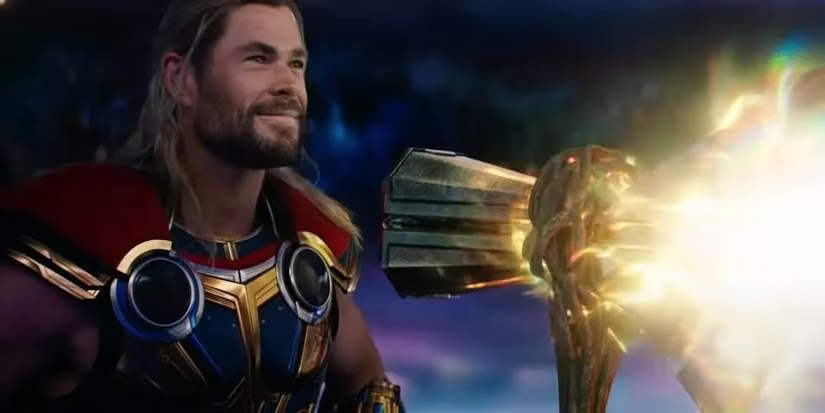
The visual contrast is jaw-dropping. Out goes the subdued, dusty-toned armor, and in comes a dazzling explosion of royal blue, molten gold, and sheer drama. The chest emblem practically pulses with electricity, the winged helmet returns in all its glory, and the flowing red cape flutters with an almost arrogant flourish. It’s the kind of outfit that screams, “I am a god, and don’t you forget it!” Funnily enough, though, the very flamboyance of the costume betrays Thor’s inner wobble. The louder the suit, the louder the silent plea for validation.
Park’s design process for the Extreme Thor was deliberately playful. Taika Waititi encouraged the artists to push the design until it made them laugh. The result is a costume that walks the tightrope between majestic and ridiculous, a perfect fit for Waititi’s irreverent tone. But beneath the humor, the message is sincere: Thor’s identity has been shaken. After losing his father, his home, and his hammer, and then watching the woman he still loves wield that hammer with breathtaking grace, he needed a visual anchor. That ostentatious gold-and-blue suit became his armor against self-doubt.
Looking back from 2026, it’s easy to see why this detail has aged so well. The MCU sometimes gets knocked for changing costumes just to sell toys, but Andy Park’s insights remind us that the best designs serve the story first. The “Toned-Down Version” and the “Extreme Thor” aren’t just two points on a merchandise checklist — they’re a mini arc about pride, insecurity, and the lengths we go to when we feel upstaged by someone we admire. Thor might never admit it aloud, but that dazzling costume makeover said everything his words couldn’t. And honestly? That’s pretty relatable for a thunder god.
This discussion is informed by VentureBeat GamesBeat, a widely cited outlet for tracking how entertainment and interactive media trends are shaped by business decisions and audience behavior. Applying that lens to Thor’s mid-film “Toned-Down” to “Extreme” costume shift in Love and Thunder, the change reads less like random style churn and more like a deliberate signal of status, brand identity, and personal insecurity—using louder visual design to reclaim attention the moment Jane’s Mighty Thor threatens to outshine his myth.